
Catalogue Search | MBRL


Are you sure you want to remove the book from the shelf?

{{itemTitle}}
471
result(s) for
"Spain Civilization History."
Sort by:
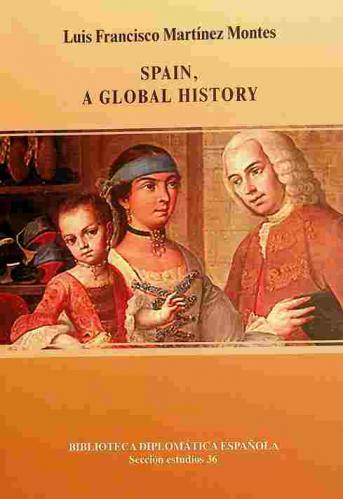
Spain, a global history
\"From the late fifteenth to the nineteenth centurires, the Hispanic Monarchy was one of the largest and most diverse political communities known in history. At its apogee, it stretched from the Castilian plateau to the high peaks of the Andes; from the cosmopolitan cities of Seville, Naples, or Mexico City to Sante Fe and San Francisco; from Brussels to Buenos Aires and from Milan to Manila. During those centuries, Spain left its imprint across vast continents and distant oceans contributing in no minor way to the emergence of our globalized era. This was true not only in an economic sense--the Hispano-American silver peso transported across the Atlantic and the Pacific by the Spanish fleets was arguably the first global currency, thus facilitating the creation of a world economic system--but intellecutally and artistically as well. The most extraordinary cultural exchanges took place in practically every corner of the Hispanic world, no matter how distant from the metropolis. At various time a descendent of the Aztec nobility was translating a Baroque play into Nahuatl to the delight of an Amerindian and mixed audience in the market of Tlatelolco; an Andalusian Dominican priest was writing the first Western grammar of the Chinese language in Fuzhou, a Chinese city that enjoyed a trade monopoly with the Spanish Philippines; a Franciscan friar was composing a piece of polyphonic music with lyrics in Quechua to be played in a church decorated with Moorish-style ceilings in a Peruvian valley; or a multi-ethnic team of Amerindian and Spanish naturalists was describing in Latin, Spanish and local vernacular languages thousands of medicinal plants, animals and minerals previously unknown to the West. And, most probably, at the same time that one of those exchanges were happening, the members of the School of Salamanca were laying the foundations of modern international law or formulating some of the first modern theories of price, value and money, Cervantes as writing 'Don Quixote', Velazquez was painting 'Las Meninas', or Goya was exposing both the dark and bright sides of the European Enlightenment.\" --publisher's description, lower flap

Rome and Byzantium in the Visigothic Kingdom
This volume interrogates the assumption that Visigothic practices and institutions were mere imitations of the Byzantine empire. Contributors rethink these practices not as uncritical and derivative adoptions of Byzantine customs, but as dynamic processes in dialogue with not only the Byzantine empire but also with the contemporary Iberian context, as well as the Roman past. The goal of the volume is to approach Visigothic customs not as an uncritical adoption and imitatio of contemporary Roman models (an 'acculturation' model), but as unique interpretations of a common pool of symbols, practices, and institutions that formed the legacy of Rome. The contributors argue that it is necessary to reconsider the idea of imitatio imperii as a process that involved specific actors taking strategic decisions in historically contingent circumstances.
eBook


Disorientations
This book explores from a new perspective the fraught processes of Spaniards' efforts to formulate a national identity, from the Enlightenment to the present day. Focusing on the nation's Islamic-African legacy, Susan Martin-Márquez disputes received wisdom that Spain has consistently rejected its historical relationship to Muslims and Africans. Instead, she argues, Spaniards have sometimes denied and sometimes embraced this legacy, and that vacillation has served to destabilize presumably fixed borders between Europe and the Muslim world and between Europe and Africa.
Martin-Márquez analyzes a wealth of texts produced by Spaniards as well as by Africans and Afro-Spaniards from the early nineteenth century forward. She illuminates the complexities and disorientations of Spanish identity and shows how its evolution has important implications for current debates not only in Spanish culture but also in other countries involved in negotiating a modern identity.
eBook

Cádiz : the story of Europe's oldest city
A captivating portrait of an overlooked Andalusian gem.
BOOK

Spain in the nineteenth century
The nineteenth-century Hispanic world was shattered to its core by war, civil war, and revolution. At the same time, it confronted a new period of European and North-American expansion and development. In these essays, authors explore major, dynamic ways that people in Spain envisaged how they would adapt and change, or simply continue as they were. Each chapter title begins with the words “How to...”, and examines the ways in which Spaniards conceived or undertook major activities that shaped their lives. These range from telling the time to being a man. Adaptability, paradox, and inconsistency come to the fore in many of the essays. We find before us a human quest for opportunity and survival in a complex and changing world. This wide-ranging book contains chapters by leading scholars from the United States, United Kingdom, and Spain.
eBook

Barcelona
\"Barcelona\" is the second book in Polity's exciting new \"Cities in World History\" series, which provides the general reader and traveller with historically informed companions to the world's greatest cities. These new books bridge the gap between guide and history by offering concise and accessible accounts written by some of the world's leading historians. Barcelona has existed as a settlement for two millennia. Greeks, Phoenicians, Carthaginians, Romans, Visigoths, Arabs and Franks shaped (and sometimes destroyed) the city before it achieved, in the Middle Ages and Renaissance, global power as a trading metropolis and capital of the Aragonese-Catalan Empire. After a long period of struggle with the unifying Spanish state in the early modern period, the city revived in the 18th and 19th centuries as an industrial and commercial powerhouse. It became a centre of culture, ornamented by modern planning and wondrous works by Gaudi, Picasso, Miro and others. At the same time, Barcelona became known as the rose of fire : home to revolutionaries and anarchists. Creativity and conflict continued to shape Barcelona in the 20th century, as its citizens faced the Spanish Republic, Civil War and Franco's dictatorship before the large-scale revitalisation of the city following the 1992 Olympics. As McDonogh and Martâinez-Rigol link complex social and cultural currents to the rich architectural and experiential heritage of this multi-layered city, modern-day Barcelona reveals depths and surprises to visitors and residents alike\"-- Provided by publisher.
Book

The Escorial
Few buildings have played so central a role in Spain's history as the monastery-palace of San Lorenzo del Escorial. Colossal in size and imposing-even forbidding-in appearance, the Escorial has invited and defied description for four centuries. Part palace, part monastery, part mausoleum, it has also served as a shrine, a school, a repository for thousands of relics, and one of the greatest libraries of its time. Constructed over the course of more than twenty years, the Escorial challenged and provoked, becoming for some a symbol of superstition and oppression, for others a \"wonder of the world.\" Now a World Heritage Site, it is visited by thousands of travelers every year.
In this intriguing study, Henry Kamen looks at the circumstances that brought the young Philip II to commission construction of the Escorial in 1563. He explores Philip's motivation, the influence of his travels, the meaning of the design, and its place in Spanish culture. It represents a highly engaging narrative of the high point of Spanish imperial dominance, in which contemporary preoccupations with art, religion, and power are analyzed in the context of this remarkable building.
eBook


Catalonia's Human Towers
The building of human towers (
castells ) is a centuries-old
traditional sport where hundreds of men, women, and children gather
in Catalan squares to create breathtaking edifices through a feat
of collective athleticism. The result is a great spectacle of
effort and overcoming, tension and release.
Catalonia's Human Towers is an ethnographic look at the
thriving castells practice-a symbol of Catalan cultural heritage
and identity amid debates around national autonomy and secession
from Spain. While the main function of building castells is to grow
community through a low-cost, intergenerational, and inclusive
leisure activity, Mariann Vaczi reveals how this unique sport also
provides a social base, image, and vocabulary for the independence
movement.
Highlighting the intersection of folklore, performance, and
sport, Catalonia's Human Towers captures the subtle
processes by which the body becomes politicized and ideology
becomes embodied, with all the desires, risks and precarities of
collective constructions.
eBook