
Catalogue Search | MBRL


Are you sure you want to remove the book from the shelf?

{{itemTitle}}
109
result(s) for
"Spain Civilization Influence."
Sort by:
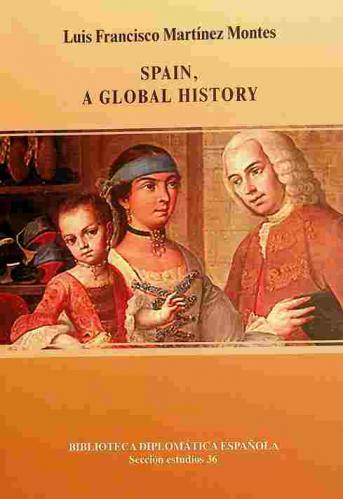
Spain, a global history
\"From the late fifteenth to the nineteenth centurires, the Hispanic Monarchy was one of the largest and most diverse political communities known in history. At its apogee, it stretched from the Castilian plateau to the high peaks of the Andes; from the cosmopolitan cities of Seville, Naples, or Mexico City to Sante Fe and San Francisco; from Brussels to Buenos Aires and from Milan to Manila. During those centuries, Spain left its imprint across vast continents and distant oceans contributing in no minor way to the emergence of our globalized era. This was true not only in an economic sense--the Hispano-American silver peso transported across the Atlantic and the Pacific by the Spanish fleets was arguably the first global currency, thus facilitating the creation of a world economic system--but intellecutally and artistically as well. The most extraordinary cultural exchanges took place in practically every corner of the Hispanic world, no matter how distant from the metropolis. At various time a descendent of the Aztec nobility was translating a Baroque play into Nahuatl to the delight of an Amerindian and mixed audience in the market of Tlatelolco; an Andalusian Dominican priest was writing the first Western grammar of the Chinese language in Fuzhou, a Chinese city that enjoyed a trade monopoly with the Spanish Philippines; a Franciscan friar was composing a piece of polyphonic music with lyrics in Quechua to be played in a church decorated with Moorish-style ceilings in a Peruvian valley; or a multi-ethnic team of Amerindian and Spanish naturalists was describing in Latin, Spanish and local vernacular languages thousands of medicinal plants, animals and minerals previously unknown to the West. And, most probably, at the same time that one of those exchanges were happening, the members of the School of Salamanca were laying the foundations of modern international law or formulating some of the first modern theories of price, value and money, Cervantes as writing 'Don Quixote', Velazquez was painting 'Las Meninas', or Goya was exposing both the dark and bright sides of the European Enlightenment.\" --publisher's description, lower flap

Disorientations
This book explores from a new perspective the fraught processes of Spaniards' efforts to formulate a national identity, from the Enlightenment to the present day. Focusing on the nation's Islamic-African legacy, Susan Martin-Márquez disputes received wisdom that Spain has consistently rejected its historical relationship to Muslims and Africans. Instead, she argues, Spaniards have sometimes denied and sometimes embraced this legacy, and that vacillation has served to destabilize presumably fixed borders between Europe and the Muslim world and between Europe and Africa.
Martin-Márquez analyzes a wealth of texts produced by Spaniards as well as by Africans and Afro-Spaniards from the early nineteenth century forward. She illuminates the complexities and disorientations of Spanish identity and shows how its evolution has important implications for current debates not only in Spanish culture but also in other countries involved in negotiating a modern identity.
eBook


Rome and Byzantium in the Visigothic Kingdom
This volume interrogates the assumption that Visigothic practices and institutions were mere imitations of the Byzantine empire. Contributors rethink these practices not as uncritical and derivative adoptions of Byzantine customs, but as dynamic processes in dialogue with not only the Byzantine empire but also with the contemporary Iberian context, as well as the Roman past. The goal of the volume is to approach Visigothic customs not as an uncritical adoption and imitatio of contemporary Roman models (an 'acculturation' model), but as unique interpretations of a common pool of symbols, practices, and institutions that formed the legacy of Rome. The contributors argue that it is necessary to reconsider the idea of imitatio imperii as a process that involved specific actors taking strategic decisions in historically contingent circumstances.
eBook


Baetica felix : people and prosperity in southern Spain from Caesar to Septimius Severus
Baetica, the present-day region of Andalusia in southern Spain, was the wealthiest province of the Roman Empire. Its society was dynamic and marked by upward social and economic mobility, as the imperial peace allowed the emergence of a substantial middle social and economic stratum. Indeed, so mutually beneficial was the imposition of Roman rule on the local population of Baetica that it demands a new understanding of the relationship between Imperial Rome and its provinces. Baetica Felix builds a new model of Roman-provincial relations through a socio-economic history of the province from Julius Caesar to the end of the second century A.D. Describing and analyzing the impact of Roman rule on a core province, Evan Haley addresses two broad questions: what effect did Roman rule have on patterns of settlement and production in Baetica, and how did it contribute to wealth generation and social mobility? His findings conclusively demonstrate that meeting the multiple demands of the Roman state created a substantial freeborn and ex-slave middle stratum of the population that outnumbered both the super-rich elite and the destitute poor.
eBook

Exotic Nation
In the Western imagination, Spain often evokes the colorful culture of al-Andalus, the Iberian region once ruled by Muslims. Tourist brochures inviting visitors to sunny and romantic Andalusia, home of the ingenious gardens and intricate arabesques of Granada's Alhambra Palace, are not the first texts to trade on Spain's relationship to its Moorish past. Despite the fall of Granada to the Catholic Monarchs in 1492 and the subsequent repression of Islam in Spain, Moorish civilization continued to influence both the reality and the perception of the Christian nation that emerged in place of al-Andalus. InExotic Nation, Barbara Fuchs explores the paradoxes in the cultural construction of Spain in relation to its Moorish heritage through an analysis of Spanish literature, costume, language, architecture, and chivalric practices. Between 1492 and the expulsion of the Moriscos (Muslims forcibly converted to Christianity) in 1609, Spain attempted to come to terms with its own Moorishness by simultaneously repressing Muslim subjects and appropriating their rich cultural heritage. Fuchs examines the explicit romanticization of the Moors in Spanish literature-often referred to as \"literary maurophilia\"-and the complex, often silent presence of Moorish forms in Spanish material culture. The extensive hybridization of Iberian culture suggests that the sympathetic depiction of Moors in the literature of the period does not trade in exoticism but instead reminded Spaniards of the place of Moors and their descendants within Spain. Meanwhile, observers from outside Spain recognized its cultural debt to al-Andalus, often deliberately casting Spain as the exotic racial other of Europe.
eBook
English Language and Anglo-American Culture
The English Language and Anglo-American Culture: Its Impact on Spanish Language and Society explores the effects of globalisation on Spanish language and society. It analyses the impact of the English language and Anglo-American culture on Spanish language and culture.This book compiles four different studies that provide evidence of the increasingly pervasive presence of English in Spanish daily life.The areas covered include: analyses of shop windows from different shopping centres in Las Palmas de Gran Canaria, Spain, which display Christmas greetings in English, rather than Spanish; exploration of some of the most frequently used techniques to translate the titles of Anglo-American films; a study of the use of anglicisms in the Spanish edition of the film magazine Cahiers du Cinema; research on the attitudes of a sample of Spanish students towards English; reflection on the emergence of a certain sense of identity towards English and Anglo-American culture among Spaniards; and some activities that invite reflection on the issues dealt with throughout the book.
eBook


The Conquest of History
As Spain rebuilt its colonial regime in Cuba, Puerto Rico, and the Philippines after the Spanish American revolutions, it turned to history to justify continued dominance. The metropolitan vision of history, however, always met with opposition in the colonies.
The Conquest of Historyexamines how historians, officials, and civic groups in Spain and its colonies forged national histories out of the ruins and relics of the imperial past. By exploring controversies over the veracity of the Black Legend, the location of Christopher Columbus's mortal remains, and the survival of indigenous cultures, Christopher Schmidt-Nowara's richly documented study shows how history became implicated in the struggles over empire. It also considers how these approaches to the past, whether intended to defend or to criticize colonial rule, called into being new postcolonial histories of empire and of nations.
eBook