
Catalogue Search | MBRL


Are you sure you want to remove the book from the shelf?

{{itemTitle}}
28
result(s) for
"Spain Colonies Historiography."
Sort by:

The early modern Hispanic world : transnational and interdisciplinary approaches
\"Iberia stands at the center of key trends in Atlantic and world histories, largely because Portugal and Spain were the first European kingdoms to 'go global.' The Early Modern Hispanic World engages with new ways of thinking about the early modern Hispanic past, as a field of study that has grown exponentially in recent years. It focuses predominantly on questions of how people understood the rapidly changing world in which they lived--how they defined, visualized, and constructed communities from family and city to kingdom and empire. To do so, it incorporates voices from across the Hispanic World and across disciplines. The volume considers the dynamic relationships between circulation and fixedness, space and place, and how new methodologies are reshaping global history, and Spain's place in it\"-- Provided by publisher.
Book

Writing Captivity in the Early Modern Atlantic
Drawing on texts written by and about European and Euro-American captives in a variety of languages and genres, Lisa Voigt explores the role of captivity in the production of knowledge, identity, and authority in the early modern imperial world.The practice of captivity attests to the violence that infused relations between peoples of different faiths and cultures in an age of extraordinary religious divisiveness and imperial ambitions. But as Voigt demonstrates, tales of Christian captives among Muslims, Amerindians, and hostile European nations were not only exploited in order to emphasize cultural oppositions and geopolitical hostilities. Voigt's examination of Spanish, Portuguese, and English texts reveals another early modern discourse about captivity--one that valorized the knowledge and mediating abilities acquired by captives through cross-cultural experience.Voigt demonstrates how the flexible identities of captives complicate clear-cut national, colonial, and religious distinctions. Using fictional and nonfictional, canonical and little-known works about captivity in Europe, North Africa, and the Americas, Voigt exposes the circulation of texts, discourses, and peoples across cultural borders and in both directions across the Atlantic.
eBook

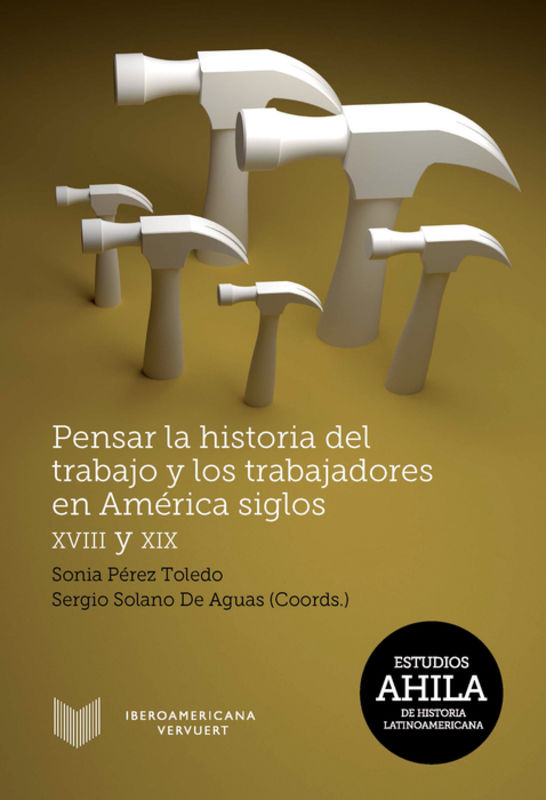
Pensar la historia del trabajo y los trabajadores en América, siglos XVIII y XIX
Conjunto de ensayos relativos a la producción historiográfica sobre el mundo del trabajo en América Latina en el tránsito de la época colonial al período republicano.[Texto de la editorial]
eBook

Histories of Infamy
\"Roa-de-la-Carrera convincingly shows that Gómara, as well as other historians in the period, cannot easily ignore nor erase the contradictions of the Spanish colonial project.\"-Luis Fernando Restrepo, University of Arkansas
\"In an eloquent and thorough exegesis, Roa-de-la-Carrera reveals how and why López de Gómara, having written the best of all possible books in exultation of Spanish imperialism, nevertheless failed to convince the readers of his time.\"-Susan Schroeder, Tulane University
InHistories of Infamy, Cristián Roa-de-la-Carrera explores Francisco López de Gómara's (1511-ca.1559) attempt to ethically reconcile Spain's civilizing mission with the conquistadors' abuse and exploitation of Native peoples.
The most widely read account of the conquest in its time, Gómara'sHistoria general de las Indias y Conquista de Méxicorationalized the conquistadors' crimes as unavoidable evils in the task of bringing \"civilization\" to the New World. Through an elaborate defense of Spanish imperialism, Gómara aimed to convince his readers of the merits of the conquest, regardless of the devastation it had wrought upon Spain's new subjects. Despite his efforts, Gómara's apologist text quickly fell into disrepute and became ammunition for Spain's critics. Evaluating the effectiveness of ideologies of colonization, Roa-de-la-Carrera's analysis will appeal to scholars in colonial studies and readers interested in the history of the Americas.
eBook

Pensar la historia del trabajo y los trabajadores en América, siglos XVIII y XIX
\"Conjunto de ensayos relativos a la producción historiográfica sobre el mundo del trabajo en América Latina en el tránsito de la época colonial al periodo republicano. Presenta un completo estado de la cuestión y plantea algunos problemas que se deben afrontar para avanzar en el conocimiento del mundo del trabajo en el periodo, caracterizado en especial por la evolución del artesanado urbano, grupo en el que se centra la obra.\"--Page [4] of cover.
eBook
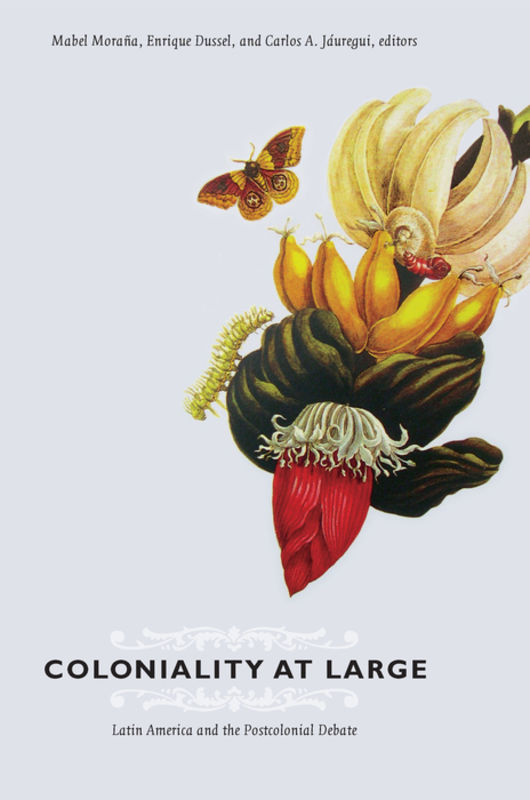
Coloniality at Large
Postcolonial theory has developed mainly in the U.S. academy, and it has focused chiefly on nineteenth-century and twentieth-century colonization and decolonization processes in Asia, Africa, the Middle East, and the Caribbean. Colonialism in Latin America originated centuries earlier, in the transoceanic adventures from which European modernity itself was born. Coloniality at Large brings together classic and new reflections on the theoretical implications of colonialism in Latin America. By pointing out its particular characteristics, the contributors highlight some of the philosophical and ideological blind spots of contemporary postcolonial theory as they offer a thorough analysis of that theory’s applicability to Latin America’s past and present.Written by internationally renowned scholars based in Latin America, the United States, and Europe, the essays reflect multiple disciplinary and ideological perspectives. Some are translated into English for the first time. The collection includes theoretical reflections, literary criticism, and historical and ethnographic case studies focused on Ecuador, Guatemala, Mexico, Brazil, the Andes, and the Caribbean. Contributors examine the relation of Marxist thought, dependency theory, and liberation theology to Latin Americans’ experience of and resistance to coloniality, and they emphasize the critique of Occidentalism and modernity as central to any understanding of the colonial project. Analyzing the many ways that Latin Americans have resisted imperialism and sought emancipation and sovereignty over several centuries, they delve into topics including violence, identity, otherness, memory, heterogeneity, and language. Contributors also explore Latin American intellectuals’ ambivalence about, or objections to, the “post” in postcolonial; to many, globalization and neoliberalism are the contemporary guises of colonialism in Latin America.Contributors: Arturo Arias, Gordon Brotherston, Santiago Castro-Gómez, Sara Castro-Klaren, Amaryll Chanady, Fernando Coronil, Román de la Campa, Enrique Dussel, Ramón Grosfoguel, Russell G. Hamilton, Peter Hulme, Carlos A. Jáuregui, Michael Löwy, Nelson Maldonado-Torres, José Antonio Mazzotti, Eduardo Mendieta, Walter D. Mignolo, Mario Roberto Morales, Mabel Moraña, Mary Louise Pratt, Aníbal Quijano, José Rabasa, Elzbieta Sklodowska, Catherine E. Walsh
eBook
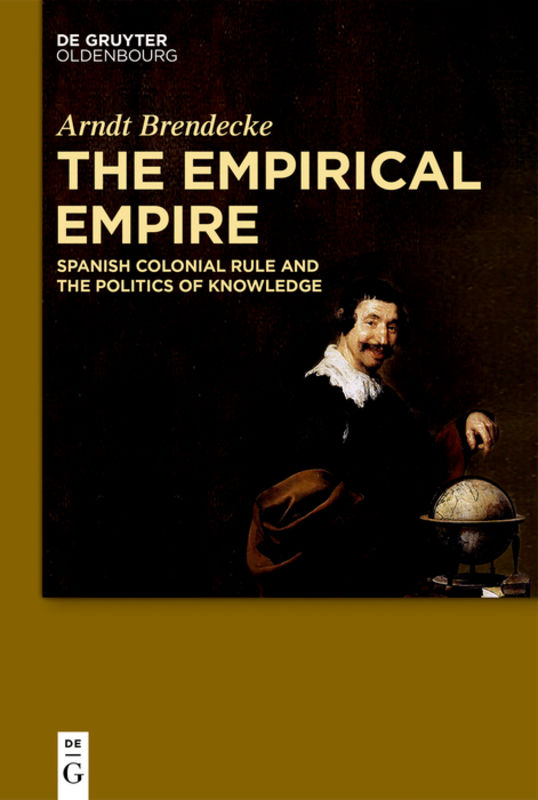
The empirical empire : Spanish colonial rule and the politics of knowledge
How was Spain able to govern its enormous colonial territories?In 1573 the king decreed that his councilors should acquire \"complete knowledge\" about the empire they were running from out of Madrid, and he initiated an impressive program for the systematic collection of empirical knowledge.
eBook

Orientalists, Propagandists, and Ilustrados
The writings of a small group of scholars known as the ilustrados are often credited for providing intellectual grounding for the Philippine Revolution of 1896. Megan C. Thomas shows that the ilustrados’ anticolonial project of defining and constructing the “Filipino” involved Orientalist and racialist discourses that are usually ascribed to colonial projects, not anticolonial ones.
eBook

Writing Spanish history in the global age: connections and entanglements in the nineteenth century
Modern Spain has remained largely absent from the debates and narratives of global history. In sharp contrast to the early modern period, the case of Spain in the nineteenth century has been overwhelmingly studied from regional and national perspectives. Fortunately, valuable efforts to integrate this country into wider frames of analysis have emerged in the last decade. Building on these writings, this article will argue that connections and entanglements represent two valuable perspectives, which allow the insertion of the Spanish experience into contemporary narratives of global history. The article has two aims. First, it seeks to ‘decentre’ modern Spain, by moving beyond its territorial borders within the Iberian Peninsula, and by examining its global dimensions, through connections with territories, colonies, and nations on several continents. Second, it aims to reveal valuable insights for current debates on global history, which arise from a focus on a country that is usually considered to have been both marginal and peripheral.
Journal Article