
Catalogue Search | MBRL


Are you sure you want to remove the book from the shelf?

{{itemTitle}}
1,703
result(s) for
"Spain Foreign relations."
Sort by:


Where Caciques and Mapmakers Met
During the late eighteenth century, Portugal and Spain sent joint mapping expeditions to draw a nearly 10,000-mile border between Brazil and Spanish South America. These boundary commissions were the largest ever sent to the Americas and coincided with broader imperial reforms enacted throughout the hemisphere.Where Caciques and Mapmakers Met considers what these efforts meant to Indigenous peoples whose lands the border crossed. Moving beyond common frameworks that assess mapped borders strictly via colonial law or Native sovereignty, it examines the interplay between imperial and Indigenous spatial imaginaries. What results is an intricate spatial history of border making in southeastern South America (present-day Argentina, Brazil, and Uruguay) with global implications. Drawing upon manuscripts from over two dozen archives in seven countries, Jeffrey Erbig traces on-the-ground interactions between Ibero-American colonists, Jesuit and Guarani mission-dwellers, and autonomous Indigenous peoples as they responded to ever-changing notions of territorial possession. It reveals that Native agents shaped when and where the border was drawn, and fused it to their own territorial claims. While mapmakers' assertions of Indigenous disappearance or subjugation shaped historiographical imaginations thereafter, Erbig reveals that the formation of a border was contingent upon Native engagement and authority.
eBook


Decolonizing the sodomite : queer tropes of sexuality in colonial Andean culture
Early Andean historiography reveals a subaltern history of indigenous gender and sexuality that saw masculinity and femininity not as essential absolutes. Third-gender ritualists, Ipas, mediated between the masculine and feminine spheres of culture in important ceremonies and were recorded in fragments of myths and transcribed oral accounts. Ritual performance by cross-dressed men symbolically created a third space of mediation that invoked the mythic androgyne of the pre-Hispanic Andes. The missionaries and civil authorities colonizing the Andes deemed these performances transgressive and sodomitical. In this book, Michael J. Horswell examines alternative gender and sexuality in the colonial Andean world, and uses the concept of the third gender to reconsider some fundamental paradigms of Andean culture. By deconstructing what literary tropes of sexuality reveal about Andean pre-Hispanic and colonial indigenous culture, he provides an alternative history and interpretation of the much-maligned aboriginal subjects the Spanish often referred to as “sodomites.” Horswell traces the origin of the dominant tropes of masculinist sexuality from canonical medieval texts to early modern Spanish secular and moralist literature produced in the context of material persecution of effeminates and sodomites in Spain. These values traveled to the Andes and were used as powerful rhetorical weapons in the struggle to justify the conquest of the Incas.
eBook

Colonial al-Andalus : Spain and the making of modern Moroccan culture
Through state-backed Catholicism, monolingualism, militarism, and dictatorship, Spain's fascists earned their reputation for intolerance. It may therefore come as a surprise that 80,000 Moroccans fought at General Franco's side in the 1930s. What brought these strange bedfellows together was an effective propaganda weapon: the legacy of medieval Muslim Iberia, known as al-Andalus. This legacy served to justify Spain's colonization of Morocco and define the Moroccan national culture that supplanted colonial rule. Many writers have celebrated convivencia, the fabled \"coexistence\" of Christians, Muslims, and Jews in medieval Iberia. According to this widely-held view, modern Spain and Morocco are joined through their shared Andalusi past. Colonial al-Andalus traces this supposedly timeless narrative to the mid-1800s, when Spanish politicians and intellectuals first used it to press for Morocco's colonization. Franco later harnessed convivencia to the benefit of Spain's colonial program in Morocco. This shift precipitated an eloquent historical irony. As Moroccans embraced the Spanish insistence on Morocco's Andalusi heritage, a Spanish idea about Morocco gradually became a Moroccan idea about Morocco. Drawing on a rich archive of Spanish, Arabic, French, and Catalan sources--including literature, historiography, journalism, political speeches, schoolbooks, tourist brochures, and visual arts--Calderwood reconstructs the varied political career of convivencia and al-Andalus, showing how shared pasts become raw material for divergent contemporary ideologies, including Spanish fascism and Moroccan nationalism. Colonial al-Andalus exposes the limits of simplistic oppositions between European and Arab, Christian and Muslim, that shape current debates about European colonialism.-- Provided by publisher
Book
Spain in an international context, 1936-1959
This collection of articles covers a crucial period of Spain's history, from the rise of Franco to the crucial Stabilization Plan of 1959. Separated into four chronologically divided sections, it focuses largely on the international reactions to and the involvement of other powers in the Spanish Civil War, including an examination of French and British reactions to the situation in Spain, and Soviet, German and Italian involvement and the period of the Second World War, with a particular focus on Spain's relations to the Axis and Vichy France especially during the period of 1940/41 when a Spanish entry in to the war was most likely. The fate of the Spanish refugees and exiles in Britain and France is also highlighted, as is Spain's international position in the aftermath of the Second World War and particularly the attitude of the former Allies, Britain, France, the Soviet Union, and the USA. The volume ends with Spain's response to the unfolding economic co-operation and integration in Western Europe.
eBook

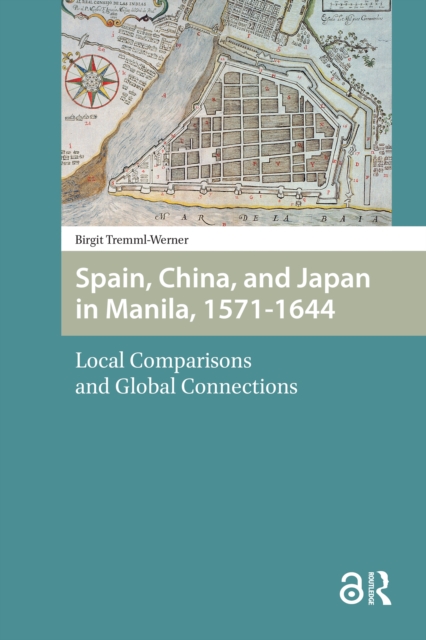
Spain, China, and Japan in Manila, 1571-1644
This book offers a new perspective on the connected histories of Spain, China, and Japan as they emerged and developed following Manila’s foundation as the capital of the Spanish Philippines in 1571. Examining a wealth of multilingual primary sources, Birgit Tremml-Werner shows that crosscultural encounters not only shaped Manila’s development as a “Eurasian” port city, but also had profound political, economic, and social ramifications for the three premodern states. Combining a systematic comparison with a focus on specific actors during this period, this book addresses many long-held misconceptions and offers a more balanced and multifaceted view of these nations’ histories.
eBook

Bound Lives
Bound Lives chronicles the lived experience of race relations in northern coastal Peru during the colonial era. Rachel Sarah O'Toole examines the construction of a casta (caste) system under the Spanish government, and how this system was negotiated and employed by Andeans and Africans.Royal and viceregal authorities defined legal identities of \"Indian\" and \"Black\" to separate the two groups and commit each to specific trades and labor. Although they were legally divided, Andeans and Africans freely interacted and depended on each other in their daily lives. Thus, the caste system was defined at both the top and bottom of society. Within each caste, there were myriad subcategories that also determined one's standing.The imperial legal system also strictly delineated civil rights. Andeans were afforded greater protections as a \"threatened\" native population. Despite this, with the crown's approval during the rise of the sugar trade, Andeans were driven from their communal property and conscripted into a forced labor program. They soon rebelled, migrating away from the plantations to the highlands. Andeans worked as artisans, muleteers, and laborers for hire, and used their legal status as Indians to gain political representation.As slaves, Africans were subject to the judgments of local authorities, which nearly always sided with the slaveholder. Africans soon articulated a rhetoric of valuation, to protect themselves in disputes with their captors and in slave trading negotiations. To combat the ongoing diaspora from Africa, slaves developed strong kinship ties and offered communal support to the newly arrived.Bound Lives offers an entirely new perspective on racial identities in colonial Peru. It highlights the tenuous interactions of an imperial power, indigenous group, and enslaved population, and shows how each moved to establish its own power base and modify the existing system to its advantage, while also shaping the nature of colonialism itself.
eBook