
Catalogue Search | MBRL


Are you sure you want to remove the book from the shelf?

{{itemTitle}}
68
result(s) for
"Spaniards America History."
Sort by:

Searching for golden empires : epic cultural collisions in sixteenth-century America
\"In Searching for Golden Empires, William K. Hartmann tells a true-life adventure story that recounts the shared history of the United States and Mexico, unveiling episodes both tragic and uplifting. Hernan Cortez Montezuma, Francisco Vasquez de Coronado, and Viceroy Antonio Mendoza are just some of the principal eyewitnesses in this vivid history of New World exploration\"--Provided by publisher.
Book

Searching for Golden Empires
This lively book recounts the explorations of the first generations of Spanish conquistadors and their Native allies. Author William K. Hartmann brings readers along as the explorers probe from Cuba to the Aztec capital of Mexico City, and then northward through the borderlands to New Mexico, the Grand Canyon, southern California, and as far as Kansas. Characters include Hernan Cortés, the conqueror; the Aztec ruler Motezuma; Francisco Vázquez de Coronado, a famous expedition leader; fray Marcos de Niza, an explorer-priest doomed to disgrace; and Viceroy Antonio Mendoza, the king's representative who tried to keep the explorers under control.Recounting eyewitness experiences that the Spaniards recorded in letters and memoirs, Hartmann describes ancient lifeways from Mexico to the western United States; Aztec accounts of the conquest; discussions between Aztec priests and Spanish priests about the nature of the universe; Cortés's lifelong relationship with his famous Native mistress, Malinche (not to mention the mysterious fate of his wife); lost explorers who wandered from Florida to Arizona; and Marcos de Niza's controversial reports of the \"Seven Cities of Cíbola.\"Searching for Golden Empiresdescribes how, even after the conquest of Mexico, Cortés remained a \"wildcat\" competitor with Coronado in a race to see who could find the \"next golden empire,\" believed to lie in the north. It is an exciting history of the shared story of the United States and Mexico, unveiling episodes both tragic and uplifting.
eBook

Empires of the Atlantic World
This epic history compares the empires built by Spain and Britain in the Americas, from Columbus's arrival in the New World to the end of Spanish colonial rule in the early nineteenth century. J. H. Elliott, one of the most distinguished and versatile historians working today, offers us history on a grand scale, contrasting the worlds built by Britain and by Spain on the ruins of the civilizations they encountered and destroyed in North and South America.Elliott identifies and explains both the similarities and differences in the two empires' processes of colonization, the character of their colonial societies, their distinctive styles of imperial government, and the independence movements mounted against them. Based on wide reading in the history of the two great Atlantic civilizations, the book sets the Spanish and British colonial empires in the context of their own times and offers us insights into aspects of this dual history that still influence the Americas.
eBook

Peace Came in the Form of a Woman
Revising the standard narrative of European-Indian relations in America, Juliana Barr reconstructs a world in which Indians were the dominant power and Europeans were the ones forced to accommodate, resist, and persevere. She demonstrates that between the 1690s and 1780s, Indian peoples including Caddos, Apaches, Payayas, Karankawas, Wichitas, and Comanches formed relationships with Spaniards in Texas that refuted European claims of imperial control.Barr argues that Indians not only retained control over their territories but also imposed control over Spaniards. Instead of being defined in racial terms, as was often the case with European constructions of power, diplomatic relations between the Indians and Spaniards in the region were dictated by Indian expressions of power, grounded in gendered terms of kinship. By examining six realms of encounter--first contact, settlement and intermarriage, mission life, warfare, diplomacy, and captivity--Barr shows that native categories of gender provided the political structure of Indian-Spanish relations by defining people's identity, status, and obligations vis-a-vis others. Because native systems of kin-based social and political order predominated, argues Barr, Indian concepts of gender cut across European perceptions of racial difference.
eBook

The Struggle for the Georgia Coast
In 1733, General James Edward Oglethorpe officially
established the colony of Georgia, and within three years had
fortified the coast southward toward St. Augustine. Although
this region, originally known as the provinces of Guale and
Mocama, had previously been under Spanish control for more than
a century, territorial fighting had emptied the region of
Spanish missionaries, soldiers, and their Indian allies.
Spanish officials maintained that the long history of Spanish
authority over the territory guaranteed Spain the right to defy
and repel the English intruders. By 1739, with diplomatic
negotiations failing and the potential for war imminent, King
Philip V requested that Don Manuel de Montiano, Governor of
Spanish Florida, provide him with every document from both
governmental and ecclesiastical sources that would demonstrate
prior Spanish presence and control over the region. Original
documents and translations were delivered within the year and
safely filed for future use--then forgotten. With the outbreak
of open war six months earlier, the diplomatic utility of the
documents had passed. For over 250 years, the documents
languished safely in the Archive of the Indies in Seville until
recognized, recovered, translated, and published by John Worth.
Within this volume, Worth brings to light the history of the
documents, provides complete translations and full explanations
of their contents and a narrative exposition of the Spanish
presence along the Atlantic coast never before fully
understood. David Hurst Thomas provides an introduction that
places Worth's translations and his historical overview into
the context of ongoing archaeological excavations on the
Georgia coast. With the publication of this volume, one of the
least known chapters of Georgia history is finally examined in
detail.
eBook

The Search for Mabila
One of the most profound events in sixteenth-century North
America was a ferocious battle between the Spanish army of
Hernando de Soto and a larger force of Indian warriors under the
leadership of a feared chieftain named Tascalusa. The site of
this battle was a small fortified border town within an Indian
province known as Mabila. Although the Indians were defeated, the
battle was a decisive blow to Spanish plans for the conquest and
settlement of what is now the southeastern United States. For in
that battle, De Soto’s army lost its baggage, including all
proofs of the richness of the land—proofs that would be
necessary to attract future colonists. Facing such a severe
setback, De Soto led his army once more into the interior of the
continent, where he was not to survive. The ragtag remnants of
his once-mighty expedition limped into Mexico some three years
later, thankful to be alive. The clear message of their ordeal
was that this new land, then known as La Florida, could not be
easily subjugated. But where, exactly, did this decisive battle
of Mabila take place? The accounts left by the Spanish
chroniclers provide clues, but they are vague, so lacking in
corroboration that without additional supporting evidence, it is
impossible to trace De Soto’s trail on a modern map with
any degree of certainty. Within this volume, 17
scholars—specialists in history, folklore, geography,
geology, and archaeology—provide a new and encouragingly
fresh perspective on the current status of the search for Mabila.
Although there is a widespread consensus that the event took
place in the southern part of what is now Alabama, the truth is
that to this day, nobody knows where Mabila is—neither the
contributors to this volume, nor any of the historians and
archaeologists, amateur and professional, who have long sought
it. One can rightfully say that the lost battle site of Mabila is
the predominant historical mystery of the Deep South.
eBook

Contested Territory
Landscape is never static, but changes continuously when seen in
relation to human occupation, movement, labor, and discourse.
Contested Territory explores the ways in which Peru's
early colonial landscapes were experienced and portrayed,
especially by the Spanish conquerors but also by their conquered
subjects. It focuses on the role played by indigenous groups in
shaping the Spanish experiences of landscapes, the diverse
geographical images of Peru and ways in which these were
constructed and contested, and what this can tell us about the
nature of colonial relations in post-conquest Peru.
This exceptional study, which draws from archival records and
sources such as cartographies, offers a richly nuanced view of the
complexity of colonial relations. It will be read with appreciation
by those interested in Spanish history, geography, and
colonialism.
eBook
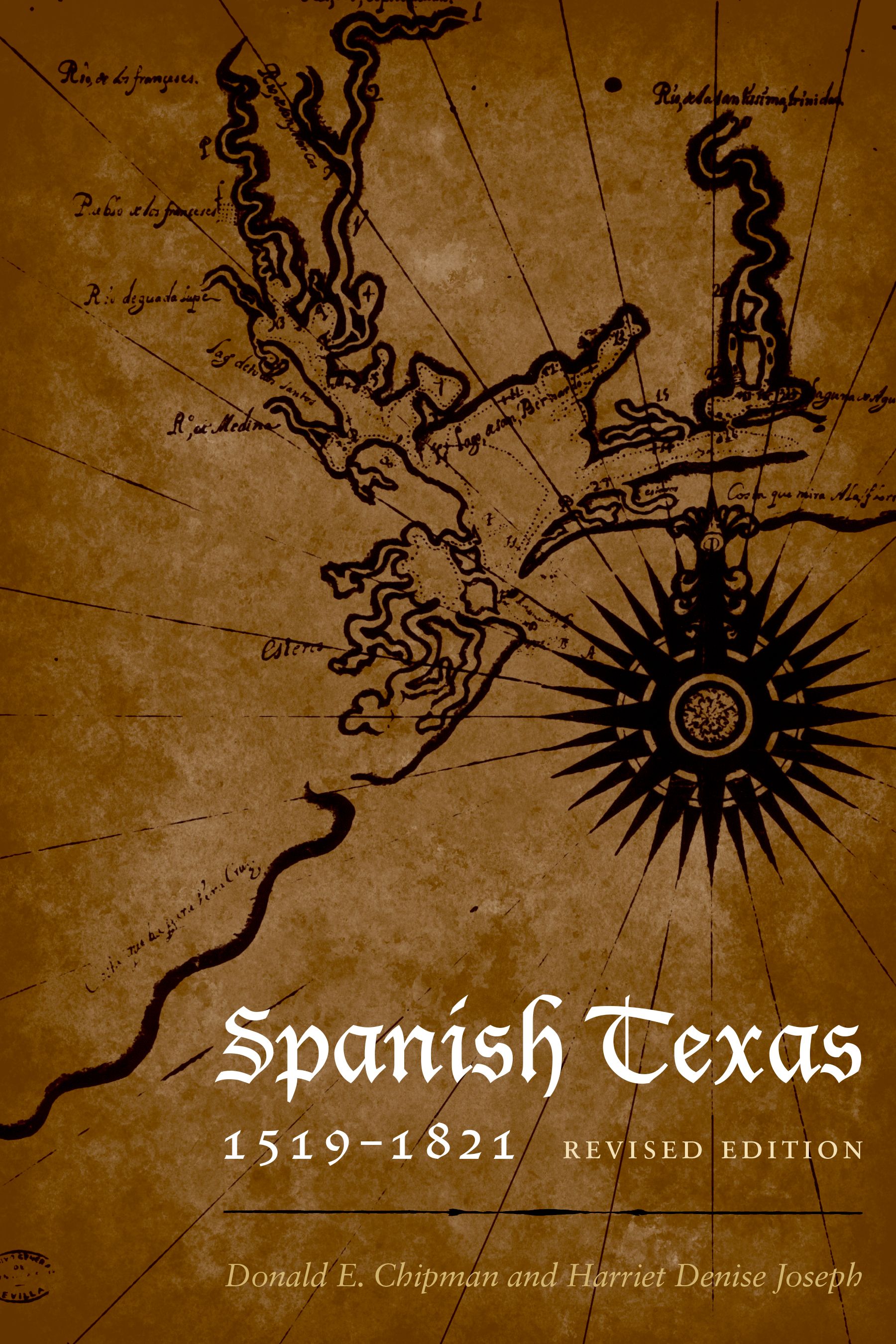
Spanish Texas, 1519–1821
Winner, Kate Broocks Bates Award, Texas State
Historical Association Presidio La Bahía Award, Sons of
the Republic of Texas A Choice Magazine Outstanding Academic
Book
Modern Texas, like Mexico, traces its beginning to
sixteenth-century encounters between Europeans and Indians who
contested control over a vast land. Unlike Mexico, however,
Texas eventually received the stamp of Anglo-American culture,
so that Spanish contributions to present-day Texas tend to be
obscured or even unknown. The first edition of
Spanish Texas, 1519-1821 (1992) sought to emphasize
the significance of the Spanish period in Texas history.
Beginning with information on the land and its inhabitants
before the arrival of Europeans, the original volume covered
major people and events from early exploration to the end of
the colonial era.
This new edition of
Spanish Texas has been extensively revised and
expanded to include a wealth of discoveries about Texas history
since 1990. The opening chapter on Texas Indians reveals their
high degree of independence from European influence and
extended control over their own lives. Other chapters
incorporate new information on La Salle's Garcitas Creek colony
and French influences in Texas, the destruction of the San
Sabá mission and the Spanish punitive expedition to the
Red River in the late 1750s, and eighteenth-century Bourbon
reforms in the Americas. Drawing on their own and others'
research, the authors also provide more inclusive coverage of
the role of women of various ethnicities in Spanish Texas and
of the legal rights of women on the Texas frontier,
demonstrating that whether European or Indian, elite or
commoner, slave owner or slave, women enjoyed legal protections
not heretofore fully appreciated.
eBook

Captives and Cousins
This sweeping, richly evocative study examines the origins and
legacies of a flourishing captive exchange economy within and among
native American and Euramerican communities throughout the
Southwest Borderlands from the Spanish colonial era to the end of
the nineteenth century.
Indigenous and colonial traditions of capture, servitude, and
kinship met and meshed in the borderlands, forming a \"slave system\"
in which victims symbolized social wealth, performed services for
their masters, and produced material goods under the threat of
violence. Slave and livestock raiding and trading among Apaches,
Comanches, Kiowas, Navajos, Utes, and Spaniards provided labor
resources, redistributed wealth, and fostered kin connections that
integrated disparate and antagonistic groups even as these
practices renewed cycles of violence and warfare.
Always attentive to the corrosive effects of the \"slave trade\" on
Indian and colonial societies, the book also explores slavery's
centrality in intercultural trade, alliances, and \"communities of
interest\" among groups often antagonistic to Spanish, Mexican, and
American modernizing strategies. The extension of the moral and
military campaigns of the American Civil War to the Southwest in a
regional \"war against slavery\" brought differing forms of social
stability but cost local communities much of their economic
vitality and cultural flexibility.
eBook
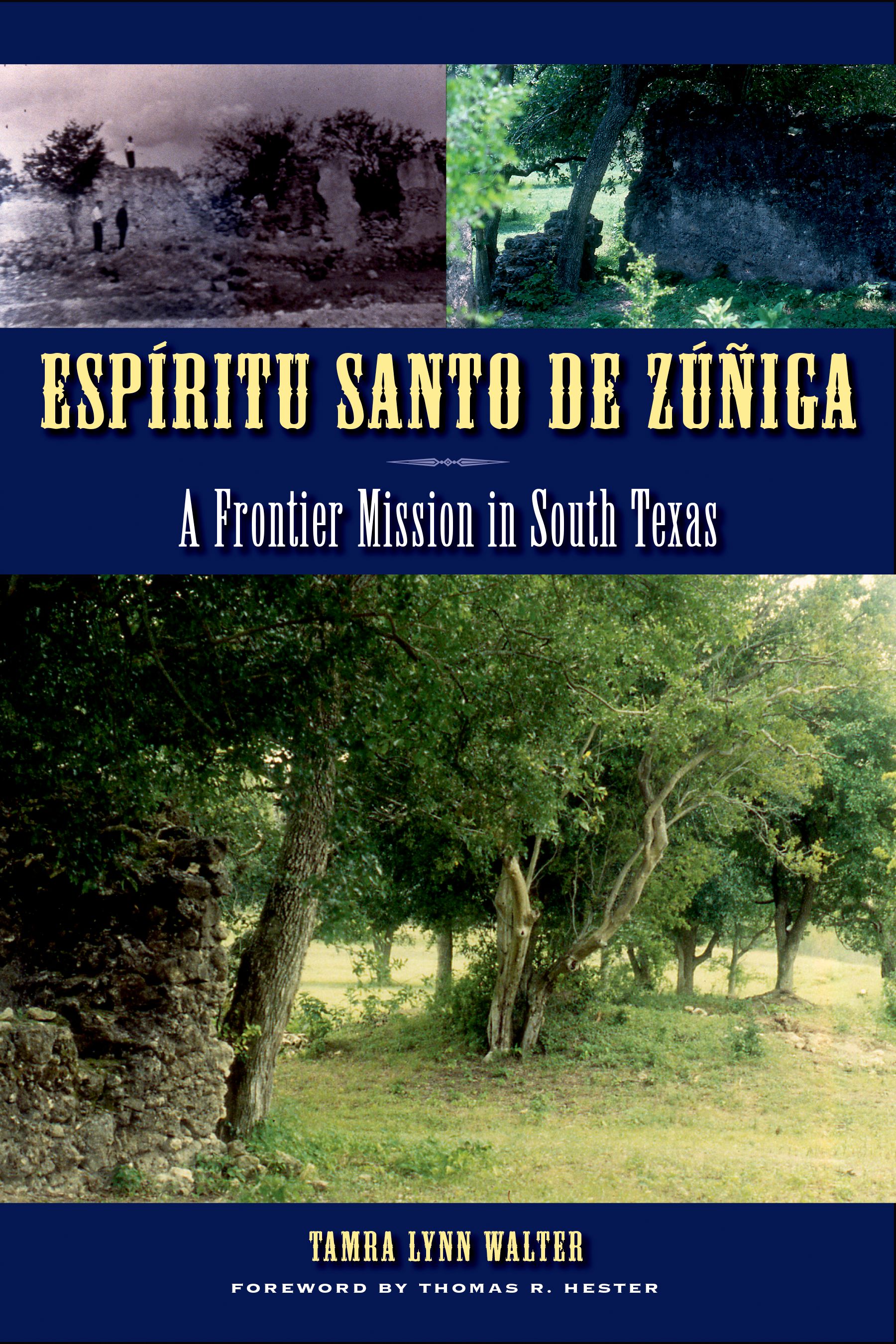
Espíritu Santo de Zúñiga
San Antonio Conservation Society Citation, 2009 In the early part of the eighteenth century, the Spanish colonial mission Espíritu Santo de Zúñiga was relocated from far south Texas to a site along the Guadalupe River in Mission Valley, Victoria County. This mission, along with a handful of others in south Texas, was established by the Spaniards in an effort to Christianize and civilize the local Native American tribes in the hopes that they would become loyal Spanish citizens who would protect this new frontier from foreign incursions. With written historical records scarce for Espíritu Santo, Tamra Walter relies heavily on material culture recovered at this site through a series of recent archaeological investigations to present a compelling portrait of the Franciscan mission system. By examining findings from the entire mission site, including the compound, irrigation system, quarry, and kiln, she focuses on questions that are rarely, if ever, answered through historical records alone: What was daily life at the mission like? What effect did the mission routine have on the traditional lifeways of the mission Indians? How were both the Indians and the colonizers changed by their frontier experiences, and what does this say about the missionization process? Walter goes beyond simple descriptions of artifacts and mission architecture to address the role these elements played in the lives of the mission residents, demonstrating how archaeology is able to address issues that are not typically addressed by historians. In doing so, she presents an accurate portrait of life in South Texas at this time. This study of Mission Espíritu Santo will serve as a model for research at similar early colonial sites in Texas and elsewhere.
eBook