
Catalogue Search | MBRL


Are you sure you want to remove the book from the shelf?

{{itemTitle}}
219
result(s) for
"Spaniels."
Sort by:

Teddy in trouble
Katie can't believe it when her parents agree that she can have a puppy. And when she sees the lively puppy named Teddy, she's sure her family will fall in love with him, just as she has.
Book

International Veterinary Epilepsy Task Force’s current understanding of idiopathic epilepsy of genetic or suspected genetic origin in purebred dogs
Canine idiopathic epilepsy is a common neurological disease affecting both purebred and crossbred dogs. Various breed-specific cohort, epidemiological and genetic studies have been conducted to date, which all improved our knowledge and general understanding of canine idiopathic epilepsy, and in particular our knowledge of those breeds studied. However, these studies also frequently revealed differences between the investigated breeds with respect to clinical features, inheritance and prevalence rates. Awareness and observation of breed-specific differences is important for successful management of the dog with epilepsy in everyday clinical practice and furthermore may promote canine epilepsy research. The following manuscript reviews the evidence available for breeds which have been identified as being predisposed to idiopathic epilepsy with a proven or suspected genetic background, and highlights different breed specific clinical features (e.g. age at onset, sex, seizure type), treatment response, prevalence rates and proposed inheritance reported in the literature. In addition, certain breed-specific diseases that may act as potential differentials for idiopathic epilepsy are highlighted.
Journal Article

Pupunzel
Pupunzel is locked in a tower by a witch but the cocker spaniel puppy and her family are determined to set things right in this twist on Rapunzel.
Book

IEHBP1L1/I Frameshift Deletion in English Springer Spaniel Dogs with Dyserythropoietic Anemia and Myopathy Syndrome or Neonatal Losses
Hereditary myopathies are well documented in dogs, whereas hereditary dyserythropoietic anemias are rarely seen. The aim of this study was to further characterize the clinical and clinicopathological features of and to identify the causative genetic variant for a dyserythropoietic anemia and myopathy syndrome (DAMS) in English springer spaniel dogs (ESSPs). Twenty-six ESSPs, including five dogs with DAMS and two puppies that died perinatally, were studied. Progressive weakness, muscle atrophy—particularly of the temporal and pelvic muscles—trismus, dysphagia, and regurgitation due to megaesophagus were observed at all ages. Affected dogs had a non-regenerative, microcytic hypochromic anemia with metarubricytosis, target cells, and acanthocytes. Marked erythroid hyperplasia and dyserythropoiesis with non-orderly maturation of erythrocytes and inappropriate microcytic metarubricytosis were present. Muscle biopsies showed centralized nuclei, central pallor, lipocyte infiltrates, and fibrosis, which was consistent with centronuclear myopathy. The genome sequencing of two affected dogs was compared to 782 genomes of different canine breeds. A homozygous frameshift single-base deletion in EHBP1L1 was identified; this gene was not previously associated with DAMS. Pedigree analysis confirmed that the affected ESSPs were related. Variant genotyping showed appropriate complete segregation in the family, which was consistent with an autosomal recessive mode of inheritance. This study expands the known genotype–phenotype correlation of EHBP1L1 and the list of potential causative genes in dyserythropoietic anemias and myopathies in humans. EHBP1L1 deficiency was previously reported as perinatally lethal in humans and knockout mice. Our findings enable the genetic testing of ESSP dogs for early diagnosis and disease prevention through targeted breeding strategies.
Journal Article

The rescued puppy
Twins Becky and Alex can't wait to go on vacation to the ocean - especially as they're taking their loveable puppy, Cooper, with them. Cooper loves running along the beach, playing in the waves and digging in the sand. All these new things are even more fun than chasing squirrels! And Becky and Alex are looking forward to taking him out on their own for the first time ever. But their walk along the cliffs turns out to be even more of an adventure than anyone could have imagined.
BOOK

Identification of a Novel Mutation in the SERPINE1 Gene Causing Clinical Hyperfibrinolysis in English Springer Spaniel Dogs
Background A 7‐month‐old female spayed English Springer Spaniel (ESS) was evaluated for spontaneous hemoperitoneum. Hyperfibrinolysis was identified on thromboelastography. Hypothesis/Objectives To identify a genetic mutation causing congenital hyperfibrinolysis in the proband and evaluate the prevalence of the mutation in the ESS breed. Animals Client‐owned ESS with hemorrhage and a non‐affected littermate. Samples of DNA from 3 ESS, 1 Welsh Springer Spaniel (WSS) with unexplained hemorrhage, and 199 ESS with no history of hemorrhage. Methods Whole genome sequencing (WGS) of the proband with variant filtering against an in‐house WGS database of 671 presumably unaffected dogs identified a deleterious variant of SERPINE1 unique to the proband, which encodes for plasminogen activator inhibitor 1 (PAI‐1). SERPINE1 was genotyped in the remaining animal population by Sanger sequencing or a Taqman assay. Liquid chromatography tandem mass spectrometry (LC–MS/MS) was performed on platelet pellets from the proband, a littermate, and three unrelated healthy ESS. Results Whole genome sequencing of the proband identified a unique homozygous insertion at chr6:8640592 in exon 1 of SERPINE1, which is predicted to cause a premature stop codon. The unaffected littermate was heterozygous for the mutation. Two unrelated ESS and 1 WSS with post‐operative hemorrhage were homozygous for the mutation. Absence of PAI‐1 in the proband's platelets was documented using LC–MS/MS. Conclusions and Clinical Importance This novel mutation in SERPINE1 is associated with the absence of the PAI‐1 protein in platelets and might cause hemorrhage because of hyperfibrinolysis in ESS and related breeds.
Journal Article

Dash
\"An English springer spaniel's tale of the Mayflower voyage and the first Thanksgiving at Plymouth Colony\"-- Provided by publisher.
BOOK
Mechanical quantitative sensory testing in cavalier King Charles spaniels with and without syringomyelia
Background
Syringomyelia (SM) is a debilitating condition in the cavalier King Charles spaniel (CKCS) that results in neuropathic pain and diminished quality of life. Von Frey aesthesiometry (VFA) is a method of mechanical quantitative sensory testing that provides an objective sensory threshold (ST) value and can be used to quantify neuropathic pain (NP) and monitor response to therapy. The utility of VFA has been previously established in client-owned dogs with acute spinal cord injury but the technique has not been evaluated in dogs with SM. The goal of this study was to evaluate ST, as determined by VFA, in dogs with and without SM, to assess the utility of VFA in quantifying NP in SM-affected dogs. We hypothesized the SM-affected CKCS would have lower ST values, consistent with hyperesthesia, when compared to control CKCS. Additionally, we hypothesized that ST values in SM-affected dogs would be inversely correlated with syrinx size on MRI and with owner-derived clinical sign scores.
Results
ST values for the thoracic and pelvic limbs differed significantly between the SM-affected and control CKCS (
p
= 0.027;
p
= 0.0396 respectively). Median ST value (range) for the thoracic limbs was 184.1 g (120.9–552) for control dogs, and 139.9 g (52.6–250.9) for SM-affected dogs. The median ST value (range) for the pelvic limbs was 164.9 g (100.8–260.3) in control dogs and 129.8 g (57.95–168.4) in SM-affected dogs. The ST values in SM-affected dogs did not correlate with syrinx height on MRI (
r
= 0.314;
p
= 0.137). Owner-reported clinical sign scores showed an inverse correlation with pelvic limb ST values, where dogs with lower ST values (hyperesthesia) were reported by their owners to display more frequent and severe clinical signs (
r
= − 0.657;
p
= 0.022).
Conclusion
ST values were lower in SM-affected CKCS compared to control dogs, suggesting the presence of neuropathic pain. Dogs with lower ST pelvic limb values were perceived by their owners to have more severe clinical signs classically associated with SM. Our results suggest that VFA might offer quantitative assessment of neuropathic pain in SM-affected dogs and could be useful for monitoring response to therapy in future clinical studies.
Journal Article
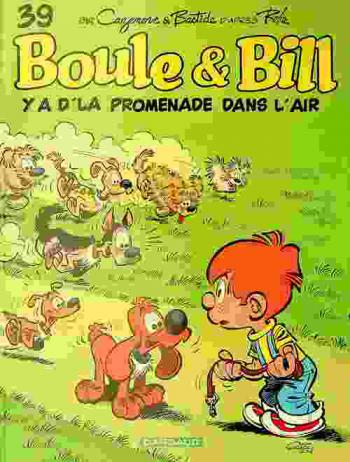
Y'a d'la promenade dans l'air
Les aventures de Boule, petit garçon joyeux et espiègle, et de Bill, son adorable cocker.
Book

Three-dimensional kinematics of the craniocervical junction of Cavalier King Charles Spaniels compared to Chihuahuas and Labrador retrievers
Our knowledge about the underlying pathomechanisms of craniocervical junction abnormalities (CCJA) in dogs mostly derives from measurements based on tomographic imaging. These images are static and the positioning of the dogs’ head does not reflect the physiological in vivo position of the craniocervical junction (CCJ). Aberrant motion patterns and ranges of motion (ROM) in sound individuals of CCJA predisposed breeds may be a pathogenetic trigger. To further extend our limited knowledge of physiological motion of the CCJ, this prospective, comparative study investigates the in vivo motion patterns and ROM of the CCJ in walk and trot in sound Cavalier King Charles Spaniels and Chihuahuas. The Labrador retriever is used as a reference breed without predisposition for CCJA. This is the first detailed description of CCJ movement of trotting dogs. Biplanar fluoroscopy images, recorded in walking and trotting dogs, were matched to a virtual reconstruction of the skull and cranial cervical spine utilising Scientific Rotoscoping. Kinematic data reveal the same motion patterns among all breeds and gaits with individual temporal and spatial differences in each dog. A stride cycle-dependent lateral rotation of the cranial cervical spine and axial rotation of the atlantoaxial joint in trot in dogs is described for the first time. The ROM of the atlantoaxial and atlantooccipital joints in walk and trot were not statistically significantly greater in the CCJA-predisposed breeds CKCS and Chihuahua. ROM values of all translational and rotational degrees of freedom were larger in walk than trot, although this is only statistically significant for the atlantoaxial joint. Until proven otherwise, a more species-specific than breed-specific general motion pattern of the CCJ in walking and trotting, clinically sound dogs must be assumed. Species-specific anatomic properties of the CCJ seem to supersede breed-specific anatomical differences in clinically sound dogs.
Journal Article