
Catalogue Search | MBRL


Are you sure you want to remove the book from the shelf?

{{itemTitle}}
101
result(s) for
"Spanish drama Classical period, 1500-1700."
Sort by:


Conscience on Stage
This study outlines and reiterates the relationship of theatre to casuistry, the Jesuit contributions to Spanish literary theory and practice, and the importance of casuistry for the study of early modern subjectivity.
eBook

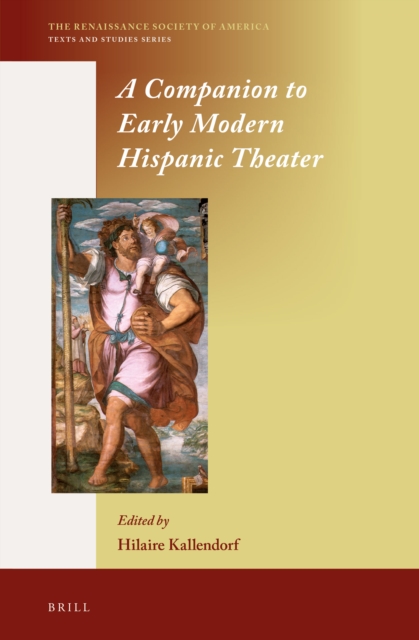
A Companion to Early Modern Hispanic Theater
A panoramic, state-of-the-art handbook in English destined to chart a course for future work in the field of early modern Hispanic theater studies. Contains 18 crucial essays distributed among 4 wide-ranging sections on Origins, Themes, Places, and Intersections.
eBook

Golden age drama in contemporary Spain
This jargon-free book on Spanish classical theatre is the first monograph to examine this rich dramatic tradition in terms of modern-day performance.
eBook

Majesty and Humanity
In the Golden Age of Spanish Theater, an age of highly dramatized coronations and regal spectacles, Alban Forcione has discovered a surprising but persistent preoccupation with the disrobing of the king. In both the celebrations of majesty and the enthrallment with its unveiling, he finds the chilling recesses in which a culture struggled to reconcile the public and the private, society and the individual, the monarch and the man.
In brilliantly reinterpreting two of Lope de Vega's plays, long regarded as conventional royalist propaganda, Forcione places his texts in the context of political and institutional history, philosophy, theology, and art history. In so doing he shows how Spanish theater anticipated the decisive changes in human consciousness that characterized the ascendance of the absolutist state and its threat to the cultivation of individuality, authenticity, and humanity.
eBook

Performance reconstruction and Spanish golden age drama : reviving and revising the comedia
\"Taking into account the ephemeral nature of performance, this book develops innovative approaches to the reconstruction of historical staging practices through the lens of Spanish classical theater. Vidler emphasizes the need to take into account not only structures of culture, but also the human capacity to manipulate those structures for both individual and group expression. Through a detailed analysis of approaches to space, the body, the stage object, and the spectator in the comedia, it is possible to discern analyzable artifacts that permit us to reconstruct significant aspects of early modern stagings. Furthermore, because it actively engages and intertwines both objective and subjective modes of interpretation, Vidler argues that performance theory itself will be the locus of the next breakthroughs in interpretive studies\"-- Provided by publisher.
Book
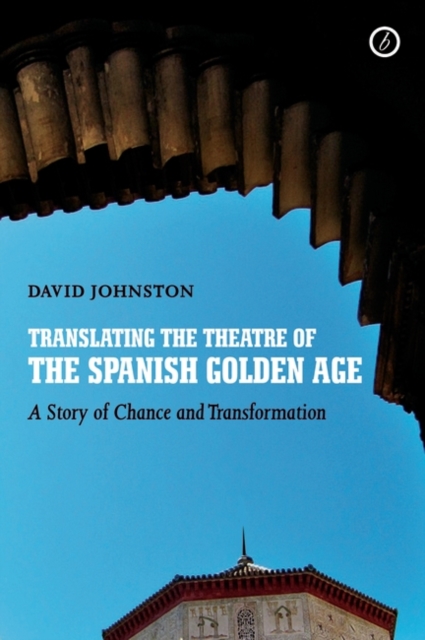
Translating the Theatre of the Spanish Golden Age
What this book most definitely is not is yet another academic discussion of Lope de Vega, Calderon and their contemporaries, divorced from any understanding of what makes these plays work so brilliantly on our stages. Instead it is a leading contemporary translator's account of why these plays deserve to assume their rightful place in our performance repertoire, firmly set within the demands and opportunities of how our theatre works. In a way it is the story of a love affair between a translator and a dramatic tradition whose riches are only now becoming apparent to theatre audiences; but it is also an exploration of the ways in which translation itself takes plays that are distant from us in time and space and makes them real and visible in terms of our own experience and our contemporary sensibilities.
eBook