
Catalogue Search | MBRL


Are you sure you want to remove the book from the shelf?

{{itemTitle}}
507
result(s) for
"Spatial behavior -- China"
Sort by:

The order of places : translocal practices of the Huizhou merchants in late imperial China
\"There were over a thousand counties and prefectures in late imperial China; each loomed large in the hearts and minds of the local natives, and had a history of its own. The Order of Places tells a story of how these places were ordered by the long-lived imperial state, and then re-ordered during the sixteenth through eighteenth centuries as geographical mobility increased. At the center of the story are the mobile merchants from south China's Huizhou Prefecture, then the most prominent merchant group in China. The story presents the dynamics of geography in the world's most enduring empire on the eve of its entry into modern history, as the author explores the changing relationships between people and the place they called 'home,' between local place and the life-world the Chinese called 'all-under-Heaven,' and between local places\"--Provided by publisher.
Book
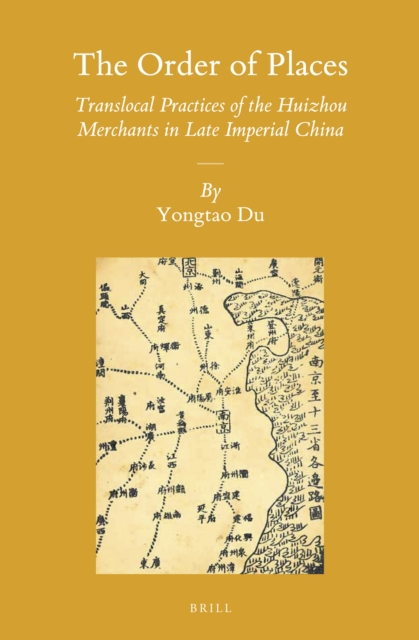
The Order of Places
In The Order of Places Yongtao Du tells a story of how the increase in geographical mobility in sixteenth through eighteenth century China brought about new understandings of spatial order in the world's most enduring empire.
eBook

Making Place
To make a place is to create a location where its creators can feel they belong. Processes of place-making are still very much ongoing today. Geographers, sociologists, political scientists and philosophers of advanced capitalism have said that place is a localisation of the global. However, the creation of a place is not legible from such grand perspectives. It is also much more creative than can be predicted by translating large-scale processes into local cultures.
Anthropologists have been sensitive to the intimate, tragic and lyrical senses of local place. But their theorising has been too much bound up with cosmology and insufficiently with the intermediate scales of state and local state.
In this book, Stephan Feuchtwang and his contributors offer a set of historical, anthropological and scale-mediated studies from China - a country that includes a subcontinental variety of cultures and landscapes. In the twentieth century it experienced collapse in civil war and was then reasserted as a particularly strong state. Now it is managing the fastest growing capitalist economy in the world. These intriguing Chinese studies contribute to the anthropology of place and space, providing an historical perspective on processes of change and of accommodation to disruption.
The stories they tell are fascinating in their own right, but in addition, the result is a critical reformulation of previous theories of place that geographers, philosophers, historians, and anthropologists will find of great interest.
eBook

A spatio-temporal analysis of urban crime in Beijing
In recent years, Chinese crime information has become more transparent and open than ever, thus providing an excellent opportunity for urban crime study by academics. To obtain a better understanding of the spatial pattern of urban crime, the city of Beijing is chosen as a study area and GIS software is employed to collect spatial data. The authors try to establish the quantitative representation of geographical characteristics of crime associated with urban space in order to create a geographical model of urban crime and space. The authors find that the overall spatial distribution of urban crime in Beijing displays a picture of polycentric structure and distance decay, and that the spatial distribution of urban crime has a reference to traffic centres, concentration of urban commerce and population migration. The numbers of suspects and locations where different types of crime happen have inter-annual variation, while both the total number of crime sites and their criminal density within each district are relatively stable. The authors point out that the spatio-temporal characteristics of sites act on both the participants in property crimes and the criminal factors, which will decide whether or not an offender can commit a crime successfully. The hot spots and periods of time of urban crime in Beijing have a close relation to the fact that success in committing a property crime is based on certain conditions of sites and times which appear in Beijing's environment. In this sense, socio-spatial dialectic provides a better understanding of the dynamics of China's crime space. Finally, the spatial anti-crime strategies for urban crime and the insufficiency of research are discussed.
Journal Article

Predicting consumers’ intention to adopt hybrid electric vehicles: using an extended version of the theory of planned behavior model
China is a major energy-consuming country and is under great pressure to improve its energy efficiency as well as reduce its carbon emissions. Hybrid electric vehicles (HEVs), as an energy-efficient transport innovation, have the potential to reduce gasoline consumption, carbon emissions and alleviate environmental problems. Diffusion of HEVs’ adoption is a significant initiative. A sample of 433 respondents has been collected in China to predict the customers’ intention to adopt HEVs, using an extended model of the theory of planned behavior (TPB). The empirical results show that the attitude toward HEVs, subjective norm, perceived behavioral control (the three primary elements of the TPB model) and personal moral norm partially mediate the effect of consumers’ environmental concern on their intention to adopt HEVs. Consumers’ environmental concern affects the adoption intention indirectly and is significantly positively related to the attitude toward HEVs, subjective norm, perceived behavioral control and personal moral norm, which in turn influence the adoption intention positively. The results confirm the appropriateness of the TPB model and verify that the extended TPB model has good explanatory power in predicting consumers’ intention to adopt HEVs. Based on the empirical results, we discuss the implications for promoting the adoption of HEVs and provide suggestions for future study.
Journal Article

Show Me the Money: Interjurisdiction Political Competition and Fiscal Extraction in China
We argue that interjurisdiction competition in authoritarian regimes engenders a specific logic for taxation. Promotion-seeking local officials are incentivized to signal loyalty and competence to their principals through tangible fiscal revenues. The greater the number of officials accountable to the same principal, the more intense political competition is, resulting in higher taxation; however, too many officials accountable to the same principal leads to lower taxation due to shirking by uncompetitive officials and the fear of political instability. Using a panel dataset of all Chinese county-level jurisdictions from 1999–2006, we find strong evidence for an inverse U-shaped relationship between the number of county-level jurisdictions within a prefecture—our proxy for the intensity of political competition—and fiscal revenues in most provinces but not so in politically unstable ethnic minority regions. The results are robust to various alternative specifications, including models that account for heterogeneous county characteristics and spatial interdependence.
Journal Article

Universal model of individual and population mobility on diverse spatial scales
Studies of human mobility in the past decade revealed a number of general scaling laws. However, to reproduce the scaling behaviors quantitatively at both the individual and population levels simultaneously remains to be an outstanding problem. Moreover, recent evidence suggests that spatial scales have a significant effect on human mobility, raising the need for formulating a universal model suited for human mobility at different levels and spatial scales. Here we develop a general model by combining memory effect and population-induced competition to enable accurate prediction of human mobility based on population distribution only. A variety of individual and collective mobility patterns such as scaling behaviors and trajectory motifs are accurately predicted for different countries and cities of diverse spatial scales. Our model establishes a universal underlying mechanism capable of explaining a variety of human mobility behaviors, and has significant applications for understanding many dynamical processes associated with human mobility.
Understanding and accurate prediction of human mobility is of increasing importance, but a universal framework is lacking. Here, the authors develop a unified model that accurately predicts both individual and population mobility and scaling behaviors on diverse spatial scales.
Journal Article

Influence of urban green open space on residents’ physical activity in China
Background
Urban green open space is a valuable resource for physical activities of urban inhabitants and has the potential to reduce chronic illness and improve health. Research on the relationships between green open space and physical activity is incomplete and limited in China. Thus, the study examines how the urban green open space contributes to physical activity.
Methods
A questionnaire was designed based on the social ecology theory to investigate the physical activity of 513 residents in urban green open space. We use the time and frequency of residents exercising in urban green space to measure physical activity, and use the factor analysis to synthesize a large number of original factors (i.e., infrastructure, safety, accessibility, landscape quality, and space environment) into relatively few composite indicators. Based on the collected data of the cross-sectional population, the Order Probit regression model was constructed to analyze how urban green open space affects the residents’ physical activity from the perspective of social ecology.
Results
① in community factors: accessibility is significantly positive correlation with residents’ physical activity, and there is no significant correlation between safety and physical activity; ②in natural factors: space environment and landscape quality are not significantly correlated with residents’ physical activity; ③ in built environmental factors: infrastructures, the area of green space, the size of open space, and entertainment facilities are significantly correlated to residents’ activity. Basketball courts, volleyball courts, swimming pools, and sports equipment will promote physical activity; ④ apart from the attributes of green open space, other factors are significantly correlated to physical activity in the green open space, e.g. having a companion.
Conclusions
Urban green open space plays an important role in promoting physical activity especially among the women and the old, and improving the attributes (such as accessibility, infrastructures, the area of green space, the size of open space and entertainment facilities) of the urban green open space and trying to set up group sports proper to play with companion (like “square dancing” and “Tai Chi”) can promote Chinese residents’ physical activity so as to improve public health. The results are significant to facilitate environment health.
Journal Article

Spatially Varying Effects of Street Greenery on Walking Time of Older Adults
Population aging has become a notable and enduring demographic phenomenon worldwide. Older adults’ walking behavior is determined by many factors, such as socioeconomic attributes and the built environment. Although a handful of recent studies have examined the influence of street greenery (a built environment variable readily estimated by big data) on older adults’ walking behavior, they have not focused on the spatial heterogeneity in the influence. To this end, this study extracts the socioeconomic and walking behavior data from the Travel Characteristic Survey 2011 of Hong Kong and estimates street greenery (the green view index) based on Google Street View imagery. It then develops global models (linear regression and Box–Cox transformed models) and local models (geographically weighted regression models) to scrutinize the average (global) and location-specific (local) relationships, respectively, between street greenery and older adults’ walking time. Notably, green view indices in three neighborhoods with different sizes are estimated for robustness checks. The results show that (1) street greenery has consistent and significant effects on walking time; (2) the influence of street greenery varies across space—specifically, it is greater in the suburban area; and (3) the performance of different green view indices is highly consistent.
Journal Article