
Catalogue Search | MBRL


Are you sure you want to remove the book from the shelf?

{{itemTitle}}
12,173
result(s) for
"Special Education Administration"
Sort by:


Parent-Implemented Enhanced Milieu Teaching With Preschool Children Who Have Intellectual Disabilities
Purpose: The purpose of this study was to compare the effects of enhanced milieu teaching (EMT) implemented by parents and therapists versus therapists only on the language skills of preschool children with intellectual disabilities (IDs), including children with Down syndrome and children with autism spectrum disorders. Method: Seventy-seven children were randomly assigned to 2 treatments (parent + therapist EMT or therapist-only EMT) and received 36 intervention sessions. Children were assessed before, immediately after, 6 months after, and 12 months after intervention. Separate linear regressions were conducted for each standardized and observational measure at each time point. Results: Parents in the parent + therapist group demonstrated greater use of EMT strategies at home than untrained parents in the therapist-only group, and these effects maintained over time. Effect sizes for observational measures ranged from d = 0.10 to d = 1.32 favoring the parent + therapist group, with the largest effect sizes found 12 months after intervention. Conclusion: Findings from this study indicate generally that there are benefits to training parents to implement naturalistic language intervention strategies with preschool children who have ID and significant language impairments.
Journal Article

Managing special and inclusive education
This book is a guide to special and inclusive education and provides a comprehensive overview of this complex field. Author Stephen Rayner examines context, policy, and practice, and shows how to successfully navigate the managerial challenges involved, while contributing to the way forward through leadership in a diverse field.
eBook

The data collection toolkit
\"This book provides quick and easy tips for data collection within the classroom. Behavioral Quik-Graphs provides quick and easy tips for data collection within the classroom. Special educators, administrators, and other paraprofessionals often view data collection as time-consuming and complex, but collecting data on behaviors, academic abilities, and Individualized Education Plans (IEPs) is a crucial procedure that shows the progress of individual students. A variety of reproducible forms and tools are available for immediate use in recording and analyzing classroom data. Data collection is a critical piece of an educator's job (not just in special education) and it can be very intimidating to a teacher. This accessible book will make data collection easy with realistic vignettes, diagrams and sample forms, and explanations written in clear language.\" -- Provided by publisher.
eBook
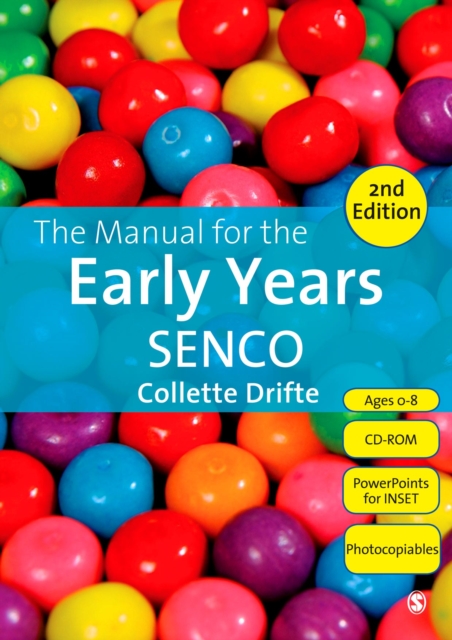
The manual for the early years SENCO
A must-have for new and busy SENCOs. This text provides plenty of help with planning and time-management, and contains everything a SENCO needs to know about their role and information on the current government policies.
eBook

Discipline in special education
Experts provide educators with legal guidelines for taking appropriate disciplinary action that can withstand legal challenges without violating the rights of students with disabilities under IDEA 2004.
eBook

Integration and the support service
The integration of children with special needs into mainstream schools demands a reorganisation of staff and support levels both in schools and in the advisory services. Integration and the Support Service, illustrated with examples from a detailed case study of one Local Education Authority, shows how support services can most effectively be matched to needs and how new strategies for integration can be developed.
eBook

Supported Education for Adults With Psychiatric Disabilities: Effectiveness of an Occupational Therapy Program
OBJECTIVE. This study assessed the effectiveness of a supported education program for adults with psychiatric disabilities. METHOD. Thirty-eight adults with psychiatric disabilities were randomly assigned to an experimental group (n = 21) that received supported education services or to a control group (n = 17) that received treatment as usual. RESULTS. We found a statistically significant difference between experimental and control group participant scores on the five instruments used to measure the program's effectiveness. Sixteen of the 21 experimental group participants (76%) completed the program. At 6-month follow-up, 10 (63%) had enrolled in an educational program, had obtained employment, or were applying to a specific program. Only 1 of the control group participants was enrolled in an educational program. CONCLUSION. The results support the effectiveness of the supported education program. A significant number of participants were able to improve their basic academic skills, enhance professional behaviors and social skills, and return to the school or work environment.
Journal Article

Faculty Needs, Doctoral Preparation, and the Future of Teacher Preparation Programs in the Education of Deaf and Hard of Hearing Students
THE PURPOSES of the study were to obtain and analyze data on the need for, and desired characteristics of, faculty in deaf education at American institutions of higher education (IHEs), and to assess the present and projected status of doctoral-level teacher preparation programs in deaf education at American IHEs. Program directors and coordinators provided information on current and projected faculty openings, the number of active doctoral students, faculty research interests, program strengths, and needs in the field. Results indicated a pending shortage due to faculty retirements and a paucity of doctoral-level graduates. Most faculty listed literacy and language as a primary research interest as well as a program strength. The ability to generate new knowledge through research was found to be less desirable for future faculty than teaching ability. Suggestions for improving doctoral preparation and moving the field to evidence-based practices are provided.
Journal Article

Implementation of Response to Intervention (RtI) Model in Spain: an example of a collaboration between Canarian universities and the department of education of the Canary Islands
The purpose of this study was to examine the effectiveness of second tier intervention at-risk readers within the context of a Response to Intervention approach. The study was conducted in the Canary Islands (Spain), directed by research team ¨Dificultades de Aprendizaje, Psicolingüística y Nuevas Tecnologías¨ (DEA&NT) from University of La Laguna, and supported by the Government of the Canary Islands. A sample of 1.123 Spanish children from fourteen schools districts were given the Spanish adaptation of The Hong Kong Specific Learning Difficulties Behavior Checklist and children who scored at or above the 75th percentile on the test were classified as \"at risk\" for early reading difficulties. Half of the students were randomly assigned to a project-based intervention condition where they received small group supplementary intervention for 30 minutes daily using the Prevención de las Dificultades Específicas de Aprendizaje (PREDEA) curriculum from mid to late December and continued until mid June. The other half received whatever remedial services were available at their schools. Results indicated that children who received the PREDEA curriculum had higher scores on the Early Grade Reading Assessment Test (EGRA) on initial sound identification, listening comprehension, letter sound knowledge and oral reading fluency compared to the control group.
Journal Article