
Catalogue Search | MBRL


Are you sure you want to remove the book from the shelf?

{{itemTitle}}
25
result(s) for
"Special operations (Military science) Pakistan"
Sort by:
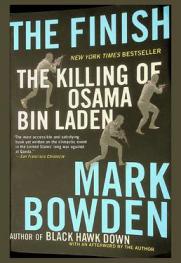
The finish : the killing of Osama Bin Laden
This work is a dramatic account of the hunt for and defeat of Osama bin Laden draws on unprecedented access to primary sources to trace how key decisions were made, revealing events from the perspectives of an adept President Obama and an increasingly despondent bin Laden. After masterminding the attacks of September 11, 2001, Osama bin Laden managed to vanish. Over the next ten years, as the author shows, America found that its war with al Qaeda, a scattered group of individuals who were almost impossible to track, demanded an innovative approach. Step by step, the author describes the development of a new tactical strategy to fight this war, the fusion of intel from various agencies and on the ground special ops. After thousands of special forces missions in Iraq and Afghanistan, the right weapon to go after bin Laden had finally evolved. By Spring 2011, intelligence pointed to a compound in Abbottabad; it was estimated that there was a 50/50 chance that Osama was there. The author shows how three strategies were mooted: a drone strike, a precision bombing, or an assault by Navy SEALs. In the end, the President had to make the final decision. It was time for the finish.
Book

U.S. special operations personnel raid compound in Pakistan, kill Osama bin Laden
In early May 2010, a team of U.S. Navy SEALs and other U.S. special operations personnel staged a nighttime raid on a residential compound in Abbottabad, Pakistan, where they located and killed Osama bin Laden. In the initial hours following the attack, officials gave varying accounts of details of the event and of the circumstances of bin Laden's death. Initial reports that he was armed and using a woman as a shield when he was shot were subsequently determined not to be correct. The shifting narratives led the UN High Commissioner for Human Rights to call for \"a full disclosure of the accurate facts.\" The UN Special Rapporteurs on extrajudicial, summary, or arbitrary executions and human rights and counterterrorism followed with their own call for \"the United States of America [to] disclose the supporting facts to allow an assessment in terms of international human rights law standards. For instance it will be particularly important to know if the planning of the mission allowed an effort to capture Bin Laden.\"
Journal Article


Foxtrot in Kandahar : a memoir of a CIA Officer in Afghanistan at the inception of America's longest war
\"Veteran CIA officer Duane Evans is dispatched to Pakistan to \"get something going in the South,\" still under the Taliban's sway and al-Qa'ida. With no \"Southern Alliance\" for the U.S. to support, a new strategy is called for. This is the true story of Evans's unexpected journey from the pristine halls of Langley to the badlands of southern Afghanistan. Within hours after he watched the horrors of 9/11 unfold during a chance visit to FBI Headquarters, Evans begins a personal and relentless quest to become part of the U.S. response against al-Qa'ida. This memoir tracks his efforts to join one of CIA's elite teams bound for Afghanistan, a journey that eventually takes him to the front lines in Pakistan, first as part of the advanced element of CIA's Echo team supporting Hamid Karzai, and finally as leader of the under-resourced and often overlooked Foxtrot team. Relying on rusty military skills from Evans's days as a Green Beret and brandishing a traded-for rifle, he moves toward Kandahar, one of only a handful of Americans pushing forward across the desert in the company of Pashtun warriors into some of the most dangerous, yet mesmerizingly beautiful, landscape on earth. The ultimate triumph of the CIA and Special Forces teams, when absolutely everything was on the line, is tempered by the US tragedy that catalyzed what is now America's longest war. Evans's very personal adventure that unfolds within the pages of Foxtrot in Kandahar: A Memoir of a CIA Officer in Afghanistan at the Inception of America's Longest War, which concludes with an analysis of opportunities lost in the years since his time in Afghanistan, should be required reading for everyone interested in modern warfare.\"--Provided by publisher.
BOOK