
Catalogue Search | MBRL


Are you sure you want to remove the book from the shelf?

{{itemTitle}}
16,939
result(s) for
"Speech act"
Sort by:


Lying, speech acts, and commitment
Not every speech act can be a lie. A good definition of lying should be able to draw the right distinctions between speech acts (like promises, assertions, and oaths) that can be lies and speech acts (like commands, suggestions, or assumptions) that under no circumstances are lies. This paper shows that no extant account of lying is able to draw the required distinctions. It argues that a definition of lying based on the notion of ‘assertoric commitment’ can succeed where other accounts have failed. Assertoric commitment is analysed in terms of two normative components: ‘accountability’ and ‘discursive responsibility’. The resulting definition of lying draws all the desired distinctions, providing an intensionally adequate analysis of the concept of lying.
Journal Article
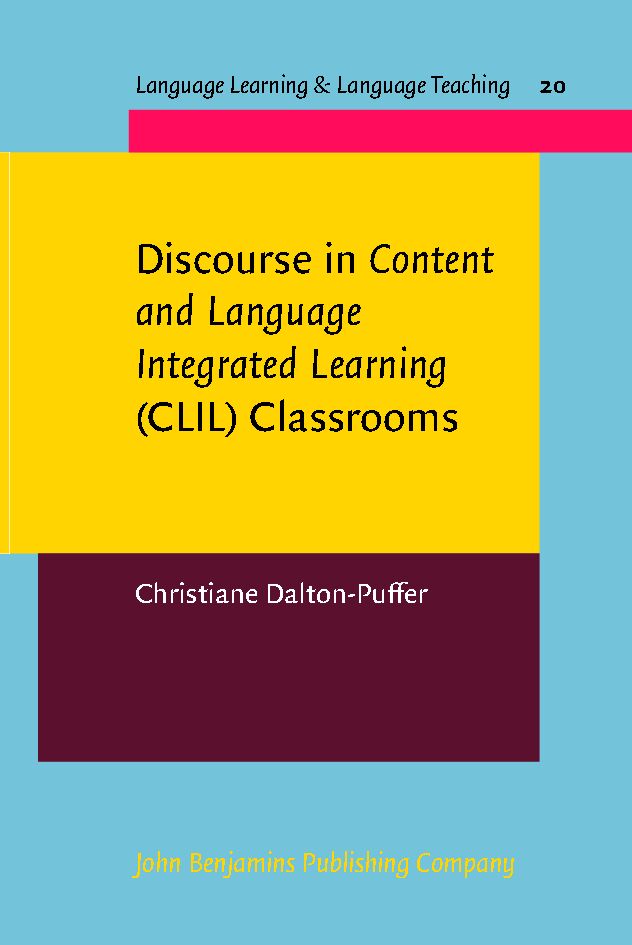
Discourse in Content and Language Integrated Learning (CLIL) Classrooms
The label CLIL stands for classrooms where a foreign language (English) is used as a medium of instruction in content subjects. This book provides a first in-depth analysis of the kind of communicative abilities which are embodied in such CLIL classrooms. It examines teacher and student talk at secondary school level from different discourse-analytic angles, taking into account the interpersonal pragmatics of classroom discourse and how school subjects are talked into being during lessons. The analysis shows how CLIL classroom interaction is strongly shaped by its institutional context, which in turn conditions the ways in which students experience, use and learn the target language. The research presented here suggests that CLIL programmes require more explicit language learning goals in order to fully exploit their potential for furthering the learners' appropriation of a foreign language as a medium of learning.
eBook

Experiencers at the syntax-pragmatics interface. The case of the jo ‘I’ – construction in Catalan
This paper aims to support the thesis that Speech Act related operators have landing sites in syntax, specifically at the syntax-pragmatics interface. In order to attain this goal, it presents the first formal analysis of a construction, dubbed the jo ‘I’ – construction, that shows an overt first person strong pronoun sitting in sentence-initial position of declarative sentences both in pro-drop and partial pro-drop languages of the Romance family. Taking Catalan as a case in point, it is shown that, prosodically, this first person strong pronoun has a particular intonation (a rising pitch accent followed by a high boundary tone). Syntactically, it corresponds not to a subject but to a (kind of) hanging topic that requires a resumptive element in the clause, while semantically it introduces a reference to the speaker who at the time of uttering the sentence is performing a subjective declaration speech act.
Journal Article

An Analysis of Illocutionary Acts in the Disney+ Short Film Once Upon a Snowman
People not only produce sentences but also perform actions when using language. In the study of language, an action performed by saying something is known as a speech act. Speech acts are divided into three categories: locutionary acts, illocutionary acts, and perlocutionary acts. In this research, the main purpose is to find out each type and function within the category of illocutionary acts in a Disney+ short movie entitled Once Upon a Snowman. According to Searle’s theory on speech acts, an illocutionary act is classified into five types: representatives, directives, commissives, expressives, and declaratives. It was found that the short movie entitled Once Upon a Snowman consists of four types (representatives, directives, expressives, and commissives) out of the five types in the category of illocutionary acts. This research uses a qualitative descriptive method to accumulate all the data. The result shows that there are fifty-four utterances that consist of illocutionary acts in Once Upon a Snowman, with 24 utterances classified as representatives, 15 utterances as directives, 13 utterances as expressives, and 2 utterances as commissives.
Journal Article

INDIRECT PERFORMATIVE SPEECH ACTS IN NABILA MAHJOUB'S NOVEL \WIND PASSAGES\: A PRAGMATIC APPROACH
Indirect speech acts are statements in which the apparent meaning contrasts with the intended meaning, such as \"Can you pass me some water?\" which appears to be a question but is actually a polite request. These acts are part of the pragmatics theory, established by John Austin and expanded by John Searle, which emphasizes intentionality and context in speech perception. A sentence is understood not only by its words, but also by the purpose for which it was uttered. This concept helps us explain how language is used to achieve social purposes and how communication goes beyond the mere exchange of knowledge.
Journal Article

The Syntax of Speech Acts: Deictic Inversion as an Evidential Strategy in English
This paper presents empirical evidence to support the so-called syntactization of discourse, that is, the projection of relevant pragmatic features in the narrow syntax. In particular, it analyses deictic inversion in English, a construction which is used by the speaker to point at a proximal or distal location and bring the addressee’s attention to an entity related to that location (e.g., Here comes the bus). It offers a novel account of this construction, which takes it to be an evidential strategy in a language that does not have standard evidential markers; this evidential status explains its main differences with locative inversion, a construction with which it is pragmatically and structurally related. Deictic inversion therefore receives a natural explanation in a framework that maps syntax with the speech act and introduces in the derivation pragmatic information about the participants in the communicative exchange and about the source of the information for the proposition asserted.
Journal Article

Pragma-Multimodal Discourse Analysis of Environmental Slogans
One of the most effective ways to create awareness among people to care for the environment and keep it serene is framing slogans in images. This paper is a pragma-multimodal analysis of environmental slogans with images created on different social media platforms. It aims to discover the illocutionary act of each text and explore how each text cooperates with its image to create a comprehensive meaning. The dataset selected for this paper includes ten slogans with images. This paper was conducted qualitatively using a descriptive-analytical approach. Findings reveal that these slogans convey various illocutionary acts such as requesting, inviting, or asserting. Also, there is an inter-connectedness between the text and its image, which helps construct a successful meaning.
Journal Article

“I Hear the Cry, but I Do Not See the Tears”: Indirectness in Bribery Negotiations
There is a relationship between crime and language, particularly crimes such as bribery, which are perpetuated through the use of language. These language-based crimes are often articulated indirectly to afford the interlocutor’s denial should such a need arise. This paper aims to comprehend the role played by language in bribery negotiations by exploring the actual utterances used by interlocutors involved in bribery negotiations and the linguistic features portrayed in these utterances. Informed by interview data (obtained from motorists) interpreted through the pragmatic act and speech act theories, the study reveals several indirect utterances such as ‘I hear you cry but I do not see your tears’, ‘Put down,’ ‘Do a drink,’ ‘Ostrich feathers are the ones that can work in this situation,’ ‘make a strong tea…’ which are characterised by declarative and imperative statements, semantic shift and informal expressions. Indirect speech acts play a significant role as a resource used to veil unethical practices from being revealed in the courts of law. Therefore, it is recommended that the expertise of language specialists should be used in the courts of law to interpret language-related crimes such as bribery.
Journal Article
Indirect Speech Acts in Javanese
Understanding speech ethics can help avoid conflicts. In Javanese society, a person can be considered impolite if they use direct speech in certain situations. Therefore, Javanese people tend to use indirect speech when interacting with others. This research discusses indirect speech acts and their relationship with language politeness in Javanese society. This research data consists of indirect speech acts used by the Javanese community in Magelang. To collect data, researchers employed listening techniques, as well as recording and documenting conversations. To ensure the reliability of the data, in-depth observations were conducted. This research uses a qualitative descriptive method. To analyze the problem, researchers applied theories of indirect speech acts, language politeness norms, and the indirectness scale. The results show that speech acts do not directly describe language politeness. Speakers tend to use indirect speech acts, particularly when addressing someone of higher social status or when there is social distance between the speaker and the addressee. Indirect speech acts include satire, commands, requests, and subtle refusals. Speakers use indirect speech to convey politeness, maintain harmony, or avoid conflict.
Journal Article