
Catalogue Search | MBRL


Are you sure you want to remove the book from the shelf?

{{itemTitle}}
102
result(s) for
"Spinor analysis."
Sort by:


Elementary Vector Calculus and its Applications with MATLAB Programming
Sir Isaac Newton, one of the greatest scientists and mathematicians of all time, introduced the notion of a vector to define the existence of gravitational forces, the motion of the planets around the sun, and the motion of the moon around the earth. Vector calculus is a fundamental scientific tool that allows us to investigate the origins and evolution of space and time, as well as the origins of gravity, electromagnetism, and nuclear forces. Vector calculus is an essential language of mathematical physics, and plays a vital role in differential geometry and studies related to partial differential equations widely used in physics, engineering, fluid flow, electromagnetic fields, and other disciplines. Vector calculus represents physical quantities in two or three-dimensional space, as well as the variations in these quantities. The machinery of differential geometry, of which vector calculus is a subset, is used to understand most of the analytic results in a more general form. Many topics in the physical sciences can be mathematically studied using vector calculus techniques. This book is designed under the assumption that the readers have no prior knowledge of vector calculus. It begins with an introduction to vectors and scalars, and also covers scalar and vector products, vector differentiation and integrals, Gauss’s theorem, Stokes’s theorem, and Green’s theorem. The MATLAB programming is given in the last chapter. This book includes many illustrations, solved examples, practice examples, and multiple-choice questions.
eBook

Tensor analysis with applications in mechanics
The tensorial nature of a quantity permits us to formulate transformation rules for its components under a change of basis. These rules are relatively simple and easily grasped by any engineering student familiar with matrix operators in linear algebra. More complex problems arise when one considers the tensor fields that describe continuum bodies. In this case general curvilinear coordinates become necessary. The principal basis of a curvilinear system is constructed as a set of vectors tangent to the coordinate lines. Another basis, called the dual basis, is also constructed in a special manner. The existence of these two bases is responsible for the mysterious covariant and contravariant terminology encountered in tensor discussions.
eBook
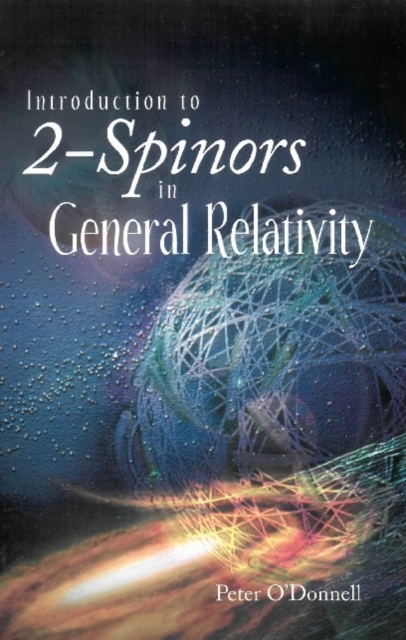
Introduction to 2-spinors in general relativity
This book deals with 2-spinors in general relativity, beginning by developing spinors in a geometrical way rather than using representation theory, which can be a little abstract. This gives the reader greater physical intuition into the way in which spinors behave. The book concentrates on the algebra and calculus of spinors connected with curved space-time. Many of the well-known tensor fields in general relativity are shown to have spinor counterparts. An analysis of the Lanczos spinor concludes the book, and some of the techniques so far encountered are applied to this. Exercises play an important role throughout and are given at the end of each chapter.
eBook
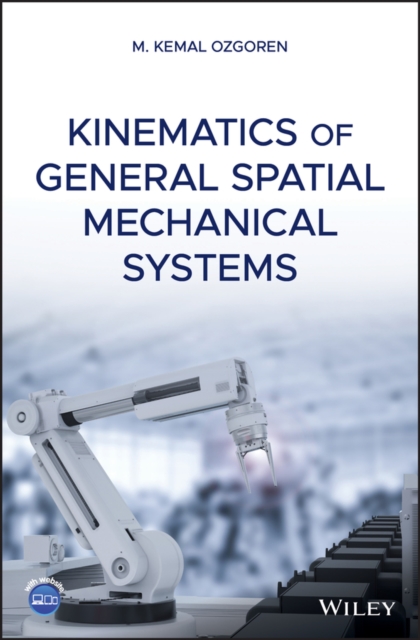
Kinematics of General Spatial Mechanical Systems
Guide to kinematic theory for the analysis of spatial mechanisms and manipulators Kinematics of General Spatial Mechanical Systems is an effective and proficient guide to the kinematic description and analysis of the spatial mechanical systems such as serial manipulators, parallel manipulators and spatial mechanisms.
eBook

Quaternions, Spinors, and Surfaces
Many problems in pure and applied mathematics boil down to determining the shape of a surface in space or constructing surfaces with prescribed geometric properties. These problems range from classical problems in geometry, elasticity, and capillarity to problems in computer vision, medical imaging, and graphics. There has been a sustained effort to understand these questions, but many problems remain open or only partially solved. This book describes how to use quaternions and spinors to study conformal immersions of Riemann surfaces into $\\Bbb R^3$. The first part develops the necessary quaternionic calculus on surfaces, its application to surface theory and the study of conformal immersions and spinor transforms. The integrability conditions for spinor transforms lead naturally to Dirac spinors and their application to conformal immersions. The second part presents a complete spinor calculus on a Riemann surface, the definition of a conformal Dirac operator, and a generalized Weierstrass representation valid for all surfaces. This theory is used to investigate first, to what extent a surface is determined by its tangent plane distribution, and second, to what extent curvature determines the shape. The book is geared toward graduate students and researchers interested in differential geometry and geometric analysis and their applications in computer vision and computer graphics.
eBook
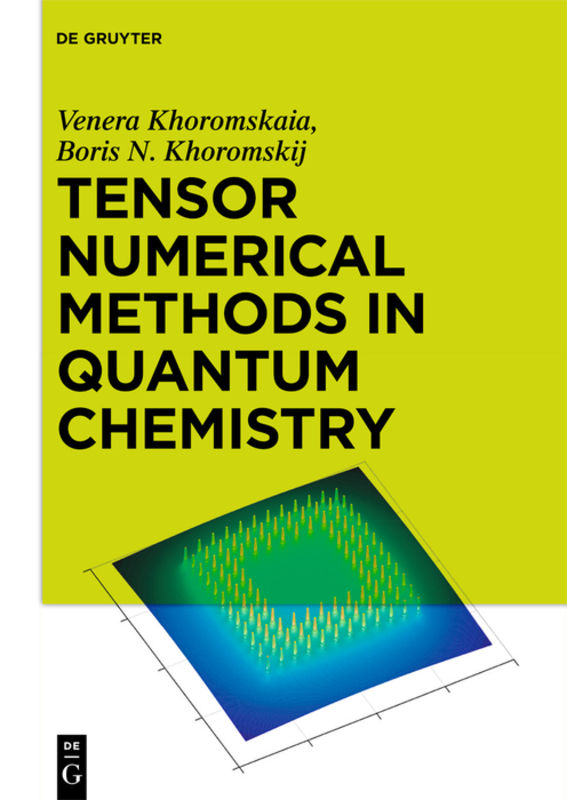
Tensor numerical methods in quantum chemistry
The conventional numerical methods when applied to multidimensional problems suffer from the so-called \"curse of dimensionality\", that cannot be eliminated by using parallel architectures and high performance computing.
eBook
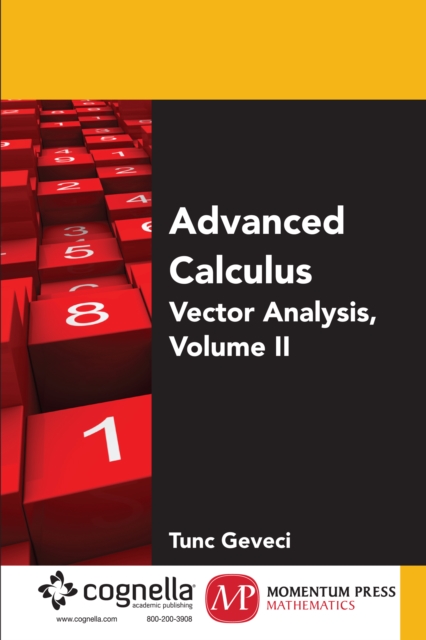
Advanced calculus
With a less is more approach to building upon the complete foundations of calculus, this sequence of 6 books introduces the reader to the topics commonly found in a 2nd or 3rd semester/or 2nd- or 3rd-year level of college-level calculus. They introduce the concept of vectors and multiple differentiation and integration, including functions of multiple variables. Examples of applications to physics and other disciplines are offered to illustrate the utility of these advanced calculus tools. This third volume discusses various versions of the chain rule for functions of several variables, showing that while not as useful as using the chain rule for functions of a single variable they can be interpreted in ways that lead to useful general results.
eBook
Advanced calculus
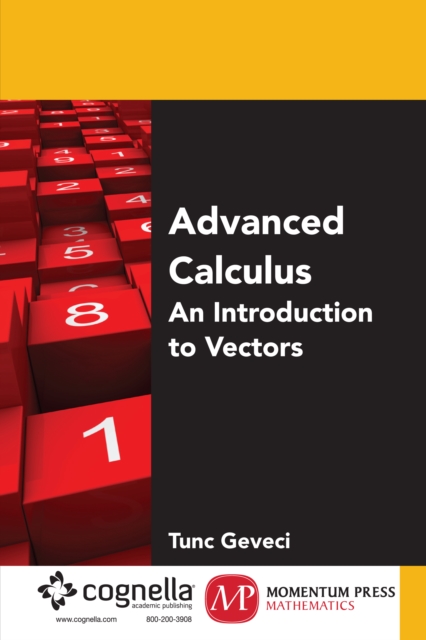
With a less is more approach to introducing the reader to the fundamental concepts and uses of Calculus, this sequence of four books covers the usual topics of the first semester of calculus, including limits, continuity, the derivative, the integral and important special functions such exponential functions, logarithms, and inverse trigonometric functions.
eBook
Advanced calculus
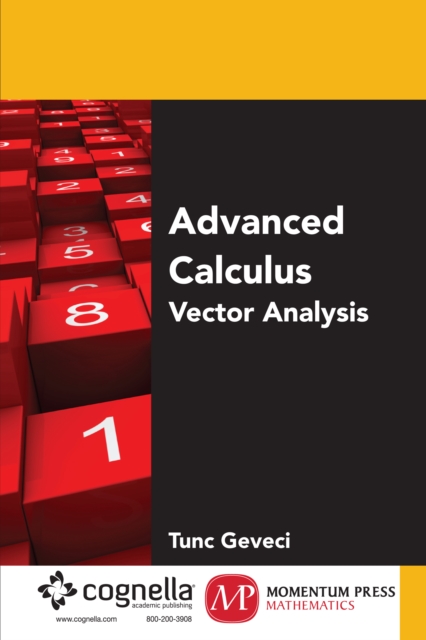
With a less is more approach to building upon the complete foundations of calculus, this sequence of 6 books introduces the reader to the topics commonly found in a 2nd or 3rd semester/or 2nd- or 3rd-year level of college-level calculus. They introduce the concept of vectors and multiple differentiation and integration, including functions of multiple variables. Examples of applications to physics and other disciplines are offered to illustrate the utility of these advanced calculus tools. This third volume discusses various versions of the chain rule for functions of several variables, showing that while not as useful as using the chain rule for functions of a single variable they can be interpreted in ways that lead to useful general results.
eBook