
Catalogue Search | MBRL


Are you sure you want to remove the book from the shelf?

{{itemTitle}}
291
result(s) for
"Spiritual gift"
Sort by:

The Irrevocable Gifts and the Calling of God: Continuity and Discontinuity in Jewish–Christian Dialogue
This article explores the evolution of Jewish–Christian dialogue in the Roman Catholic Church, focusing on the theological and pastoral contributions of three post-Vatican II Popes—John Paul II, Benedict XVI, and Francis. Beginning with the transformative Nostra Ætate declaration of the Second Vatican Council (1962–1965), this study examines how each Pope uniquely advanced Jewish–Christian relations through doctrinal development, symbolic gestures, and interreligious dialogue. John Paul II’s performative theology emphasized reconciliation and outreach, significantly enhancing Jewish–Christian relations through groundbreaking gestures and public declarations. Benedict XVI sought to deepen the theological foundations of Jewish–Christian dialogue, integrating it into broader Roman Catholic theology while navigating challenges of reception due to his intellectual style. Francis emphasized relational warmth, shared ethical commitments, and a theology of reconciliation, fostering a more inclusive and dialogical approach to interreligious engagement. By analysing the continuities and discontinuities in the approaches of these three Popes, this article highlights the dynamic interplay between theology, symbolism, and pastoral care in advancing Jewish–Christian relations, offering a comprehensive overview of a pivotal era in interreligious dialogue.
Journal Article
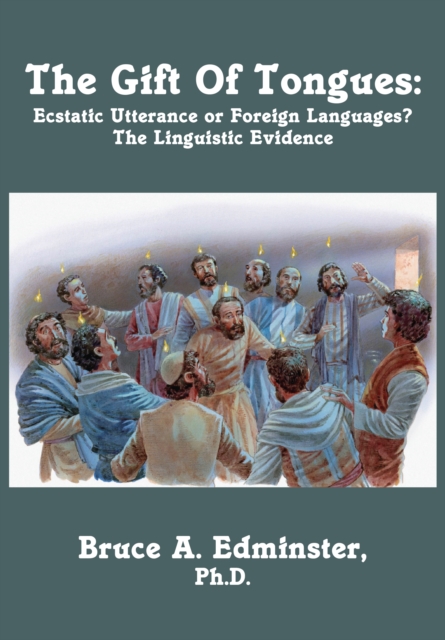
The Gift of Tongues
Of all the theological issues discussed in Christian circles, few have received more attention than the New Testament \"gift of tongues.\"Were the tongues at Corinth \"real languages, \" or something else?Some charismatics and an assortment of sympathetic observers, spurred on by modern linguistic analyses of audio recordings of modern tongues vocalizations, argue that modern tongues and the tongues in Corinth alike are not real languages at all.The questions Bruce Edminster seeks to answer in The Gift of Tongues include whether the Corinthian gift is the same as the one found in the book of Acts, what is the meaning and significance of the word\"edification\" in the context of the Corinthian phenomenon, and is the gift of tongues \"real\" language, the language of the angels, or a non-language? Further consideration asks what should the \"gift of tongues\" should be used for? Evangelism? Personal devotion? Self-gratification?
eBook

Collations on the Seven Gifts of the Holy Spirit
The first English translation of St. Bonaventure’s Collationes de septem donis Spiritus Sancti to appear in print, this fourteenth volume in the series is the crowning achievement of Zachary Hayes, a pre-eminent commentator on Bonaventure’s thought for four decades.
eBook

Holy Mischief Within Institutions: Charism and Conscience
People often tend to understand the word charism to mean a particular spiritual gift given by God to a person for the good of a religious institution like a church, a synagogue, a temple, or a mosque. The initiator of the gift is God, Thou who is the ground of being, and the recipients are members of a religious institution. Working through religious institutions, a charism can benefit the entire human community. However, in this day, he thinks they need to recognize that charisms are given to people who do not belong to a specific religion and are operative in the wider secular world. Indeed, given the secular age in which they live, it appears that charisms operate both inside and outside conventional religious institutions. Indeed, today there are many who abide beyond confessional walls who possess charisms for the good of all. Here, Dallaire offers a few observations on the charism of holy mischief, how it operates within institutions and organizations today, and how discernment and conscience are important elements of living this charism.
Journal Article

Desire spiritual gifts that edify: A text-generated persuasion of 1 Corinthians 14:1–40
Paul’s first epistle to the Corinthian church details the various problems it faced, with the primary issue in 1 Corinthians 14 being the use of spiritual gifts. Churches today are not free from similar issues, making Paul’s letter particularly relevant, especially regarding spiritual gifts. This article interprets 1 Corinthians 14:1–40, focusing on Paul’s persuasion of the Corinthians towards proper use of spiritual gifts. The interpretation employs a text-centred rhetorical approach called ‘text-generated persuasion-interpretation’ (TGPI), which avoids imposing a predefined rhetorical model, whether ancient or contemporary. Following Tolmie and Snyman’s framework, the study identifies the dominant rhetorical strategy in each pericope and examines how Paul uses rhetorical techniques to enhance his communication’s effectiveness. The article highlights Paul’s rhetorical objectives in 1 Corinthians 14:1–40 and how he achieves them. Specifically, it addresses two key questions: (1) How can the author’s primary rhetorical objective be described? (2) How does the author achieve this objective? The conclusion asserts that Paul’s rhetorical strategies in 1 Corinthians 14 effectively guide churches towards proper use of spiritual gifts, making his teachings relevant to contemporary church issues.Intradisciplinary and/or interdisciplinary implicationsReading 1 Corinthians through rhetorical criticism is common, although there is no consensus on approach. This article, allowing the text to speak for itself, aims to enhance understanding of Pauline rhetoric, its application to modern church practices, and New Testament scholarship. Using the TGPI method, it integrates classical rhetorical criticism and socio-historical aspects to offer a fresh perspective on the chapter, making Paul’s teachings more relevant to contemporary audiences.
Journal Article
Descending to Bring Up “The Knowledge of the Son of God”: The Descent–Ascent Use of Psalm 68:18 in Ephesians 4:8–10, Compared with Romans 10:6–8’s Use of Deuteronomy 30
This paper offers a new explanation for the quotation of Psalm 68:18 in Ephesians 4:8. There are at least three puzzles in this text: (1) the significance of the quotation within the argument in the Ephesians passage (and why the apparent interruption between 4:7 and 4:11); (2) the divergent form of the quotation from the MT and LXX vis-a-vis the giving of gifts versus receiving; (3) why is only one set of gifts—proclaiming/verbal gifts, not gifts of service or discernment—mentioned in 4:11–12? This paper argues three points. First, diversity of spiritual gifts is not the focus of Eph 4:7–16, but rather, the same gift given to many: the word of truth about Jesus’s identity as Messiah and Son of God and his resurrection. Second, Ephesians 4:8–10 is comprehensible in context if viewed through another lens: Romans 10:6–8, the motif of “Messiah ascending victorious after having previously descended”. Third, the invocation of Psalm 68:18 in Ephesians 4:8–10 matches the Aramaic textual tradition, over-against the MT and the LXX. Paul’s use of the verse mirrors the proto-Targumic understanding of the “gifts given to the sons of mankind” as the Law of Moses. Paul is adopting this motif of “ascending with the Law-truth”, but with his own implied substitution of “the truth about Jesus”.
Journal Article

Spiritual gifts in Romans 11:29–32: Critiquing revocation of ordination at the Evangelical Lutheran Church in Southern Africa
The case of the revocation of ordination from the two pastors by the Evangelical Lutheran Church in Southern Africa (hereafter, ELCSA) in the Gauteng Province, Pretoria, South Africa has motivated the present conversation. In order to respond appropriately to the scenario mentioned earlier, the research will dialogue with Paul’s teaching on spiritual gifts in Romans 11:29–32. The document released by the High Court of South Africa, Gauteng Division, Pretoria (hereafter, HCoSAP) ruled that ELCSA acted against the law and ordered that the revocation of the ordination be reversed (Case No: 62810/2018). The study comprises three main layers as follows: (1) analysis of ordination in the biblical text, including a dialogue with Paul’s view of calling and spiritual gifts in 11:29–32, (2) a ruling by the HCoSAP, and (3) a critique of ELCSA. Documentary analysis, ethnography, and participant observation are employed as methodological approaches.ContributionThe contribution of this research is two-fold. Firstly, the readership in general and believing communities in particular should adhere to the rules of the game as prescribed by the biblical text so that they will mitigate both conflict and confrontation with other congregants. Secondly, the study aims to educate societies that no one is above the law. Members of the sacred institution can appear at the high court either when their constitutional right is violated or as suspects of crime.
Journal Article
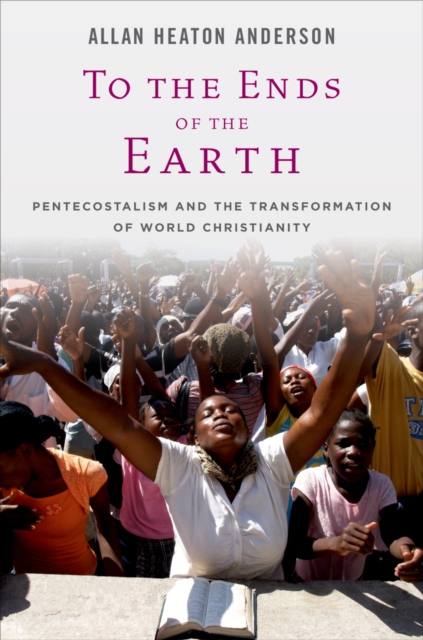
To the Ends of the Earth
Scholars have commented for years on the southward shift of Christianity during the twentieth century. The majority of Christians worldwide are now found in the continents of Africa, Asia, and Latin America. But the nature of that shift and the actors involved have not been fully explored. This book maintains that a transformation of Christianity has occurred that is far more than demographical or geographical — a profound reformation in the character of Christianity itself has taken place. The emergence, growth, and impact of Pentecostalism in the past hundred years played a major role in this transformation of a European and North American religion into a non-Western, charismatic, and predominantly female one. Key figures and movements, the many divisions and proliferations, and the resourcefulness and challenges of its leaders and members in the majority world are examined. The book discusses the historical origins, characteristics, ideologies, theologies, and emphases of Pentecostalism as it developed from a small number of obscure Christian revivalist sects at the beginning of the century, to representing, in many different forms today, possibly as much as a quarter of the world’s Christian population. How this has happened is what this book is all about.
eBook
The Body of the Artist, in the Body of Christ: Toward a Theology of the Embodied Arts
One insight at the heart of embodiment research is that the particular, material human body is the nexus of two loci: as an integration of sensory apparatuses, the body is the receptive locus of the world; at the same time, the body is the locus of responsive engagement with the world. Working from the framework of embodiment, this essay is a theological exploration of the arts, with particular attention given to the artist. The first half details two controlling ideas about the nature of embodiment and the arts: (i) the arts are necessarily embodied, and (ii) the Christian artist is in Christ’s body. Here I examine how the artwork and the artist are necessarily embodied—the body is the horizon on which the arts are possible. With these two controlling ideas in hand, the second half of the essay considers three implications: (i) the artist works in and for the church; (ii) the arts are a gift of the Holy Spirit; and (iii) the arts are a place where the church experiences the Spirit’s working. These implications yield, among other insights, the finding that Christ’s body is the horizon on which the Christian arts are possible.
Journal Article

Passionately Human, No Less Divine
The Great Migration was the most significant event in black life since emancipation and Reconstruction. Passionately Human, No Less Divine analyzes the various ways black southerners transformed African American religion in Chicago during their Great Migration northward. A work of religious, urban, and social history, it is the first book-length analysis of the new religious practices and traditions in Chicago that were stimulated by migration and urbanization. The book illustrates how the migration launched a new sacred order among blacks in the city that reflected aspects of both Southern black religion and modern city life. This new sacred order was also largely female as African American women constituted more than 70 percent of the membership in most black Protestant churches. Ultimately, Wallace Best demonstrates how black southerners imparted a folk religious sensibility to Chicago's black churches. In doing so, they ironically recast conceptions of modern, urban African American religion in terms that signified the rural past. In the same way that working class cultural idioms such as jazz and the blues emerged in the secular arena as a means to represent black modernity, he says, African American religion in Chicago, with its negotiation between the past, the present, rural and urban, revealed African American religion in modern form.
eBook