
Catalogue Search | MBRL


Are you sure you want to remove the book from the shelf?

{{itemTitle}}
17,654
result(s) for
"Sports Medicine - methods"
Sort by:


Foam Rolling and Muscle and Joint Proprioception After Exercise-Induced Muscle Damage
Foam rolling (FR) is considered an effective postexercise modality for reducing delayed-onset muscle soreness and enhancing recovery of muscle function. However, the effects of FR on muscle and joint proprioception have not been investigated.
To examine the effects of FR on muscle and joint proprioception after an intense exercise protocol.
Controlled laboratory study.
University-based laboratory.
A total of 80 healthy, physically active male students were randomly assigned to either the FR (n = 40; age = 22.8 ± 3.3 years, height = 176.4 ± 5.3 cm, mass = 74.2 ± 6.4 kg) or passive-recovery (PR; n = 40; age = 23.0 ± 3.2 years, height = 178.1 ± 5.5 cm, mass = 74.6 ± 6.2 kg) group.
Participants in both groups performed 4 sets of 25 repetitions of voluntary maximal eccentric contractions at 60°/s from 20° to 100° of knee flexion to induce exercise-induced muscle damage. The exercise was followed by either PR or 2 minutes of FR immediately (1 hour) and 24, 48, and 72 hours postexercise.
Muscle soreness, pressure-pain threshold, quadriceps-muscle strength, joint position sense, isometric force sense, and threshold to detect passive movement at baseline and immediately, 24, 48, and 72 hours postexercise after FR.
Foam rolling resulted in decreased muscle pain, increased pressure-pain threshold, improved joint position sense, attenuated force loss, and reduced threshold to detect passive movement compared with PR at 24 and 48 hours postexercise.
Foam rolling postexercise diminished delayed-onset muscle soreness and improved recovery of muscle strength and joint proprioception. These results suggested that FR enhanced recovery from exercise-induced damage.
Journal Article

Data analysis in sport
\"Making sense of sports performance data can be a challenging task but is nevertheless an essential part of performance analysis investigations. Focusing on techniques used in the analysis of sport performance, this book introduces the fundamental principles of data analysis, explores the most important tools used in data analysis, and offers guidance on the presentation of results. The book covers key topics such as: The purpose of data analysis, from statistical analysis to algorithmic processing Commercial packages for performance and data analysis, including Focus, Sportscode, Dartfish, Prozone, Excel, SPSS and Matlab Effective use of statistical procedures in sport performance analysis Analysing data from manual notation systems, player tracking systems and computerized match analysis systems Creating visually appealing 'dashboard' interfaces for presenting data Assessing reliability. The book includes worked examples from real sport, offering clear guidance to the reader and bringing the subject to life. This book is invaluable reading for any student, researcher or analyst working in sport performance or undertaking a sport-related research project or methods course\"-- Provided by publisher.
Book
Point-of-Care Clinical Trials in Sports Medicine Research: Identifying Effective Treatment Interventions Through Comparative Effectiveness Research
Recently, calls to conduct comparative effectiveness research (CER) in athletic training to better support patient care decisions have been circulated. Traditional research methods (eg, randomized controlled trials [RCTs], observational studies) may be ill suited for CER. Thus, innovative research methods are needed to support CER efforts.
To discuss the limitations of traditional research designs in CER studies, describe a novel methodologic approach called the point-of-care clinical trial (POC-CT), and highlight components of the POC-CT (eg, incorporation of an electronic medical record [EMR], Bayesian adaptive feature) that allow investigators to conduct scientifically rigorous studies at the point of care.
Practical concerns (eg, high costs and limited generalizability of RCTs, the inability to control for bias in observational studies) may stall CER efforts in athletic training. In short, the aim of the POC-CT is to embed a randomized pragmatic trial into routine care; thus, patients are randomized to minimize potential bias, but the study is conducted at the point of care to limit cost and improve the generalizability of the findings. Furthermore, the POC-CT uses an EMR to replace much of the infrastructure associated with a traditional RCT (eg, research team, patient and clinician reminders) and a Bayesian adaptive feature to help limit the number of patients needed for the study. Together, the EMR and Bayesian adaptive feature can improve the overall feasibility of the study and preserve the typical clinical experiences of the patient and clinician.
The POC-CT includes the basic tenets of practice-based research because studies are conducted at the point of care, in real-life settings, and during routine clinical practice. If implemented effectively, the POC-CT can be seamlessly integrated into daily clinical practice, allowing investigators to establish patient-reported evidence that may be quickly applied to patient care decisions. This design appears to be a promising approach for CER investigations and may help establish a \"learning health care system\" in the sports medicine community.
Journal Article

Predicting Manual Therapy Treatment Success in Patients With Chronic Ankle Instability: Improving Self-Reported Function
Therapeutic modalities that stimulate sensory receptors around the foot-ankle complex improve chronic ankle instability (CAI)-associated impairments. However, not all patients have equal responses to these modalities. Identifying predictors of treatment success could improve clinician efficiency when treating patients with CAI.
To conduct a response analysis on existing data to identify predictors of improved self-reported function in patients with CAI.
Secondary analysis of a randomized controlled clinical trial.
Sports medicine research laboratories.
Fifty-nine patients with CAI, which was defined in accordance with the International Ankle Consortium recommendations.
Participants were randomized into 3 treatment groups (plantar massage [PM], ankle-joint mobilization [AJM], or calf stretching [CS]) that received six 5-minute treatments over 2 weeks.
Treatment success, defined as a patient exceeding the minimally clinically important difference of the Foot and Ankle Ability Measure-Sport (FAAM-S).
Patients with ≤5 recurrent sprains and ≤82.73% on the Foot and Ankle Ability Measure had a 98% probability of having a meaningful FAAM-S improvement after AJM. As well, ≥5 balance errors demonstrated 98% probability of meaningful FAAM-S improvements from AJM. Patients <22 years old and with ≤9.9 cm of dorsiflexion had a 99% probability of a meaningful FAAM-S improvement after PM. Also, those who made ≥2 single-limb-stance errors had a 98% probability of a meaningful FAAM-S improvement from PM. Patients with ≤53.1% on the FAAM-S had an 83% probability of a meaningful FAAM-S improvement after CS.
Each sensory-targeted ankle-rehabilitation strategy resulted in a unique combination of predictors of success for patients with CAI. Specific indicators of success with AJM were deficits in self-reported function, single-limb balance, and <5 previous sprains. Age, weight-bearing-dorsiflexion restrictions, and single-limb balance deficits identified patients with CAI who will respond well to PM. Assessing self-reported sport-related function can identify CAI patients who will respond positively to CS.
Journal Article


Handbook of Sports Medicine and Science
This new International Olympic Committee (IOC) handbook covers the science, medicine and psycho-social aspects of females in sports at all levels of competition. Each chapter focuses on the specific issues that female athletes confront both on and off the field, such as bone health, nutritional recommendations, exercise/competition during menstruation and pregnancy, and much more. Fully endorsed by the IOC and drawing upon the experience of an international team of expert contributors, no other publication deals with the topic in such a concise and complete manner. The Female Athlete is recommended for all health care providers for women and girl athletes internationally for all sports and all levels of competition. It is a valuable resource for medical doctors, physical and occupational therapists, nutritionists, and sports scientists as well as coaches, personal trainers and athletes.
eBook

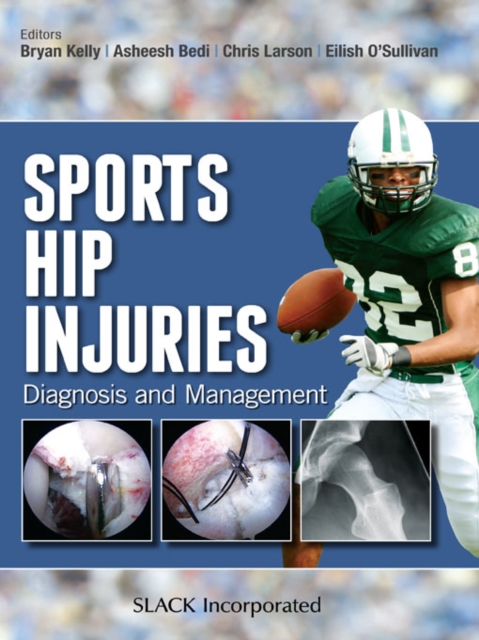
Sports Hip Injuries
In the world of sports, hip injuries among an athletic population can be very difficult to diagnose and manage. That's why
Sports Hip Injuries: Diagnosis and Management
is a comprehensive guide to diagnosing and managing sports hip injuries and hip preservation.
Drs. Bryan Kelly, Asheesh Bedi, Chris Larson, and Eilish O'Sullivan are leaders in the field of hip preservation. They present
Sports Hip Injuries: Diagnosis and Management
in a concise manner by focusing on hip and pelvis disorders and cover all of the typical disorders seen in athletes presenting with hip and pelvic pain. The anatomy, presentation, clinical evaluation, imaging, nonsurgical and surgical treatment, and post-surgical rehabilitation of hip joint disorders are presented clearly throughout.
Some of the topics Include:
Femoroacetabular impingement
Hip instability/dysplasia
Athletic pubalgia/core muscle injury
Stress fractures and traumatic sports injuries of the hip and pelvis
Myotendinous injuries and nerve entrapment disorders of the hip and pelvis
Rehabilitation guidelines and return to sport outcomes
Sports Hip Injuries: Diagnosis and Management
is an invaluable resource for sports medicine providers including orthopedic surgeons and fellows that care for patients presenting with hip pain for athletes at all levels, as well as physical therapists and athletic trainers.
eBook