
Catalogue Search | MBRL


Are you sure you want to remove the book from the shelf?

{{itemTitle}}
17
result(s) for
"Sports journalism Authorship."
Sort by:


3... 2... 1... We're on the Air
Imagine what it's like to make hundreds of decisions in just two hours on \"live\" network television with your work seen by millions of people.That's what a sports television producer does each time they sit in \"the big chair.\" In 3...2...1.
eBook

Reflexiones sobre periodismo deportivo
Este libro responde al desafío de dar a conocer la situación del periodismo deportivo a nivel local, regional, nacional e internacional. En esta ocasión, estudiantes de la carrera de Comunicación, sede Cuenca de la Universidad Politécnica Salesiana, Ecuador articulan un compendio de ocho capítulos de investigación en los que manteniendo una estructura organizada pretenden vincular los medios y el deporte con la historia, publicidad, redes sociales, política, profesionalización mediática, olimpíadas, estereotipos femeninos y los E-sports. La heterogeneidad de los resultados obtenidos enriquece las acciones futuras en esta área de la comunicación, entre ellas, la migración digital de las audiencias prescribe una adaptación progresiva de los medios, la necesidad de romper el estereotipo femenino en un ambiente excesivamente masculinizado, alertar a las autoridades del uso del deporte para proselitismo político, entre otras.
eBook
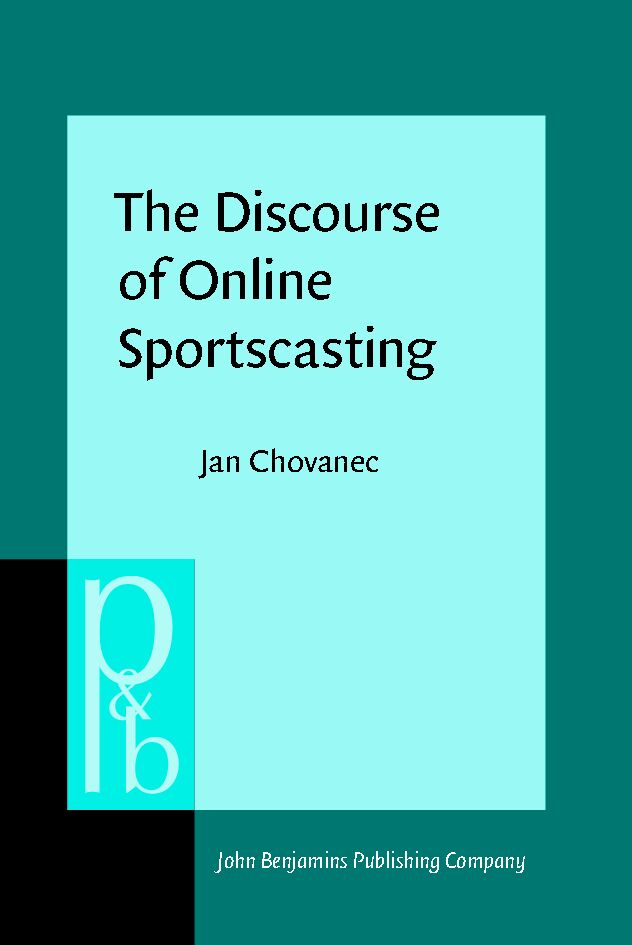
The discourse of online sportscasting : constructing meaning and interaction in live text commentary
This book offers the first comprehensive linguistic analysis of live text commentary, one of the most innovative online genres of modern news media. The study focuses on written sports commentaries in online newspapers that enable partial real-time audience involvement in the media text. Adopting an approach from interactional pragmatics, the book identifies the genre's characteristic micro-linguistic features as well as its unique narrative structure. Live text commentary is shown to be a hybrid and multimodal text format - an internally complex form of media communication that combines elements of live spoken broadcasting, blogging, informal conversation and online chat. It aims to inform as well as entertain the audience: by using humour, banter and real or staged dialogue it seeks to create a sense of community among its readers - sports fans. The book will be of interest to many scholars in linguistic pragmatics, discourse analysis and social sciences, as well as to all others interested in modern online genres, news media and sports discourse.
eBook

Fan (Fiction) Acting on Media and the Politics of Appropriation
Fanfiction is the creative appropriation and transformation of existing popular media texts by fans who take stories, worlds and/or characters as starting points and create their own stories based on them. As a cultural field of practice, fanfiction questions prevalent concepts of individual authorship and proprietary of cultural goods. At the same time, fanfiction itself is challenged. Through processes of mediatization, fanfiction grew and became increasingly visible. Third parties, ranging from the media industry (e.g., film studios) and copyright holders to journalism and academia, are interested in fanfiction and are following its development. We regard fanfiction communities and fan acting as fields for experimentation and as discursive arenas which can help understand what appropriating, writing and publishing in a digital culture and the future of writing might look like. In this paper, we outline important debates on the legitimacy and nature of fanfiction and present preliminary results of current research within Germany.
Journal Article

Industrialising Print, Sport, and Authorship: Nimrod, Surtees, and the \New Sporting Magazine\
In the early Victorian period, sporting literature found a new audience among the young century's industrialists and prosperous merchants who, enabled by the growth of the railroads and increased access to the countryside, chose to use their increased leisure time to experience English rural life and to hobnob on equal terms, at least superficially, with the rural ancien régime. The New Sporting Magazine, established in 1831, positioned itself to speak both to the existing devotees of sport and to the middle-class audience which was about to make its presence felt in the field. The parallel refinement of English sport and its print discourse is described by and exemplified in the two best-known sport writers of the early Victorian era: Robert Smith Surtees and Charles Apperley ('Nimrod'). Surtees and Nimrod, though highly professional and well remunerated, habitually put forward their own work as 'correspondence', contributing to the illusion that the magazine was a playground for gentlemen of leisure. The careful blend of the conservative and modern in the New Sporting Magazine thus extends to its contributors as well: in this magazine's pages the eighteenth-century culture of the gentleman correspondent was beginning to merge with the culture of the paid celebrity author that would become such a force in the mass literary environment of the nineteenth century.
Journal Article

Making Meaning on the Screen: Digital Video Production About the Dominican Republic
As part of an inquiry and digital documentary video project, two 12‐year‐old students studied the Dominican Republic. Over the course of their research, the boys (one of whose parents moved from the Dominican Republic) focused their project on two aspects of the culture of the Dominican Republic: contemporary music (bachata and merengue) and famous baseball players who have familial ties to the country. Through the use of digital video software available at the school, the boys produced a digital video by weaving together images from the Web with music and informational audio tracks that they wrote (based upon their research), recorded, and imported into their documentary video project. The article provides a reference point for teachers to try out digital video production in their own classrooms, as well as discussing the importance of such projects in light of the new, digital literacies that they enable students to practice.
Journal Article

Communities of Practice in the History of English
Languages change and they keep changing as a result of communicative interactions and practices in the context of communities of language users. The articles in this volume showcase a range of such communities and their practices as loci of language change in the history of English. The notion of communities of practice takes its starting point in the work of Jean Lave and Etienne Wenger and refers to groups of people defined both through their membership in a community and through their shared practices. Three types of communities are particularly highlighted: networks of letter writers; groups of scribes and printers; and other groups of professionals, in particular administrators and scientists. In these diverse contexts in England, Scotland, the United States and South Africa, language change is not seen as an abstract process but as a response to the communicative needs and practices of groups of people engaged in interaction.
eBook