
Catalogue Search | MBRL


Are you sure you want to remove the book from the shelf?

{{itemTitle}}
18,796
result(s) for
"Sports museums"
Sort by:

Heritage and sport : an introduction
\"This book provides a holistic view of the relationship between heritage and sport and an in-depth examination into the different types of sport heritage. It offers both theoretical and applied approaches to the heritage-sport relationship and intersects with many contemporary topics in heritage, sport, tourism, events and marketing\"-- Provided by publisher.
Book

The FC Porto Museum project and the challenges of a new reality
Purpose
This paper aims to explain how FC Porto positioned its museum and stadium as touristic and cultural attractions of reference in Porto. The current international situation demands a reflection on how to behave in relation to the market in the near future.
Design/methodology/approach
This paper is based on information drawn from official sources and relevant FC Porto data.
Findings
FC Porto Museum has an extensive program of cultural events that is offered every month to the locals. Public and private partnerships have also been celebrated by welcoming all kinds of audiences from schools to universities and tour operators.
Practical implications
Now that everyone is living in unprecedented and challenging times, sharing experiences on how to evolve and create new opportunities to the public is even more essential.
Originality/value
FC Porto Museum and Dragão Stadium are among the most visited attractions in Porto. Although cultural attractions are often more popular, during the past six years the impact of the museum and stadium on the tourism sector in the eastern area of the city and the local community cannot be underestimated.
Journal Article
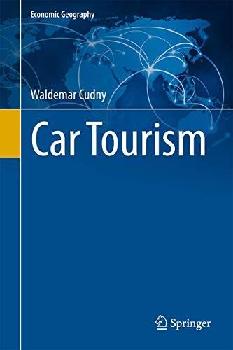
Car tourism
\"This book examines the role of cars and the space connected with their production and presentation in tourism development. It describes the role played by experiences and experience societies formed in the 20th c. in the development of contemporary tourism, including tourism related to cars. The book explores the influence of experiencing unusual events, such as car races, car fairs, visits to car industry museums or multifunctional spaces connected with producing and exhibiting cars (e.g. Autostadt or Audi Forum) on the development of a new type of tourism, i.e. car tourism. This kind of tourism is novel in two ways: firstly, it is a new phenomenon in science, as so far it has not been thoroughly studied or described, apart from various short articles. Secondly, this type of tourism has developed on a large scale only in recent years, mainly due to the huge investments made by powerful European car manufacturers (e.g. Autostadt, Audi Forums, Porsche Museum, Lamborghini Museum etc.). The book presents cars and the spaces related to them as tourist assets (sites, events) and as tourist products that satisfy tourists' needs. Moreover, it connects the issue of car tourism to the marketing strategies of large car manufacturers and discusses the theory of tourism space, highlighting the main tourism spaces in which car tourism develops. It presents multifunctional spaces (factories, adventure centres - Autostadt in Wolfsburg), museums, car exhibitions, and race tracks. In the next chapter, following an introduction to the problem of events, the author describes events related to car tourism, including races, rallies, driving schools and car fairs. The book ends with a summarizing chapter, which includes a model of the function of car tourism as a separate type of tourism, as well as a discussion presenting the main features, advantages and disadvantages of car tourism in the context of the tourism space theory.\"--Page [4] of cover.
BOOK

On Sport, Public History, and Public Sport History
This essay explores the relationship between public history and sport history within the United States and outlines a historiography of public sport history. Public history is the presence, usage, and effects of the past in our everyday lived realities, while public sport history is the intersection of these ideas with sport. In the United States, most public sport history is visible through sport museums, halls of fame, and nostalgic celebrations. To this point, sport museums and halls of fame have received significant attention fom academics, but surprisingly little literature exists on other forms of public sport history. This essay concludes with suggestions for promising avenues of future research to this field.
Journal Article

Push–pull analysis: the mediating role of promotion types relative to visit intention to a sports museum
PurposeAlthough sport museums are considered an important sector in nostalgia sport tourism, annual visitations of the major sport Hall of Fames (HoF) have been decreasing, often resulting in operational and financial difficulties for the HoF. The current study examined the relationship between sport museum image, motivation, constraints, monetary and non-monetary promotions (as a mediator), and visit intention among those who have attended or never attended.Design/methodology/approachData was collected from the residents in the Northeast Ohio area via an online survey questionnaire using Qualtrics (N = 1,607). Two sets of data parameters were generated based on consumers previous visitation to Pro Football HoF (visited group n = 754; never-visited group n = 853) and each group's monetary and non-monetary promotion models (total of four models) were analyzed. Descriptive statistics and reliability tests were processed via IBM SPSS Statistics 26 and the structural relationships among the constructs were examined using SmartPLS 3.FindingsAmong all the antecedents, positive perceived image of HoF has been identified as the most significant predictor for both promotions and visit (revisit) intention. Social motivation was found to be a strong driver for visiting a sports museum regardless of the types of promotions. Promotions' mediation effects were found. The monetary promotion between cost constraints and visit intention implied, cost constraints can be mitigated through monetary promotion.Originality/valueThis is the first study examining the role of relationship between image, motivation, constraints and visit intention relative to sport museums. Results provide practical insights for the sport museum marketers and researchers relative to visit intension.
Journal Article
Sports museums as part of the touristic and cultural itineraries
PurposeThis paper aims to explain how FC Porto became an important agent on the contribution for the development of tourism in the city of Porto.Design/methodology/approachThe paper is based on information drawn from official sources and relevant data from Futebol Clube do Porto.FindingsThrough the football matches and since the migration of the club's headquarters to the eastern district of the city, during the mid-1950s, FC Porto proved to be responsible for bringing attention and public to the city of Porto and then to an area where progress was missing.Originality/valueThe FC Porto Museum has been able to capture strong interest and satisfaction from visitors less connected to the phenomenon of sports, attracted by the theme of a museum of a sports club that speaks the language of the city, the region and the country.
Journal Article
