
Catalogue Search | MBRL


Are you sure you want to remove the book from the shelf?

{{itemTitle}}
1,266
result(s) for
"Stage props"
Sort by:

Harry Potter : the artifact vault
Throughout the making of the eight Harry Potter movies, designers and craftspeople were tasked with creating fabulous chocolate-fantasy feasts, flying brooms, enchanted maps, and much more, in addition to numerous magical items necessary in a wizard everyday life--for example, newspapers with moving photos, vicious textbooks, and Howlers. Harry Potter: The Artifact Vault chronicles the work of the graphics department in creating vibrant and imaginative labels for potions bottles, brooms, and candy; the creation of Quidditch Quaffles, Bludgers, and Golden Snitches, lovingly crafted by the prop making team; and the stunning inventiveness used by the entire crew to create a rich, bewitched filmic universe.
BOOK
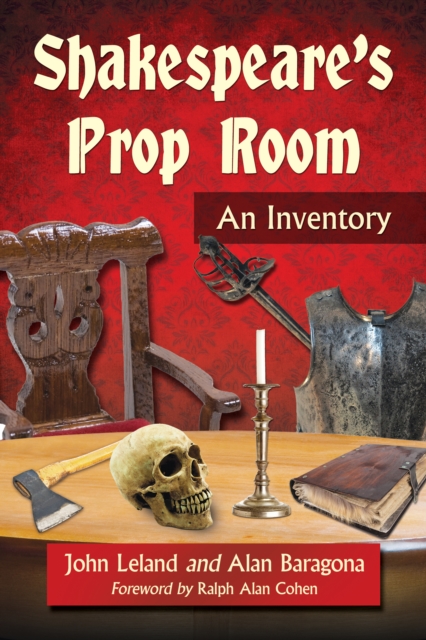
Shakespeare's prop room : an inventory
This study provides the first comprehensive examination of every prop in Shakespeare's plays, whether mentioned in stage directions, indicated in dialogue or implied by the action. Building on the latest scholarship and offering a witty treatment of the subject, the authors delve into numerous historical documents, the business of theater in Renaissance England, and the plays themselves to explain what audiences might have seen at the Globe, the Rose, the Curtain, or the Blackfriars Playhouse, and why it matters. Students of the plays will be able to read beyond Shakespeare's words and visualize the drama as it might have appeared on the stage. Scholars will find a wealth of previously unmined material for reconstructing Renaissance theatrical practices. School drama groups, amateur theaters and directors and prop masters of professional troupes will find help in mounting their own productions as the Bard's audiences would have seen them.
eBook

The prop maker's workshop manual
For many people, even within the theatre industry, prop making is something of a 'dark art', practised by gifted individuals who manage to produce intricate works battling against short deadlines. However, the skills of prop making ar relevant to many industries and contexts, whether for art projects, carnival floats, live action role-play (LARP), model railways or film and television. The options and applications are endless, but the traditional skills remain the same. This manual is a definitive guide to the materials and practices used within the professional performing arts industries, covering both traditional techniques and modern practices.
Book

The Stage Life of Props
InThe Stage Life of Props,Andrew Sofer aims to restore to certain props the performance dimensions that literary critics are trained not to see, then to show that these props are not just accessories, but time machines of the theater.Using case studies that explore the Eucharistic wafer on the medieval stage, the bloody handkerchief on the Elizabethan stage, the skull on the Jacobean stage, the fan on the Restoration and early eighteenth-century stage, and the gun on the modern stage, Andrew Sofer reveals how stage props repeatedly thwart dramatic convention and reinvigorate theatrical practice.While the focus is on specific objects, Sofer also gives us a sweeping history of half a millennium of stage history as seen through the device of the prop, revealing that as material ghosts, stage props are a way for playwrights to animate stage action, question theatrical practice, and revitalize dramatic form.Andrew Sofer is Assistant Professor of English, Boston College. He was previously a stage director.
eBook


Model Making for the Stage: A Practical Guide
Model Making for the Stage explains the practical techniques that will promote accurate scale model making for the theatre. Topics covered include: practical information about model-making materials and setting up a good working environment; foundation skills, techniques, & exercises to introduce model making; how to construct scale interiors, exteriors & furniture and create accurate scale figures; different types of models within a design process; the scenographic model as a communication tool; collaborating with the director and fellow designers as an integral part of the model-making process; the importance of considering the performers during the model-making process; information about theatre technology, scenic construction & painting; and presenting the final scenographic model.
eBook


Theatre-in-education: Confucian learning experiences of props managers in Peking Opera
The Confucian educational impact of Peking Opera has garnered considerable attention, primarily focusing on the educational experience of audiences, with limited attention to the participants. Theatre in Education (TIE) reminds us that theatre participants get a more profound educational experience. To address this gap, this study explores the Confucian educational experiences of Jianchang (props managers) participating in Peking Opera. A case study at the Peking Opera Protection and Inheritance Centre in Hunan (POPIC) applies Schechner's performance studies theory. The results indicate that Jianchang deeply experiences the Confucian concepts of 'SanGangWuChang' during their participation process and further internalizes them into their behaviour, such as 'maintaining strict hierarchical order' and 'adhering to rigorous personal moral standards'. This research has multidisciplinary significance as it enhances the value of Peking Opera education, expands the scope of TIE, and inspires the living conservation of traditional culture. It encourages future research to explore the educational experiences of traditional theatre participants, who are an overlooked group.
Journal Article

Los útiles y los inútiles
Es con mirada interdisciplinar como Los útiles y los inútiles quiere aventurarse en ese mundo polimorfo. Allí no encontramos únicamente aquellos objetos que resplandecen en plano-detalle y que captan nuestra atención, como una bola de vidrio en Citizen Kane, un aparato de radio en las películas de David Lynch y unas pobres cosas sobre una mesita de noche en Stalker, de Tarkovski. Se trata también de todos esos objetos que casi no se ven, que casi parecen inútiles, y que justamente están allí para que nadie los vea, en una especie de ruido de fondo de la visión fílmica. Esa invisibilidad y esa inutilidad no son características reductivas y negativas, sino la condición indispensable para que el cine nos atrape en su efecto de realidad. Necesitamos entonces que esos objetos estén allí: libros en las estanterías, periódicos abandonados en una repisa, documentos escondidos en un mueble, aparatos prendidos en la profundidad de campo y mucho desorden, perfectamente alineado. Poco a poco, el lector se dará cuenta de un submundo exuberante que pide ser rescatado y observado, un mundo que nunca es casual aunque nuestra mirada lo capture a veces casualmente.
eBook