
Catalogue Search | MBRL


Are you sure you want to remove the book from the shelf?

{{itemTitle}}
101
result(s) for
"Stalin, Joseph, 1878-1953"
Sort by:
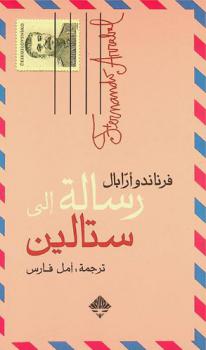
رسالة إلى ستالين
مستخدما أسماء التصغير، مثل : \"سوسو\"، أو \"كوبا\"، يخاطب أرابال الزعيم جوزيف ستالين عبر رسالة طويلة، ساخرة وساخطة، مسقطا عنه صفات العظمة والتأليه، ليعود طفلا يستوجب التوبيخ. وموظفا مخزونه الفكري الضخم والمتنوع، ينقب أرابال في تفاصيل حياة ستالين، انطلاقا من شاربه الشهير، ومرورا بالنساء في حياته، والجواسيس، والأتباع الذين عملوا لصالحه، والشعراء الذين خلدوه في أبيات ركيكة، وصولا إلى ضحاياه، وهم كثر، داخل الاتحاد السوفييتي وخارجه، ومع ذلك، لا يكشف أرابال مصادر معلوماته، ولا يفرق بين الحقائق والتفاصيل المختلقة، فهو لا يسعى إلى تقديم وثيقة تاريخية بحق بقدر اهتمامه بصياغة مرافعة جدلية وأخلاقية. س بخلاف رسالته إلى الجنرال فرانكو التي أرسلها إلى الأخير، وهو على قيد الحياة، فإن مراسلة ديكتاتور ميت قد تبدو فعلا عبثيا وغير مجد، لكن أرابال في الحقيقة يوجه خطابه إلى الأحياء ممن عايشوا ستالين، أو تأثروا به لاحقا، وهو يحاول في رسالته، التي تبدو أقرب إلى مرافعة في محكمة ؛ أن يقول : إن التاريخ لا ينسى، ولا يمكن أن يطمس.
BOOK

Not According to Plan
InNot According to Plan, Maria Belodubrovskaya reveals the limits on the power of even the most repressive totalitarian regimes to create and control propaganda. Belodubrovskaya's revisionist account of Soviet filmmaking between 1930 and 1953 highlights the extent to which the Soviet film industry remained stubbornly artisanal in its methods, especially in contrast to the more industrial approach of the Hollywood studio system. Not According to Plan shows that even though Josef Stalin recognized cinema as a \"mighty instrument of mass agitation and propaganda\" and strove to harness the Soviet film industry to serve the state, directors such as Eisenstein, Alexandrov, and Pudovkin had far more creative control than did party-appointed executives and censors.
The Stalinist party-state, despite explicit intent and grandiose plans to build a \"Soviet Hollywood\" that would release a thousand features per year, failed to construct even a modest mass propaganda cinema. Belodubrovskaya's wealth of evidence shows that the regime's desire to disseminate propaganda on a vast scale was consistently at odds with its compulsion to control quality and with Stalin's intolerance of imperfection.Not According to Planis a landmark in Soviet cultural history and the global history of cinema.
eBook


Cold Peace
In the period from the end of World War II until his death, Stalin became an increasingly distrustful despot. He habitually picked on and humiliated members of his inner circle, had them guarded around the clock, had their correspondence decoded by secret police, bugged the lines of even his most senior deputies, and even drove several to the point of publicly betraying their spouses in order to prove their allegiance. This book argues that Stalin's behavior was not entirely paranoid and erratic but followed a clear political logic. This book contends that his system of leadership was at once both modern — Stalin vested authority in committees, elevated younger specialists, and made key institutional innovations — and patrimonial-repressive, informal, and based on personal loyalty. Always, Stalin's goal was to make the USSR a global power and, though the country teetered on the edge of violence during this period of acute domestic and international pressure, he succeeded in achieving superpower status and in holding on to power despite his old age and ill health.
eBook

Stalin's Final Films
Stalin's Final Films explores
a neglected period in the history of Soviet cinema, breathing new
life into a body of films long considered moribund as the pinnacle
of Stalinism. While film censorship reached its apogee in
this period and fewer films were made, film attendance also peaked
as Soviet audiences voted with their seats and distinguished a
clearly popular postwar cinema.
Claire Knight examines the tensions between official ideology
and audience engagement, and between education and entertainment,
inherent in these popular films, as well as the financial
considerations that shaped and constrained them. She explores how
the Soviet regime used films to address the major challenges faced
by the USSR after the Great Patriotic War (World War II), showing
how war dramas, spy thrillers, Stalin epics, and rural comedies
alike were mobilized to consolidate an official narrative of the
war, reestablish Stalinist orthodoxy, and dramatize the rebuilding
of socialist society. Yet, Knight also highlights how these same
films were used by filmmakers more experimentally, exploring a
diverse range of responses to the ideological crisis that lay at
the heart of Soviet postwar culture, as a victorious people were
denied the fruits of their sacrificial labor. After the war, new
heroes were demanded by both the regime and Soviet audiences, and
filmmakers sought to provide them, with at times surprising
results.
Stalin's Final Films mines Soviet cinema as an
invaluable resource for understanding the unique character of
postwar Stalinism and the cinema of the most repressive era in
Soviet history.
eBook

The concept of neutrality in stalin's foreign policy, 1945-1953 (The Harvard Cold War studies book series)
Drawing on recently declassified Soviet archival sources, this book sheds new light on how the division of Europe came about in the aftermath of World War II. The book contravenes the notion that a neutral zone of states, including Germany, could have been set up between East and West. The Soviet Union under Joseph Stalin was determined to preserve control over its own sphere of German territory. By tracing Stalin's attitude toward neutrality in international politics, the book provides important insights into the origins of the Cold War.
eBook