
Catalogue Search | MBRL


Are you sure you want to remove the book from the shelf?

{{itemTitle}}
100
result(s) for
"Stark, Freya."
Sort by:


Autobiography, Journalism, and Controversy: Freya Stark's Baghdad Sketches
This article examines Freya Stark's life-writing over a forty-year period in order to shed light on her experience of Baghdad from 1929 to 1933. The article focuses on Stark's resistance to expected feminine norms of the British community, and contextualizes her experience alongside that of Gertrude Bell and Stefana Drower. Stark's experiences, and those of Drower, reveal the ways in which British women resisted the mundane expatriate lifestyle, and gained a great deal of cultural understanding though their interaction with Iraqis. Furthermore, the article discusses Stark's work at the Baghdad Times, a literary apprenticeship that also led to the publication of Baghdad Sketches. The article not only highlights the plurality of autobiographical presentation characteristic of Stark's oeuvre, but also reveals how Stark refashioned her experiences throughout her life, taking into account her changing status and the different political and cultural climates in which the works were published.
Journal Article

Stark, Freya (1893–1993)
(1893–1993),
whose many books on her travels in Iran, Iraq, southern Arabia, and Asia Minor include The Valleys
Reference


The Romance of the Road
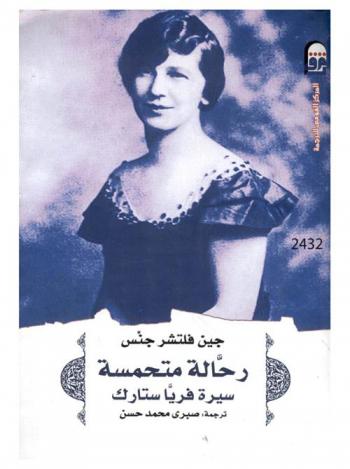
Sometimes it's just as well not to know too much about an admired figure. Dame Freya Stark had long been a favorite of mine: by all appearances a brave and dogged explorer who resorted to disguise when necessary to gain access to restricted parts of the Muslim world, a scarred woman who compensated for her lack of beauty by wielding a formidable charm, a sharp-eyed observer of cultural differences, a hardy soul who lived to be 100 (dying in 1993), a writer of exuberant, witty travelogues that are the literary equivalents of top- notch champagne. Some of these attributes have withstood Jane Fletcher Geniesse's fine biography, but not all. Geniesse shows that at times Freya Stark committed follies that obliged the British government to step in and save her. Such was her appeal and luck, however, that the public put a glamorous spin on these incidents -- a dramatic rescue was thought to prove the mettle of the party who had flung herself in harm's way. As with other 20th-century British adventurers and explorers of the Mideast -- Bertram Thomas, St. John Philby and Wilfred Thesiger come to mind -- it was the fall of the Ottoman Empire and the consequent opening of previously closed regions to outsiders that allowed Stark to set her course. She prepared for a lifetime's travels by studying Arabic, on her own and with a tutor, for seven years. She was late in shoving off, however, because of her attachment to her overbearing mother, Flora, who had separated from Freya's father and gone into business with Mario di Roascio, an Italian nobleman and the husband of Freya's sister. Mario and Flora schemed idealistically and endlessly to boost the economy of Dronero, the provincial seat of his family, by employing local workers in a rug- and basket-making venture. It was on an inspection tour of their factory that Freya, then 13, had been disfigured. Her long hair got caught in a piece of machinery, and, as Geniesse tells it, \"she was yanked violently toward the ceiling. Mario extricated her by grabbing her legs, but the cost was high: Half her scalp was ripped off, including her right ear; the right eyelid was pulled away; and all the tissue around her temple exposed.\" Long afterward, until she could take advantage of progress in plastic surgery, Stark was rarely seen in public without a hat.
Newspaper Article


Dame Freya Stark, Travel Writer, Is Dead at 100
In a foreword to \"The Journey's Echo: Selections From [Freya Madeline Stark]\" (1964), the writer Lawrence Durrell praised her as a \"poet of travel\" and \"one of the most remarkable women of our age.\" Many Languages and Dialects Dame Freya was essentially self-taught. In her youth, she became fluent in Arabic and Turkish, and over the years she mastered other languages and many dialects. It was a talent that served her well in the course of a venturesome life as reflected in the titles of her books: \"Baghdad Sketches\" (1933 and 1937), \"The Valleys of the Assassins and Other Persian Travels\" (1934, 1972 and 1978), \"The Southern Gates of Arabia: A Journey in the Hadhramaut\" (1936 and 1972), \"A Winter in Arabia\" (1940, 1972 and 1987), \"Letters From Syria\" (1942), \"The Freya Stark Story\" (1953), \"Alexander's Path\" (1958 and 1988) and \"Gateways and Caravans: A Portrait of Turkey\" (1971).
Newspaper Article