
Catalogue Search | MBRL


Are you sure you want to remove the book from the shelf?

{{itemTitle}}
142,721
result(s) for
"State Department"
Sort by:

Summer at Tiffany
In 1945, Hart and her best friend, Marty, found work on the sales floor at Tiffany's--a diamond-filled day job that was the envy of all their friends. This is the enchanting story of that unforgettable time as the girls rub elbow with the world's rich and famous.
Book

Music in America's Cold War diplomacy
During the Cold War, thousands of musicians from the United States traveled the world, sponsored by the U.S. State Department’s Cultural Presentations program. Performances of music in many styles—classical, rock ’n’ roll, folk, blues, and jazz—competed with those by traveling Soviet and mainland Chinese artists, enhancing the prestige of American culture. These concerts offered audiences around the world evidence of America’s improving race relations, excellent musicianship, and generosity toward other peoples. Through personal contacts and the media, musical diplomacy also created subtle musical, social, and political relationships on a global scale. Although born of state-sponsored tours often conceived as propaganda ventures, these relationships were in themselves great diplomatic achievements and constituted the essence of America’s soft power. Using archival documents and newly collected oral histories, Danielle Fosler-Lussier shows that musical diplomacy had vastly different meanings for its various participants, including government officials, musicians, concert promoters, and audiences. Through the stories of musicians from Louis Armstrong and Marian Anderson to orchestras and college choirs, Fosler-Lussier deftly explores the value and consequences of \"musical diplomacy.\"
eBook


Effects of intensive versus standard blood pressure control on domain-specific cognitive function: a substudy of the SPRINT randomised controlled trial
Results from the Systolic Blood Pressure Intervention Trial (SPRINT) showed that intensive control of systolic blood pressure significantly reduced the occurrence of mild cognitive impairment, but not probable dementia. We investigated the effects of intensive lowering of systolic blood pressure on specific cognitive functions in a preplanned substudy of participants from SPRINT.
SPRINT was an open-label, multicentre, randomised controlled trial undertaken at 102 sites, including academic medical centres, Veterans Affairs medical centres, hospitals, and independent clinics, in the USA and Puerto Rico. Participants were adults aged 50 years or older with systolic blood pressure higher than 130 mm Hg, but without diabetes, history of stroke, or dementia. Participants were randomly assigned (1:1) to a systolic blood pressure goal of less than 120 mm Hg (intensive treatment) versus less than 140 mm Hg (standard treatment). All major classes of antihypertensive agents were included. A subgroup of randomly assigned participants including, but not limited to, participants enrolled in an MRI substudy was then selected for a concurrent substudy of cognitive function (target 2800 participants). Each individual was assessed with a screening cognitive test battery and an extended cognitive test battery at baseline and biennially during the planned 4-year follow-up. The primary outcomes for this substudy were standardised composite scores for memory (Logical Memory I and II, Modified Rey-Osterrieth Complex Figure [immediate recall], and Hopkins Verbal Learning Test-Revised [delayed recall]) and processing speed (Trail Making Test and Digit Symbol Coding). SPRINT was registered with ClinicalTrials.gov, NCT01206062.
From Nov 23, 2010, to Dec 28, 2012, 2921 participants (mean age 68·4 years [SD 8·6], 1080 [37%] women) who had been randomly assigned in SPRINT were enrolled in the substudy (1448 received intensive treatment and 1473 received standard treatment). SPRINT was terminated early due to benefit observed in the primary outcome (composite of cardiovascular events). After a median follow-up of 4·1 years (IQR 3·7–5·8), there was no between-group difference in memory, with an annual decline in mean standardised domain score of −0·005 (95% CI −0·010 to 0·001) in the intensive treatment group and −0·001 (–0·006 to 0·005) in the standard treatment group (between-group difference −0·004, 95% CI −0·012 to 0·004; p=0·33). Mean standardised processing speed domain scores declined more in the intensive treatment group (between-group difference −0·010, 95% CI −0·017 to −0·002; p=0·02), with an annual decline of −0·025 (–0·030 to −0·019) for the intensive treatment group and −0·015 (–0·021 to 0·009) for the standard treatment group.
Intensive treatment to lower systolic blood pressure did not result in a clinically relevant difference compared with standard treatment in memory or processing speed in a subgroup of participants from SPRINT. The effect of blood pressure lowering might not be evident in specific domains of cognitive function, but instead distributed across multiple domains.
National Heart, Lung, and Blood Institute, National Institute of Diabetes and Digestive and Kidney Diseases, National Institute on Aging, National Institute of Neurological Disorders and Stroke, and the Alzheimer's Association.
Journal Article
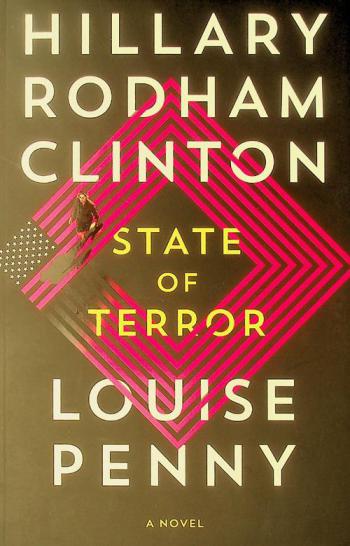
State of terror : a novel
\"After a tumultuous period in American politics, a new administration has just been sworn in, and to everyone's surprise the president chooses a political enemy for the vital position of Secretary of State. There is no love lost between the President of the United States and Ellen Adams, his new Secretary of State. But it's a canny move on the part of the president. With this appointment, he silences one of his harshest critics, since taking the job means Adams must step down as head of her multinational media conglomerate. As the new president addresses Congress for the first time, with Secretary Adams in attendance, Anahita Dahir, a young foreign service officer (FSO) on the Pakistan desk at the State Department, receives a baffling text from an anonymous source. Too late, she realizes the message was a hastily coded warning. What begins as a series of apparent terrorist attacks is revealed to be the beginning of an international chess game involving the volatile and byzantine politics of Pakistan, Afghanistan, and Iran; the race to develop nuclear weapons in the region; the Russian mob; a burgeoning rogue terrorist organization; and an American government set back on its heels in the international arena. As the horrifying scale of the threat becomes clear, Secretary Adams and her team realize it has been carefully planned to take advantage of four years of an American government out of touch with international affairs, out of practice with diplomacy, and out of power in the places where it counts the most. To defeat such an intricate, carefully constructed conspiracy, it will take the skills of a unique team: a passionate young FSO; a dedicated journalist; and a smart, determined, but as yet untested new Secretary of State.\"-- Provided by publisher

Pharmacotherapy of Traumatic Brain Injury: State of the Science and the Road Forward: Report of the Department of Defense Neurotrauma Pharmacology Workgroup
Despite substantial investments by government, philanthropic, and commercial sources over the past several decades, traumatic brain injury (TBI) remains an unmet medical need and a major source of disability and mortality in both developed and developing societies. The U.S. Department of Defense neurotrauma research portfolio contains more than 500 research projects funded at more than $700 million and is aimed at developing interventions that mitigate the effects of trauma to the nervous system and lead to improved quality of life outcomes. A key area of this portfolio focuses on the need for effective pharmacological approaches for treating patients with TBI and its associated symptoms. The Neurotrauma Pharmacology Workgroup was established by the U.S. Army Medical Research and Materiel Command (USAMRMC) with the overarching goal of providing a strategic research plan for developing pharmacological treatments that improve clinical outcomes after TBI. To inform this plan, the Workgroup (a) assessed the current state of the science and ongoing research and (b) identified research gaps to inform future development of research priorities for the neurotrauma research portfolio. The Workgroup identified the six most critical research priority areas in the field of pharmacological treatment for persons with TBI. The priority areas represent parallel efforts needed to advance clinical care; each requires independent effort and sufficient investment. These priority areas will help the USAMRMC and other funding agencies strategically guide their research portfolios to ensure the development of effective pharmacological approaches for treating patients with TBI.
Journal Article

When women ran Fifth Avenue : glamour and power at the dawn of American fashion
\"A glittering, glamorous portrait of the golden age of American department stores and of three visionary women who led them, from the award-winning author of The Plaza\"-- Provided by publisher.
BOOK

Tracking implementation strategies in the randomized rollout of a Veterans Affairs national opioid risk management initiative
Background
In 2018, the Department of Veterans Affairs (VA) issued Notice 2018-08 requiring facilities to complete “case reviews” for Veterans identified in the Stratification Tool for Opioid Risk Mitigation (STORM) dashboard as high risk for adverse outcomes among patients prescribed opioids. Half of the facilities were randomly assigned to a Notice version including additional oversight. We evaluated implementation strategies used, whether strategies differed by randomization arm, and which strategies were associated with case review completion rates.
Methods
Facility points of contact completed a survey assessing their facility’s use of 68 implementation strategies based on the Expert Recommendations for Implementing Change taxonomy. We collected respondent demographic information, facility-level characteristics, and case review completion rates (percentage of high-risk patients who received a case review). We used Kruskal-Wallis tests and negative binomial regression to assess strategy use and factors associated with case reviews.
Results
Contacts at 89 of 140 facilities completed the survey (64%) and reported using a median of 23 (IQR 16–31) strategies. The median case review completion rate was 71% (IQR 48–95%). Neither the number or types of strategies nor completion rates differed by randomization arm. The most common strategies were using the STORM dashboard (97%), working with local opinion leaders (80%), and recruiting local partners (80%). Characteristics associated with case review completion rates included respondents being ≤ 35 years old (incidence rate ratio, IRR 1.35, 95% CI 1.09–1.67) and having < 5 years in their primary role (IRR 1.23; 95% CI 1.01–1.51), and facilities having more prior academic detailing around pain and opioid safety (IRR 1.40, 95% CI 1.12–1.75). Controlling for these characteristics, implementation strategies associated with higher completion rates included (1) monitoring and adjusting practices (adjusted IRR (AIRR) 1.40, 95% CI 1.11–1.77), (2) identifying adaptations while maintaining core components (AIRR 1.28, 95% CI 1.03–1.60), (3) conducting initial training (AIRR 1.16, 95% CI 1.02–1.50), and (4) regularly sharing lessons learned (AIRR 1.32, 95% CI 1.09–1.59).
Conclusions
In this national evaluation of strategies used to implement case reviews of patients at high risk of opioid-related adverse events, point of contact age and tenure in the current role, prior pain-related academic detailing at the facility, and four specific implementation strategies were associated with case review completion rates, while randomization to additional centralized oversight was not.
Trial registration
This project is registered at the ISRCTN Registry with number
ISRCTN16012111
. The trial was first registered on May 3, 2017.
Journal Article

وثائق من أرشيف وزارة الخارجية الأمريكية حول ليبيا 1969 م
هذه الوثائق التي أفرج عنها حديثا وأمدني بها شقيقه السيد / مراد محمد حميمه وكيل وزارة الخارجية للشؤون القنصلية، هي عبارة عن مراسلات متبادلة بين السفارة الأمريكية في طرابلس ووزارة الخارجية الأمريكية في واشطن الوثائق تغطي فترة زمنية قصيرة لا تتجاوز العام 1969م وتتفاوت في القيمة والحجم، حيث إن بعضها عبارة عن برقيات مختصرة، بينما أغلبها تقارير مطولة، تتناول مواضيع متنوعة، وتعتمد على مصادر متعددة وتحتوي على معلومات وتفاصيل جديدة غاية في الأهمية.
Book

Consideration of substance use in compensation and pension examinations of veterans filing PTSD claims
Veterans filing claims that service-induced PTSD impairs them worry that claims examiners may attribute their difficulties to conditions other than PTSD, such as substance use. Substance use commonly co-occurs with PTSD and complicates establishing a PTSD diagnosis because symptoms may be explained by PTSD alone, PTSD-induced substance use, or by a substance use condition independent of PTSD. These alternative explanations of symptoms lead to different conclusions about whether a PTSD diagnosis can be made. How substance use impacts an examiner's diagnosis of PTSD in a Veteran's service-connection claim has not been previously studied. In this study, we tested the hypothesis that mention of risky substance use in the Compensation & Pension (C&P) examination would result in a lower likelihood of service-connection award, presumably because substance use reflected an alternative explanation for symptoms. Data were analyzed from 208 Veterans' C&P examinations, medical records, and confidentially-collected research assessments. In this sample, 165/208 (79%) Veterans' claims were approved for a mental health condition; 70/83 (84%) with risky substance use mentioned and 95/125 (76%) without risky use mentioned (p = .02). Contrary to the a priori hypothesis, Veterans with risky substance use were more likely to get a service-connection award, even after controlling for baseline PTSD severity and other potential confounds. They had almost twice the odds of receiving any mental health award and 2.4 times greater odds of receiving an award for PTSD specifically. These data contradict assertions of bias against Veterans with risky substance use when their claims are reviewed. The data are more consistent with substance use often being judged as a symptom of PTSD. The more liberal granting of awards is consistent with literature concerning comorbid PTSD and substance use, and with claims procedures that make it more likely that substance use will be attributed to trauma exposure than to other causes.
Journal Article