
Catalogue Search | MBRL


Are you sure you want to remove the book from the shelf?

{{itemTitle}}
3,893
result(s) for
"State flowers."
Sort by:

Flowers
Describes the different flowers that have been chosen by the fifty states and the District of Columbia to represent them.
Book

Spring Wildflowers of the Northeast
This exquisitely illustrated volume provides an in-depth look at spring-blooming wildflowers of the Northeast, from old favorites to lesser-known species. Featuring more than 500 full-color photos in a stunning large-sized format, the book delves deep into the life histories, lore, and cultural uses of more than 35 plant species. The rich narrative covers topics such as the naming of wildflowers; the reasons for taxonomic changes; pollination of flowers and dispersal of seeds; uses by Native Americans; related species in other parts of the world; herbivores, plant pathogens, and pests; medicinal uses; and wildflower references in history, literature, and art. The photos capture the beauty of these plants and also illustrate the concepts discussed in the text.
A book unlike any other,Spring Wildflowers of the Northeastcombines the latest scientific research with an accessible, entertaining style, making it the ideal volume for readers of all levels of expertise.
Showcases the Northeast's most spectacular spring-blooming wildflowersFeatures more than 500 full-color photosCovers the life histories, lore, and cultural uses of more than 35 speciesCombines the latest scientific research with an easy-to-read styleOffers something new for seasoned botanists as well as armchair naturalists
eBook

New York in bloom
New York in Bloom leads you on a beautiful floral tour of the metropolis--past stylish floral studios and corner shops overflowing with fresh-cut blooms, through bustling flower markets, to blooming trees and lush public parks. With sumptuous photography, the unexpected, softer side of New York is revealed by juxtaposing floral beauty with exquisite botanical details found in the city's iconic architecture. Also included are field guides to locating and identifying common spring blooms, a list of recommended locations and vendors, and a tutorial on how to create your own New York-style floral bouquet. For anyone who loves New York City, flowers, and photography, New York in Bloom is a gorgeous gift and an essential addition to one's library of fine books.
Book

Cold War Kansas
Kansas played an outsized role in the Cold War, when civilization's survival hung in the balance.Forbes Air Force Base operated nine Atlas E intercontinental ballistic missile launch sites.Schilling Air Force Base was the hub for twelve Atlas F ICBMs.McConnell Air Force Base operated eighteen Titan II ICBMs.
eBook

When Sunflowers Bloomed Red
emWhen Sunflowers Bloomed Red/em reveals the origins of agrarian radicalism in the late nineteenth-century United States. Great Plains radicals, particularly in Kansas, influenced the ideological principles of the Populist movement, the U.S. labor movement, American socialism, American syndicalism, and American communism into the mid-twentieth century. Known as the American Radical Tradition, members of the Greenback Labor Party and the Knights of Labor joined with Prohibitionists, agrarian Democrats, and progressive Republicans to form the Great Plains Populist Party (later the People's Party) in the 1890s. The Populists called for the expansion of the money supply through the free coinage of silver, federal ownership of the means of communication and transportation, the elimination of private banks, universal suffrage, and the direct election of U.S. senators. They also were the first political party to advocate for familiar features of modern life, such as the eight-hour workday for agrarian and industrial laborers, a graduated income tax system, and a federal reserve system to manage the nation's money supply. When the People's Party lost the hotly contested election of 1896, members of the party dissolved into socialist and other left-wing parties and often joined efforts with the national Progressive movement. emWhen Sunflowers Bloomed Red/em offers readers entry into the Kansas radical tradition and shows how the Great Plains agrarian movement influenced and transformed politics and culture in the twentieth century and beyond.
eBook
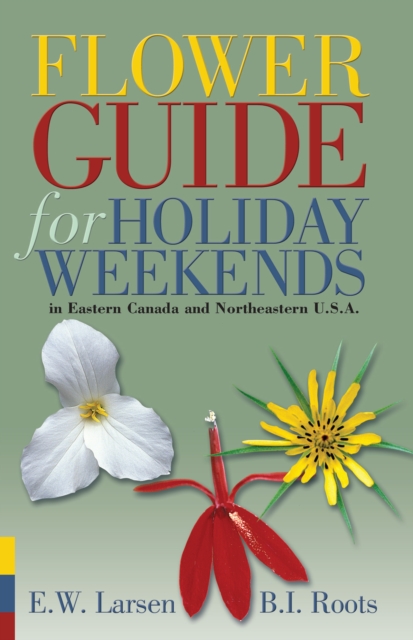
Flower Guide for Holiday Weekends in Eastern Canada and Northeastern U.S.A
A companion for visitors to the countryside on long holiday weekends who are intrigued by the flowers they see but find field guides formidable. The lively and enthusiastic text and photographs, act as a gateway for readers to deepen their interest in natural history. The book is organized into sections according to flowering times coinciding with the three North American summer holiday weekends (Victoria Day/Memorial Day; Canada Day/Independence Day; Civic Holiday/Labor Day). The flowers chosen occur widely over eastern Canada and the northeastern United States, and the majority can be spotted without even leaving the car.
eBook
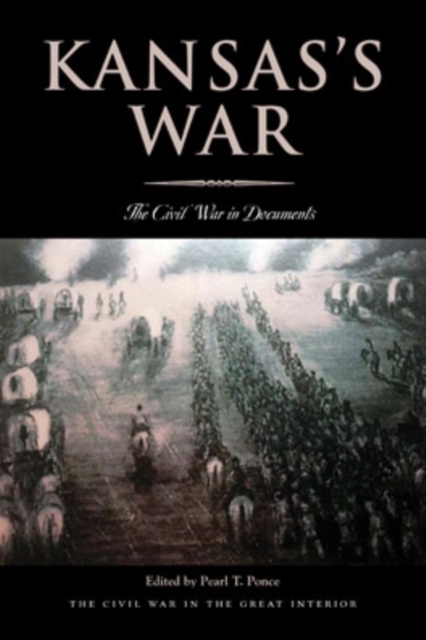
Kansas's War
When the Civil War broke out in April 1861, Kansas was in a unique position. Although it had been a state for mere weeks, its residents were already intimately acquainted with civil strife. Since its organization as a territory in 1854, Kansas had been the focus of a national debate over the place of slavery in the Republic. By 1856, the ideological conflict developed into actual violence, earning the territory the sobriquet \"Bleeding Kansas.\" Because of this recent territorial strife, the state's transition from peace to war was not as abrupt as that of other states.
Kansas's War illuminates the new state's main preoccupations: the internal struggle for control of policy and patronage; border security; and issues of race—especially efforts to come to terms with the burgeoning African American population and American Indians' continuing claims to nearly one-fifth of the state's land. These documents demonstrate how politicians, soldiers, and ordinary Kansans understood the conflict and were transformed by the war.
eBook

Border Between Them
The most bitter guerrilla conflict in American history raged along the Kansas-Missouri border from 1856 to1865, making that frontier the first battleground in the struggle over slavery. That fiercely contested boundary represented the most explosive political fault line in the United States, and its bitter divisions foreshadowed an entire nation torn asunder. Focusing on the countryside south of the big bend in the Missouri River, an area where there was no natural boundary separating the states, Jeremy Neely draws on the letters and diaries of ordinary citizens-as well as newspaper accounts, election results, and census data-to illuminate the complex strands that helped bind Kansas and Missouri together in post-Civil War America.
eBook


Black Citizen-Soldiers of Kansas 1864-1901
Many Americans know the story of the United States Colored Troops, who broke racial barriers in Civil War combat, and of the \"buffalo soldiers,\" who served in the West after that conflict, but African Americans also served in segregated militia units in twenty-three states. This book tells the story of that experience in Kansas. In addition to black regulars, hundreds of other black militiamen and volunteers from Kansas provided military service from the Civil War until the dawn of the twentieth century. More than a military history, this account records the quest of black men, many of them former slaves, for inclusion in American society. Many came from the bottom of the socioeconomic order and found that as militiamen they could gain respect within their communities.
eBook