
Catalogue Search | MBRL


Are you sure you want to remove the book from the shelf?

{{itemTitle}}
61,017
result(s) for
"State libraries"
Sort by:

Reading publics : New York City's public libraries, 1754-1911
\"A history of public libraries in New York City before the founding of the New York Public Library. Most of these libraries were accessible through a membership or an annual subscription. Explores the private and public purposes of public libraries before the advent of tax-supported public libraries\"-- Provided by publisher.
Book

Reading Publics: New York City's Public Libraries, 1754-1911
This lively, nuanced history of New York City's early public libraries traces their evolution within the political, social, and cultural worlds that supported them. On May 11, 1911, the New York Public Library opened its \"marble palace for book lovers\" on Fifth Avenue and 42nd Street. This was the city's first public library in the modern sense, a tax-supported, circulating collection free to every citizen. Since before the Revolution, however, New York's reading publics had access to a range of \"public libraries\" as the term was understood by contemporaries. In its most basic sense a public library in the eighteenth and most of the nineteenth centuries simply meant a shared collection of books that was available to the general public and promoted the public good. From the founding in 1754 of the New York Society Library up to 1911, public libraries took a variety of forms. Some of them were free, charitable institutions, while others required a membership or an annual subscription. Some, such as the Biblical Library of the American Bible Society, were highly specialized; others, like the Astor Library, developed extensive, inclusive collections. What all the public libraries of this period had in common, at least ostensibly, was the conviction that good books helped ensure a productive, virtuous, orderly republic-that good reading promoted the public good. Tom Glynn's vivid, deeply researched history of New York City's public libraries over the course of more than a century and a half illuminates how the public and private functions of reading changed over time and how shared collections of books could serve both public and private ends. Reading Publics examines how books and reading helped construct social identities and how print functioned within and across groups, including but not limited to socioeconomic classes. The author offers an accessible while scholarly exploration of how republican and liberal values, shifting understandings of \"public\" and \"private,\" and the debate over fiction influenced the development and character of New York City's public libraries in the eighteenth and nineteenth centuries. Reading Publics is an important contribution to the social and cultural history of New York City that firmly places the city's early public libraries within the history of reading and print culture in the United States.
eBook

The lions at night
\"By day, the library lions Patience and Fortitude guard the iconic New York Public Library. But when the sun goes down, and the library closes, their work is done, and it is time for fun. This debut wordless picture book brings the reader along on a late-night subway trip to the wild and wonderful Coney Island, where the two lions fit right in and indulge in some classic New York City-style fun. Will they make it back to the library before dawn? And will anyone notice that they've been gone?\" -- Amazon.
Book

Diversity, equity, and inclusion in action : planning, leadership, and programming
With this volume's model programs to guide them, academic libraries and their staff can successfully strengthen their own DEI initiatives.
eBook

Flora illustrata : great works from the LuEsther T. Mertz Library of the New York Botanical Garden
\"The renowned LuEsther T. Mertz Library of The New York Botanical Garden counts among its holdings many of the most beautiful and pioneering botanical and horticultural works ever created. More than eight centuries of knowledge, from the twelfth century to the present, are represented in the library's collection of more than one million cataloged items. In this sumptuously illustrated volume, international experts introduce us to some of the library's most fascinating works--exceedingly rare books, stunning botanical artworks, handwritten manuscripts, Renaissance herbals, nursery catalogs, explorers' notebooks, and more. The contributors hold these treasures up for close inspection and offer surprising insights into their histories and importance.\"-- Dust jacket.
Book


Underserved patrons in university libraries : assisting students facing trauma, abuse, and discrimination
This practical and research-based volume focuses on how libraries can meet the needs of underserved patrons in college and university libraries, with an emphasis on those facing trauma, abuse, and discrimination.While university libraries strive to meet the needs of all students, some groups have traditionally been overlooked.
eBook
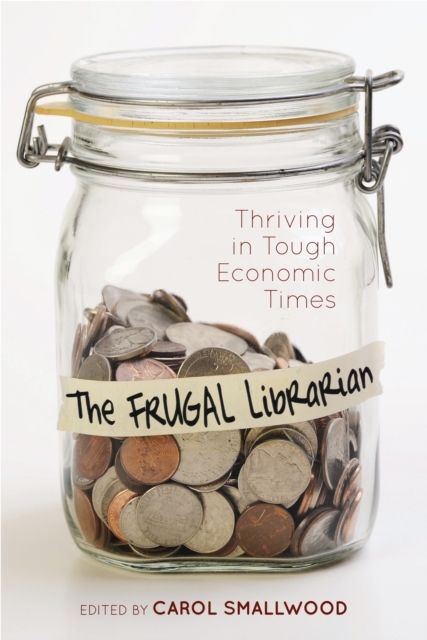
The frugal librarian
Fewer employees, shorter hours, diminished collection budgets, reduced programs and services all at a time of record library usage. Don t fret and fritter away scarce resources. Be frugal! In this book, library expert Smallwood persuasively demonstrates that the necessity of doing business differently can be positive. Presenting creative and resourceful solutions to universal concerns from dozens of librarians, representing a wide variety of institutions, this collection helps overtaxed library professionals * Find supplementary funding sources, including grants * Save money by sharing resources, using tiered staffing for technical services, and implementing green IT * Tap into grassroots movements to save neighborhood libraries * Preserve and enhance important library functions like programming, outreach, and staff development, despite a tight budget Partnering, sharing, innovating these are the watchwords for contemporary librarians in tough economic times, and this book offers plenty of ideas that can be implemented immediately.
eBook

Wild Intelligence
Information science was a burgeoning field in the early years of
the Cold War, and while public and academic libraries acted as
significant sites for the information boom, it is unsurprising that
McCarthyism and censorship would shape what they granted readers
access to and acquired. Wild Intelligence traces a
different history of information management, examining the
privately assembled collections of poets and their
knowledge-building practices at midcentury.
Taking up case studies of four poets who began writing during
the 1950s and 1960s, including Charles Olson (1910-1970), Diane di
Prima (1934-2020), Gerrit Lansing (1928-2018), and Audre Lorde
(1934-1992), M. C. Kinniburgh shows that the postwar American
poet's library should not just be understood according to
individual books within their collection but rather as an archival
resource that reveals how poets managed knowledge in a growing era
of information overload. Exploring traditions and systems that had
been overlooked, buried, occulted, or censored, these poets sought
to recover a sense of history and chart a way forward.
eBook