
Catalogue Search | MBRL


Are you sure you want to remove the book from the shelf?

{{itemTitle}}
5,690
result(s) for
"Statistics Computer programs."
Sort by:

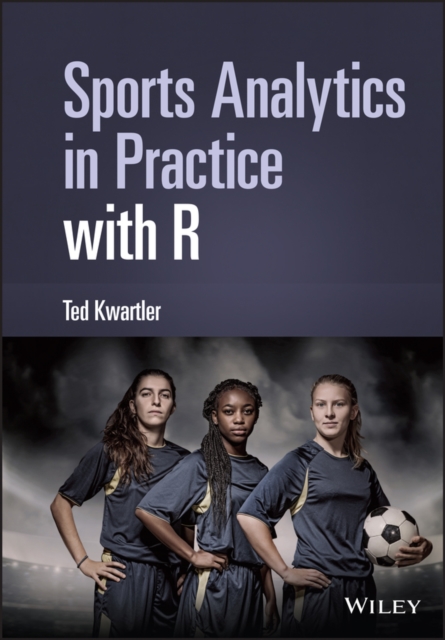
Sports analytics in practice with R
Sports Analytics in Practice with R A practical guide for those looking to employ the latest and leading analytical software in sport In the last twenty years, sports organizations have become a data-driven business.Before this, most decisions in sports were qualitatively driven by subject-matter experts.
eBook

Statistics with R : a beginner's guide
\"The dynamic, student focused textbook provides step-by-step instruction in the use of R and of statistical language as a general research tool. It is ideal for anyone hoping to: Complete an introductory course in statistics Prepare for more advanced statistical courses Gain the transferable analytical skills needed to interpret research from across the social sciences Learn the technical skills needed to present data visually Acquire a basic competence in the use of R. The book provides readers with the conceptual foundation to use applied statistical methods in everyday research. Each statistical method is developed within the context of practical, real-world examples and is supported by carefully developed pedagogy and jargon-free definitions. Theory is introduced as an accessible and adaptable tool and is always contextualized within the pragmatic context of real research projects and definable research questions.\"--Publisher's website.
Book
Implement, improve and expand your statewide longitudinal data system : creating a culture of data in education
Step-by-step guidance for implementing an effective statewide longitudinal data system Every U.S. state faces challenges in its efforts to ensure the highest-quality education for students. To address these challenges, a growing number of states are establishing statewide longitudinal data systems (SLDSs), a data-rich system integrating relevant data about a student's education. Implementing Statewide Longitudinal Data Systems for Education presents a detailed and contextualized discussion of SLDSs, which will serve as a recipe for states that want to implement an SLDS, develop design and enactment of new and existing SLDS systems, addressing implementation, operation and optimization. Provides a contextualized discussion of the history and purpose of SLDSs Describes how to plan for and implement an SLDS, including best practices regarding data governance, standards and privacy Discusses proven methods of data management, and details the two most popular methods of database architectures used for SLDSs Provides 5 case studies of states successfully using SLDSs Offers suggestions for expansion and inclusion of new datasets over time This essential book addresses the culture of data concept, providing a guide for states to usher in a new era in their education system where data is invaluable and used by everyone, not simply the newest version of the old system. A robust LDS initiative includes linked student records, teacher records, test scores, course selection, finances, certifications, licensure, salary and more. Concluding with a discussion of the potential future uses of SLDS, this book is the ultimate guide to SLDS implementation and understanding.
eBook

Understanding and applying basic statistical methods using R
Features a straightforward and concise resource for introductory statistical concepts, methods, and techniques using R Understanding and Applying Basic Statistical Methods Using R uniquely bridges the gap between advances in the statistical literature and methods routinely used by non-statisticians. Providing a conceptual basis for understanding the relative merits and applications of these methods, the book features modern insights and advances relevant to basic techniques in terms of dealing with non-normality, outliers, heteroscedasticity (unequal variances), and curvature. Featuring a guide to R, the book uses R programming to explore introductory statistical concepts and standard methods for dealing with known problems associated with classic techniques. Thoroughly class-room tested, the book includes sections that focus on either R programming or computational details to help the reader become acquainted with basic concepts and principles essential in terms of understanding and applying the many methods currently available. Covering relevant material from a wide range of disciplines, Understanding and Applying Basic Statistical Methods Using R also includes: * Numerous illustrations and exercises that use data to demonstrate the practical importance of multiple perspectives * Discussions on common mistakes such as eliminating outliers and applying standard methods based on means using the remaining data * Detailed coverage on R programming with descriptions on how to apply both classic and more modern methods using R * A companion website with the data and solutions to all of the exercises Understanding and Applying Basic Statistical Methods Using R is an ideal textbook for an undergraduate and graduate-level statistics courses in the science and/or social science departments. The book can also serve as a reference for professional statisticians and other practitioners looking to better understand modern statistical methods as well as R programming. Rand R. Wilcox, PhD, is Professor in the Department of Psychology at the University of Southern California, Fellow of the Association for Psychological Science, and an associate editor for four statistics journals. He is also a member of the International Statistical Institute. The author of more than 320 articles published in a variety of statistical journals, he is also the author eleven other books on statistics. Dr. Wilcox is creator of WRS (Wilcox' Robust Statistics), which is an R package for performing robust statistical methods. His main research interest includes statistical methods, particularly robust methods for comparing groups and studying associations.
eBook

Analyzing data with Microsoft Power BI and Power Pivot for Excel
\"This book introduces the basic techniques for shaping data models in Excel and Power BI. It's meant for readers who are new to data modeling as well as for experienced data modelers looking for tips from the experts. If you want to use Power BI or Excel to analyze data, the many real-world examples in this book will help you look at your reports in a different way--like experienced data modelers do.\"--Provided by publisher.
Book

A conceptual guide to statistics using SPSS
Walking the reader through the steps of statistical tests and providing data sets and screen shots from SPSS, this student-friendly book helps students to successfully use statistical tests in SPSS, interpret the results and also to understand statistical concepts.
eBook


Data visualization
Data Visualization: A Guide to Visual Storytelling for Libraries is a practical guide to the skills and tools needed to create beautiful and meaningful visual stories through data visualization. Learn how to sift through complex datasets to better understand a variety of metrics, such as trends in user behavior and electronic resource usage, return on investment (ROI) and impact metrics, and data about library collections and repositories. Sections include: ·Identifying and interpreting datasets for visualization ·Tools and technologies for creating meaningful visualizations ·Case studies in data visualization and dashboards Data Visualization also features a 20-page color insert showcasing a wide variety of visualizations generated using an array of data visualization technologies and programming languages that can serve as inspiration for creating your own visualizations. Understanding and communicating trends from your organization’s data is essential. Whether you are looking to make more informed decisions by visualizing organizational data, or to tell the story of your library’s impact on your community, this book will give you the tools to make it happen.
eBook