
Catalogue Search | MBRL


Are you sure you want to remove the book from the shelf?

{{itemTitle}}
122
result(s) for
"Steiner, Max"
Sort by:


Max Steiner
Max Steiner is one of the greatest—not to mention most prolific—composers of the Golden Age of Hollywood. The winner of three Academy Awards, Steiner’s credits include King Kong, The Informer, Gone with the Wind, Now, Voyager, Since You Went Away, Johnny Belinda, and The Caine Mutiny. Though known for timeless melodies that symbolize the glamor of Hollywood’s Golden Age, Steiner has also been hailed as a film scoring pioneer. In Max Steiner: Composing, Casablanca, and the Golden Age of Film Music, Peter Wegele unveils the man behind dozens of memorable scores, offering a portrait of the composer from a personal and professional point of view. Beginning with background on the history and techniques of film music, Wegele then examines Steiner’s musical innovations, some of which are still used today. This is followed by a thorough analysis of one of Steiner’s legendary scores—the music to Casablanca. More than eighty transcribed musical examples demonstrate how efficient, musically clever, and tremendously skilled the composer was when he wrote this score. Drawing on quotes, notes from production files, and excerpts from the original script for Casablanca, Wegele provides insight not only into the production history of the film, but also into the workings of Hollywood during the Golden Age. Including an appendix that compares Steiner with four other composers of his age—Erich Wolfgang Korngold, Alfred Newman, Franz Waxman, and Hugo Friedhofer—and a complete filmography of Steiner’s work, this book is an invaluable examination of the composer’s life and career. Film music composers, music scholars and students, directors, and anyone interested in film and music history will enjoy this detailed portrait of a musical genius.
eBook

Steiner, Korngold and the Musical Expression of Physical Space — A Preliminary Note
Composers of »Classic Hollywood« were able to convey the physical presence of Space through their film scores, as a close technical consideration of four works from the late 1930s and early 1940s reveals: M. Steiner's Gone with the Wind (1939) and Now, Voyager (1942); and W. E. Korngold's The Adventures of Robin Hood (1938); and The Sea Hawk (1940). According to E. Siegel's doctrine of Aesthetic Realism, our fundamental means of using musical sound to orient ourselves in space relies on the fact that reality presents itself as a dialectical phenomenon. He notes that Space is that which does not obstruct motion; Matter, that which does. Space is therefore associated with the thin; Matter, with the thick. And, in the deepest sense, Space is associated with freedom, since it permits motion. The interplay of Space and Time is illustrated through Korgnold's score to The Adventures of Robin Hood, and the fact that aesthetic issues and ethical issues are inter-explanatory is shown through a consideration of Steiner's score to Now, Voyager. Ovaj članak istražuje pitanje o tome do koje su mjere skladatelji »klasičnog Hollywood a « bili sposobni izraziti fizički prostor - ne kretanje kroz prostor, nego sâm prostor u njegovim trima osnovnim dimenzijama kao »okvirima« kretanja. Uz pomoć potankog tehničkog ispitivanja četiriju filmskih partitura iz kasnih 1930-ih i ranih 1940-ih nameće se odgovor: oni su to uistinu bili u stanju izraziti i to do znatne mjere. Te su četiri partiture: Gone with the Wind (1939.) i Now, Voyager (1942.) Maxa Steinera, te The Adventures of Robin Hood (1938.) i The Sea Hawk (1940.) Wolfganga Ericha Korngolda. Glavna metodologija koja se pritom rabi je filozofija tzv. estetičkog realizma koju je 1941. utemeljio američki znanstvenik Eli Siegel. U skladu s njegovom idejom da su u stvarnosti suprotnosti zapravo jedno, što pokazuje umjetnost, temeljna sredstva uporabe glazbenoga zvuka pri orijentaciji u prostoru oslanjaju se na činjenicu da se stvarnost predstavlja - zvukovno ili drukčije - kao dijalektička pojava. U svojem ranom klasičnom filozofskom djelu Definitions and Comment: Being a Description of the World, Siegel tvrdi da nije prostor ono što sprječava kretanje, nego je to materija sa svojom gustoćom. On objašnjava da je stoga prostor povezan s tankoćom, a materija s gustoćom. A u dubljem smislu prostor je povezan sa slobodom jer dopušta kretanje. Međuigra prostora i vremena središnja je stavka svake estetike, a ovdje se o njoj detaljno raspravlja u odnosu na Korngoldovu partituru za film The Adventures of Robin Hood. Također se upotrebljava Steinerova partitura za film Now, Voyager kako bi se istaknula činjenica da su estetički i etički aspekti u biti nerazdvojni i da su međusobno objašnjivi. Prema doktrini estetičkog realizma, kada skladatelj posjeduje zamišljajnu snagu povezivanja suprotstavljajućih iskustvenih aspekata tako da osjećamo njihovo jedinstvo - dakle, ne tek njihovo suprostavljanje nego i njihovo dubinsko i temeljitije slaganje - tada doživljavamo ljepotu. I nema toga što bi čovjek više želio. Čovjek se nada voljeti svijet na poštenoj osnovi, osjetiti da kontradikcije u svijetu (koje su i kontradikcije u nama samima) imaju smisao - smisao ljepote. Prema Siegelu, upravo je to najviši cilj umjetnosti, cilj s kojim se uvijek iznova susreću film i filmska glazba. Drugi filozofi i pomni proučavatelji umjetnosti o kojima se govori u ovome članku su Immanuel Kant i Viktor Zuckerkandl.
Journal Article

Fanfare as Fulcrum
Max Steiner’s fanfare for Warner Brothers (WB), which was used to introduce most of the studio’s films during the years 1938–1955, is unique in that is does not have a clearly defined ending. Continuing directly into the opening title sequence, the fanfare leads to a wide variety of themes in different keys, meters, and tempos, and with quite different characters. The “pivotal event” that helps to set the tone for the rest of the film occurs right at the moment of the fanfare’s resolution. In this corpus study, we examine eighty-eight films scored by Steiner that use the WB fanfare, with a particular focus on harmonic and melodic resolutions at the fanfare’s point of arrival. We find that Steiner devised at least fifty-three different resolutions for the end of the fanfare—some of them quite surprising and dissonant. Each of these resolutions creates a different emotional effect, communicating to the listener what the genre and tone of the film might be. We also examine the function of the transitional music that is set in motion by the fanfare’s resolution and its connection with visual cues in the film.
Journal Article

Celluloid Symphonies
Celluloid Symphonies is a unique sourcebook of writings on music for film, bringing together fifty-three critical documents, many previously inaccessible. It includes essays by those who created the music—Max Steiner, Erich Korngold, Jerry Goldsmith, Elmer Bernstein and Howard Shore—and outlines the major trends, aesthetic choices, technological innovations, and commercial pressures that have shaped the relationship between music and film from 1896 to the present. Julie Hubbert’s introductory essays offer a stimulating overview of film history as well as critical context for the close study of these primary documents. In identifying documents that form a written and aesthetic history for film music, Celluloid Symphonies provides an astonishing resource for both film and music scholars and for students.
eBook


Motivic development in Max Steiner's score for Gone With the Wind
This thesis explores the musical development of the major themes in Max Steiner’s score for Gone with the Wind. One of the most revered composers of Hollywood’s Golden Age, Steiner scored David O. Selznick’s epic Civil War drama in 12 short weeks with a collaborative team composing in the Steiner style. Steiner relied on his European post-Romantic compositional training, as well as his Broadway arranging and conducting experience, to craft an expressive, expansive score for what would become one of the most successful films of all time. This study analyzes the borrowed and original material of Steiner’s score by highlighting the compositional techniques that make it effective, and viewing it through a historical lens. By incorporating recognizable patriotic songs, Stephen Foster melodies, and original leitmotifs for the principal characters and their relationships, Steiner emphasizes the narrative tone, conveys the regional setting and historical time, and accentuates the film’s dramatic themes of nostalgia and survival. He achieves this primarily through repetition of character leitmotifs, distinguishable melodic construction, and expressive instrumentation. Steiner’s arsenal of musical tactics are effectively put to use in eliciting empathy from audiences of Gone with the Wind across generations, especially its first audiences in the Great Depression era at the dawn of World War II. In particular, Steiner’s inspirational theme for the Tara plantation elicited the nostalgia and message of survival those audiences needed to hear.
Dissertation
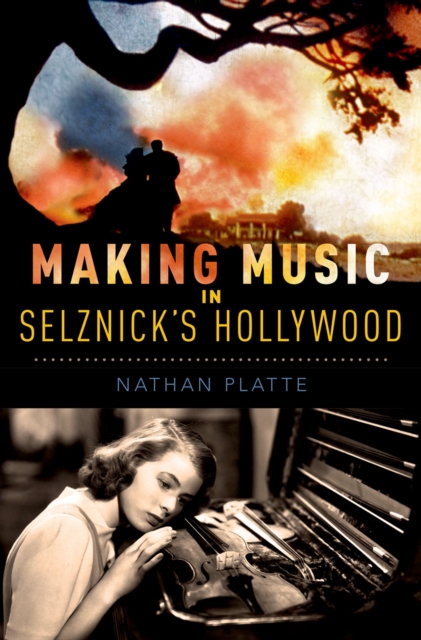
Making Music in Selznick's Hollywood
Making Music in Selznick’s Hollywood explores the network of musicians and filmmakers whose work defined the sound of Hollywood’s golden age (c. 1920s–1950s). The book’s central character is producer David O. Selznick, who immersed himself in the music of his films, serving as manager, critic, and advocate. By demonstrating music’s value in film and encouraging its distribution through sheet music, concerts, radio broadcasts, and soundtrack albums, Selznick cultivated audiences’ relationship to movie music. But he did not do it alone. Selznick’s films depended upon the men and women who brought the music to life. This book shows how a range of specialists, including composers (Max Steiner, Dimitri Tiomkin, Franz Waxman, and others), orchestrators, music directors (Lou Forbes), editors (Audray Granville), writers, instrumentalists, singers, and publicists, helped make the music for Selznick’s films stand apart from competitors’. Drawing upon thousands of archival documents, this book offers a tour of American cinema through its music. By investigating Selznick’s efforts in the late silent era, his work at three major Hollywood studios, and his accomplishments as an independent producer (including his films with Alfred Hitchcock), this book reveals how the music was made for iconic films like King Kong (1933), A Star is Born (1937), The Prisoner of Zenda (1937), Gone with the Wind (1939), Rebecca (1940), Spellbound (1945), The Third Man (1948), and A Farewell to Arms (1957).
eBook

Conference Report: \Max Steiner: Man and Myth\ at California State University, Long Beach
The symposium \"Max Steiner: Man and Myth\" was held February 24-25, 2017 at the Bob Cole Conservatory of Music at California State University, Long Beach. Over the course of the two-day event, a wide range of Steiner-related topics were investigated, including biography, identity, harmonic analysis, self-plagiarism, and a panel devoted to the troubles and tribulations associated with the music for \"Gone with the Wind,\" among others. These panels and roundtables generated enthusiastic question-and-answer period that flowed into the following coffee breaks and meals. The symposium participants left energized and with a strong sense of camaraderie that the organizers hope will fuel further study and collaborations on the life and music of Max Steiner.
Journal Article