
Catalogue Search | MBRL


Are you sure you want to remove the book from the shelf?

{{itemTitle}}
9
result(s) for
"Stem Cells -- Laboratory Manuals"
Sort by:
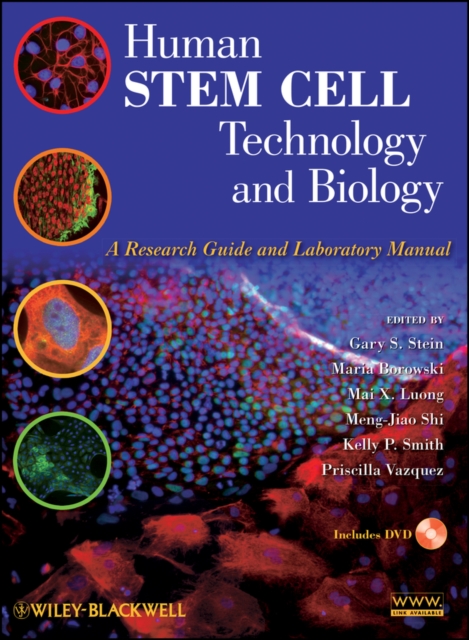
Human stem cell technology and biology
\"Human Stem Cell Technology & Biology: A Research Guide and Laboratory Manual integrates readily accessible text, electronic and video components with the aim of effectively communicating the critical information needed to understand and culture human embryonic stem cells. Key Features: An authoritative, comprehensive, multimedia training manual for stem cell researchers. Easy to follow step-by-step laboratory protocols and instructional videos provide a valuable resource. A must-have for developing laboratory course curriculums, training courses, and workshops in stem cell biology. Perspectives written by the world leaders in the field. Introductory chapters will provide background information. The volume will be a valuable reference resource for both experienced investigators pursuing stem cell and induced pluripotent stem cell research as well as those new to this field\"--
\"Current advances in human stem cell research utilize the latest tools of cell biology, molecular biology, chemistry, biomedical imaging, genomics, proteomics and bioinformatics\"--
eBook
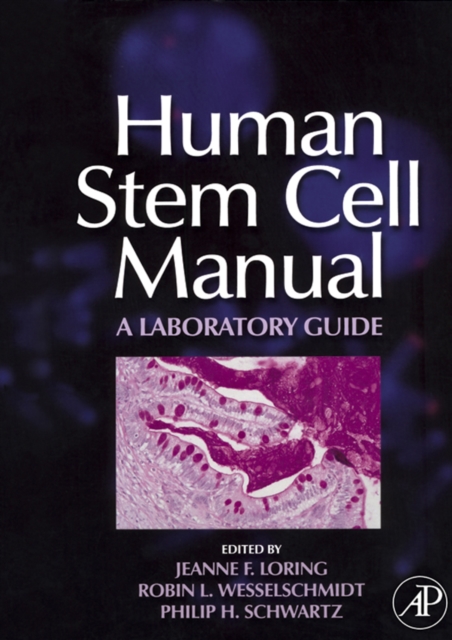
Human stem cell manual : a laboratory guide
Stem cells are self-replicating and undifferentiated, meaning their function is not yet cell, tissue, or organ-specific. Due to the unique nature of these cells, research into their biology and function holds great promise for therapeutic applications through replacement or repair of diseased and damaged cells. This reader-friendly manual provides a practical \"hands on\" guide to the culture of human embryonic and somatic stem cells. By presenting methods for embryonic and adult lines side-by-side, the authors lay out an elegant and unique path to understanding the science of stem cell practice. The authors begin with a broad-based introduction to the field, and also review legal and regulatory issues and patents. Each experimental strategy is presented with an historical introduction, detailed method, discussion of alternative methods, and common pitfalls. This lab guide for researchers also serves as a textbook for undergraduate and graduate students in laboratory courses.
eBook

The Mississippi State Sovereignty Commission
In 1956, two years after the U.S. Supreme Court unanimously outlawed legally imposed racial segregation in public schools, Mississippi created the State Sovereignty Commission.
This was the executive agency established \"to protect the sovereignty of the State of Mississippi . . . from encroachment thereon by the Federal Government.\" The code word encroachment implied the state's strong resolve to preserve and protect the racial status quo. In the nomenclature the formality of the word sovereignty supposedly lent dignity to the actions of the Commission. For all practical purposes the Sovereignty Commission intended to wage this Deep South state's monolithic resistance to desegregation and to the ever-intensifying crusade for civil rights in Mississippi.
In 1998 the papers of the Commission were made available for examination. No other state has such extensive and detailed documentary records from a similar agency. Exposed to public light, they unmasked the Commission as a counterrevolutionary department for political and social intrigue that infringed on individual constitutional rights and worked toward discrediting the civil rights movement by tarnishing the reputations of activists. As the eyes of the citizenry studied the records, the Commission slid from sovereign and segregated to unsavory and abominable.
This book, the first to give a comprehensive history of this watchdog agency, shows how, to this day, the Sovereignty Commission remains obscure, debated, and for many citizens a star chamber of the most sinister sort. Why was the Commission created? What were some of the political and social climates that initiated its creation? What were its activities during its seventeen years? What was its impact on the course of Mississippi and southern history?
Drawing on the newly opened materials at the Mississippi Department of Archives and History, this examination gives answers to such questions and traces the vicissitudes that took the Commission from governmental limelight to public opprobrium. This book also looks at the attitudes of the state's white citizenry, who, upon realizing the Commission's failure, saw the importance of a nonviolent accommodation of civil rights.
Yasuhiro Katagiri, an associate professor of American history and government at Tokai University in Kanagawa, Japan, has been published in such periodicals asAmerican Reviewand49th Parallel: An Interdisciplinary Journal of North American Studies.
eBook

The leukemia-lymphoma cell line factsbook
The Leukemia-Lymphoma Cell Line Factsbook represents an essential reference manual for all of the well-characterized leukemia-lymphoma cell lines currently available.It provides the most important facts, using the succinct and user-friendly format that has made the FactsBooks so popular with scientists and clinical researchers.
eBook
Scanning electron microscopy, X-ray microanalysis, and analytical electron microscopy
During the last four decades remarkable developments have taken place in instrumentation and techniques for characterizing the microstructure and microcomposition of materials. Some of the most important of these instruments involve the use of electron beams because of the wealth of information that can be obtained from the interaction of electron beams with matter. The principal instruments include the scanning electron microscope, electron probe x-ray microanalyzer, and the analytical transmission electron microscope. The training of students to use these instruments and to apply the new techniques that are possible with them is an important function, which. has been carried out by formal classes in universities and colleges and by special summer courses such as the ones offered for the past 19 years at Lehigh University. Laboratory work, which should be an integral part of such courses, is often hindered by the lack of a suitable laboratory workbook. While laboratory workbooks for transmission electron microscopy have-been in existence for many years, the broad range of topics that must be dealt with in scanning electron microscopy and microanalysis has made it difficult for instructors to devise meaningful experiments. The present workbook provides a series of fundamental experiments to aid in \"hands-on\" learning of the use of the instrumentation and the techniques. It is written by a group of eminently qualified scientists and educators. The importance of hands-on learning cannot be overemphasized.
eBook

Manual accidents, biological risk control, and quality indicators at a children's hospital in north-east Italy
Working in health care carries the risk of transmission of infected blood to patients by hospital workers and to other health personnel in the form of occupational infections. Conscientious application of the standard precautions is the main method used to avoid needle stick injuries, contamination of skin and mucous membranes, cuts with sharp tools, and inadequate disposal and recapping of needles. The aim of this work was to investigate in Friuli Venezia Giulia, a region in north-east Italy, the enhancement carried out to prevent situations of biologic risk for health care workers, and to verify the related laboratory analyses.
Biological accidents occurring during the years 2012-2013 in the departments of oncology and pediatric-obstetric surgery, and in the intensive care unit at Burlo Garofolo Children's Hospital in Trieste (a large town in Friuli Venezia Giulia) were reviewed, and a new panel of tests was introduced for patients and health care workers, to also detect human immunodeficiency virus (HIV), hepatitis C virus (HCV), hepatitis B virus (HBV), and aspartate transaminase and immunoglobulin G. All tests were submitted for external quality assessment.
In total, 230 nosocomial events were reported by health care workers in the above-mentioned hospital departments in 2012-2013. There were 158 accidents in 2012, including 55 accidental needle stick injuries (34.81%), 59 blood splashes (37.34%), and 44 cuts with infected instruments (27.84%). The risk of sustaining a cut was related to movement error during surgery when the appropriate procedure was not followed or when devices were being assembled and passed between doctors and nurses. Most accidents happened among physicians compared to nurses; the high percentage of needle stick injuries (34.81%) versus nurses (25.94%) were due to incorrect recapping of needles after use. No cases of health care workers being infected with HCV, HBV, or HIV were identified. In 2013, the number of biological accidents decreased to 61, comprising two needle stick injuries (3.27%), 35 blood splashes (57.37%), and 25 cuts with contaminated instruments (40.98%). The number of subcutaneous abscesses with scarring resulting from cuts with sharp instruments decreased from three in 2012 (one of which was the subject of medicolegal proceedings) to none in 2013. Although our study population was relatively small, we did detect a statistically significant decrease in the number of needle stick injuries (P<0.05, χ(2) test).
In this early experience at a maternal and child health institution in the Friuli Venezia Giulia region, application of a safety protocol, centralized organization of HIV tests, improved external quality assessment, and introduction of internal quality control for immunoglobulin G contributed to a decrease in the number of work-related biological accidents and their complications, which have the potential to result in medicolegal problems.
Journal Article
THE WHITE HOUSE: Statement by the President
I have spoken with Governor Bill Owens and County Commission Chair Patricia Holloway and expressed my profound concern for the people of Littleton. I have spoken to Deputy Attorney General Eric Holder, who, along with Attorney General Reno, is closely monitoring the situation. I've asked the Attorney General and the Secretary of Education to stand ready to assist local law enforcement, the schools, the families, the entire community during this time of crisis and sorrow. I think that Patricia Holloway would not mind if I said that, amidst all the turmoil and grief that she and others are experiencing, she said to me just a moment ago that perhaps now America would wake up to the dimensions of this challenge -- if it could happen in a place like Littleton, and we could prevent anything like this from happening again. We pray that she is right. We don't know yet all the hows or whys of this tragedy. Perhaps we may never fully understand it. St. Paul reminds us that we all see things in this life through a glass darkly, that we only partly understand what is happening. We do know that we must do more to reach out to our children and teach them to express their anger and to resolve their conflicts with words, not weapons. And we do know we have to do more to recognize the early warning signs that are sent before children act violently.
Newsletter