
Catalogue Search | MBRL


Are you sure you want to remove the book from the shelf?

{{itemTitle}}
331
result(s) for
"Stepchildren."
Sort by:

Stepfamilies
\"This is a much-needed sociological review of stepfamily life, examining the particular issues and challenges which people in stepfamilies face. Combining published studies and original fieldwork, it focuses on the internal dynamics of stepfamily households as well as the relationships sustained with those outside the household\"--Provided by publisher.
Book

The Strength of Parent–Adult Child Ties in Biological Families and Stepfamilies: Evidence From Time Diaries From Older Adults
We examine older partnered parents' time spent with adult children in biological and step families, treating time together as an indication of relationship strength. Using a unique national sample of U.S. time diaries from the Panel Study of Income Dynamics, we investigate time with all adult children combined and with each adult child. We find that time together depends on family structure and parent–adult child dyadic relationship type embedded in family structure. In analyses of all adult children combined, an older parent is more likely to spend time with adult children in biological families than in stepfamilies only when there is no shared biological child in the stepfamily. In dyadic analyses, a parent's tie with an adult child who is a biological child of both partners is stronger in stepfamilies than in biological families. Moreover, among stepfamilies, ties are not uniformly stronger with biological children relative to stepchildren; differences emerge only in more complex families when each partner has biological children from previous relationships. Our findings challenge the view that ties with older parents are always weaker with stepchildren in stepfamilies and point to the importance of considering parent–child relationships in the broader family context.
Journal Article
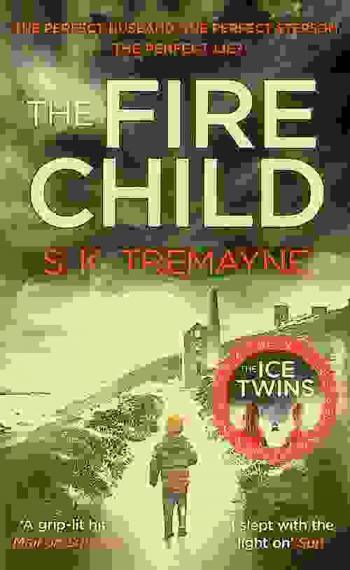
The fire child
When Rachel marries dark, handsome David, everything seems to fall into place. Swept from single life in London to the beautiful Carnhallow House in Cornwall, she gains wealth, love, and an affectionate stepson, Jamie. But then Jamie's behaviour changes, and Rachel's perfect life begins to unravel. He makes disturbing predictions, claiming to be haunted by the spectre of his late mother - David's previous wife. Is this Jamie's way of punishing Rachel, or is he far more traumatized than she thought? As Rachel starts digging into the past, she begins to grow suspicious of her husband.

The Child Witches of Olague
In the early seventeenth century, thousands of children in
Spain's Navarre region claimed to have been bewitched. The
Child Witches of Olague features the legal depositions of
self-described child witches as well as their parents and victims.
The volume sheds new light on Navarre's massive witch persecution
(1608-14), illuminating the tragic cost of witch hunts and opening
a new window onto our understanding of early modern Iberian
life.
Drawing from Spanish-language sources only recently discovered,
Homza translates and annotates three court cases from Olague in
1611 and 1612. Two were defamation trials involving the slur
\"witch,\" and the third was a petition for divorce filed by an
accused witch and wife. These cases give readers rare access to the
voices of illiterate children in the early modern period. They also
speak to the emotions of witch-hunting, with testimony about
enraged, terrified parents turning to vigilante justice against
neighbors. Together the cases highlight gender norms of the time,
the profound honor code of early modern Navarre, and the power of
children to alter adult lives.
With translations of Inquisition correspondence and printed
pamphlets added for context, The Child Witches of Olague
offers a portrait of witch-hunting as a horrific, contagious
process that fractured communities. This riveting, one-of-a-kind
book will appeal to anyone interested in the history of witch
hunts, life in early modern Spain, and history as revealed through
court testimony.
eBook

Go tell it on the mountain
The story of John, a fourteen-year-old boy whose stepfather is a Pentecostal minister in Harlem in 1935, as he struggles to discover his own identity.
Book

Coping within the Stepfamily Context in Ghana: Experiences of Stepchildren and Stepparents
Living in a stepfamily can be stressful due to several challenges that confront individuals within stepfamilies, hence adaptive coping is vital for wellbeing. Nonetheless, little research focus has been devoted to understating how individuals within stepfamilies cope with family-related distresses. Using a qualitative exploratory approach, this study explored coping strategies used by 11 stepparents and 22 adolescent stepchildren in the Ghanaian context. Findings show that whereas stepchildren adopted a wide range of coping strategies which were mostly emotion-focused, stepparents used less diverse strategies. Nonetheless, both groups used strategies that were both emotion-focused and problem-focused although, for stepchildren, two of the problem-solving strategies were maladaptive. Findings reflect the imbalanced power hierarchy that exists within the stepfamily household that tends to disadvantage stepchildren. Implications of the findings are discussed.
Journal Article

Murder in the family
\"In December 2003, Luke Ryder, the stepfather of acclaimed filmmaker Guy Howard, was found dead in the garden of their suburban family home. Guy was only a child, asleep upstairs at the time of the murder. His mother and two half sisters were also in the house that night -- but all swear they saw nothing. Despite a high-profile police investigation and endless media attention, no suspect was ever charged, and Guy's family has been haunted ever since. Twenty years later, the sensational new streaming series Infamous is dedicated to investigating -- and perhaps cracking -- this famous cold case. The production team will reexamine testimony, reinterview witnesses, and once again scour the evidence. The family will speak. The key players will be reunited -- on camera. The truth will come out. Are you ready to see it?\" -- Publisher's description.
Book

Patterns of Stepchild-Stepparent Relationship Development
Thirty-two stepdaughters and 17 stepsons participated in this grounded theory study of emerging adult stepchildren's perceptions about how relationships with their stepparents developed. The theory created from this study proposes that the degree to which stepchildren engage in relationship-building and -maintaining behaviors with stepparents is a function of stepchildren's evaluative judgments about the stepparents' positive contributions. Stepchildren's judgments about stepparents are made with inputs from biological parents and other kin. Stepchildren's ages when relationships began, gender of stepchildren and stepparents, and time spent together because of custody arrangements provided the context within which relationships developed. The outcomes in this grounded theory were six patterns of step-relationship development: accepting as a parent, liking from the start, accepting with ambivalence, changing trajectory, rejecting, and coexisting. These patterns of development were distinct trajectories that related closely to qualitatively different stepparent—stepchild relationships. Only 30% of stepchildren with multiple stepparents evaluated them similarly.
Journal Article

Non-Financial Support Provided to Parents in Stepfamilies: Empirical Examination of Europeans 50
The aging of the population, coupled with increasing divorce and remarriage rates, are changing the structure of potential non-financial support for older parents. The purpose of this study was to examine support provided to parents aged 50+ in stepfamilies and to determine if the difference existed between help provided by natural children and stepchildren. The primary objective was to investigate whether blood ties were a significant determinant of the support if the quality of the relationship between the parent and a natural child or a stepchild was taken into account. The secondary objective was to answer the question to what extent the reciprocal exchange motive of support was observed in stepfamilies. The probability of non-financial support from children and stepchildren was estimated based on the sixth wave of the SHARE (Survey on Health, Ageing, and Retirement in Europe) database for European countries. Children in stepfamilies provided less non-financial help to parents than those in intact families. Stepchildren were less likely to be in stepparents’ social networks, and stepparents provided less help with childcare for grandchildren than they did to their biological children. Relationship closeness and looking after grandchildren increased the probability of non-financial support to older parents, regardless of whether the donor was a natural child or a stepchild.
Journal Article
Stepchildren's Views About Former Step-Relationships Following Stepfamily Dissolution
Remarriages end in divorce more often than first marriages, so many stepchildren experience multiple parental divorces and the potential loss of significant family ties. Although there is substantial research on parent–child relationships after divorce, little is known about stepparent–stepchild relationships after divorce. Therefore, the authors conducted a grounded theory study of 41 adults who had undergone a stepfamily dissolution to explore their experiences with former stepparents. Postdivorce relationships with former stepparents are a function of whether stepchildren thought of their former stepparents as kin. Postdivorce step-relationships were based on whether the stepchild had claimed the stepparent as kin, had once claimed them as kin but disclaimed them after the divorce, or had never claimed them as family members (unclaimed stepparents). Emotional reactions to parental divorce, patterns of support or resource exchanges, and parental encouragement or discouragement for continuing step-relationships were identified. Implications for families, practitioners, and researchers are discussed.
Journal Article