
Catalogue Search | MBRL


Are you sure you want to remove the book from the shelf?

{{itemTitle}}
609
result(s) for
"Stepmothers."
Sort by:

Stepmonster : a new look at why real stepmothers think, feel, and act the way we do
A groundbreaking way of understanding the tensions that define relations between women and their stepchildren. Half of all women in the United States will live with or marry a man with children. And what woman with stepchildren has not--in order to defuse the often overwhelming challenges of the role--referred to herself as a \"stepmonster\"? Wednesday Martin unlocks the emotional mysteries of why stepmothers think and feel and act the way they do.
Book

Monster/Beauty
This daring, intensely personal book challenges both conventional
and feminist ideas about beauty by asking us to take pleasure in
beauty without shame, and to see and feel the erotic in everyday
life. Bringing together her varied experiences as a poet, art
historian, bodybuilder, and noted performance artist, Joanna Frueh
shows us how to move beyond society's equation of youth with beauty
toward an aesthetic for the fully erotic human being. A lush
combination of autobiography, theory, photography, and poetry, this
book continues to develop the ideas about the erotic, beauty, older
women, sex, and pleasure that Frueh first addressed in Erotic
Faculties. Monster/Beauty examines these issues using a
provocative, often explicit, set of examples. Frueh admiringly
looks at the bodies and mindsets of midlife female bodybuilders,
rethinks the vampire, and revises our ideas about traditional
models of beauty, such as Aphrodite. Above all, she boldly brings
her personal experience into the text, weaving her reflections on
female sensuality with contemporary theory. These linked essays are
as much a performance as they are a discussion, breaking down the
barriers between the personal and the academic, and the erotic and
the intellectual. Frueh writes passionately and beautifully, and
the result is a much-needed exploration of beauty myths and taboos.
eBook

Fairytale : a novel
Camille Lammenais has grown up in the beauty of the Napa Valley, surrounded by acres of her family's vineyards. Her parents, Christophe and Joy, still deeply in love after two decades of marriage, have built a renowned winery and chمateau modeled after Christophe's ancient family estate in his native Bordeaux. Camille has had a perfect childhood, safe in her parents' love. After graduating from Stanford, she returns to help manage Chمateau Joy, her lifetime goal. But their fairytale ends suddenly with her mother's death from cancer. Six months after losing his wife, the devastated Christophe is easy prey for a mysterious, charming Frenchwoman visiting the valley. The Countess de Pantin is the essence of Parisian seductiveness and sophistication. Within weeks they are a clandestine couple, making love like teenagers, glowing with their secret. Camille, still grieving for her mother, is shocked by the news that her father intends to remarry. Then she begins to see past the alluring looks, designer clothes, and elegant manners of the countess, while her innocent father is trapped in her web. When tragedy strikes again, Camille is at her stepmother's mercy, and that of the two evil stepbrothers who appear. Camille needs to fight--first for her legacy, and then for her very life. But as she grapples with the plots being carried out against her, the countess's elderly, kind, clever mother becomes her only ally, and a childhood friend emerges as a prince worthy of any fairytale.
Book


The demon's door
During rehearsals for a play based on his stepmother's bestselling children's books, eleven-year-old Zack discovers that the director is planning to raise a horde of evil specters from the dead by offering up a human sacrifice.
Book

Skeptical Erections
Skeptical Erections is a book of startling visual and verbal imagination. In his poems Sapeta describes the deception and self-loathing prevalent in the people he encounters in his world, including (or perhaps especially) himself. Despite their distortions, however, the characters who come alive in these poems are depicted with respect and compassion.
eBook

Winter
Princess Winter, admired by the Lunar people for her grace and kindness, teams up with the cyborg mechanic, Cinder, and her allies, to defeat Queen Levana and find their happily ever afters.
Book

Comparing Children’s Behavior Problems in Biological Married, Biological Cohabitating, and Stepmother Families in the UK
A large body of research shows that children who live with two married biological parents have lower levels of externalizing and internalizing behavior problems compared to their peers in other family structure, including cohabitating biological families. Such patterns suggest that marriage provides a uniquely protective family environment, though we know less about children in the obvious counterfactual case: married stepfamilies. While research suggests children with stepfathers have more behavior problems than those living with married biological parents, we know little about how children with stepmothers fare, or how children with stepparents fare compared to those living with cohabiting biological parents. We use the Millennium Cohort Study (MCS) sweep 6 to compare children living with married biological parents, married fathers and stepmothers, and cohabiting biological parents. We find that family structure has no significant relationship with children’s internalizing behavior problems, but that children living with a stepmother and biological cohabitating families exhibit more externalizing behavior problems than do those living with married biological parents. Covariates that indicate both physical and social family environments must be considered together to explain differences in married-parent families on externalizing behavior problems.
Journal Article
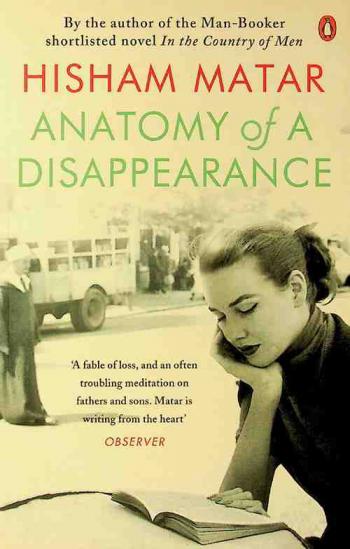
Anatomy of a disappearance
In Egypt, Nuri, a teenage boy, falls in love with Mona - the woman his father will marry. Consumed with longing, Nuri wants to get his father out of the way - to take his place in Mona's heart. But when his father disappears, Nuri regrets what he wished for.

Parenting Stress, Perceived Child Regard, and Depressive Symptoms Among Stepmothers and Biological Mothers
Although stepmothering is a common undertaking in American families, little research has investigated the mental health consequences, and their correlates, associated with adopting a stepmother role. To help fill this gap, the current study examines parenting stress and participants' perceptions of their (step) children's regard toward them and the family as mediators in the relation between parenting role (stepmother or biological mother) and depressive symptoms. Participants included 60 biological mothers and 75 stepmothers living in the United States. Stepmothers reported more depressive symptoms and parenting stress and lower perceptions of child regard than did biological mothers. Further, the relation between parenting role and depressive symptoms was mediated by parenting stress and perceptions of child regard. Results suggest that stepmothers are at risk for depressive symptoms and illuminate possible contributors to this risk, providing important directions for research and intervention.
Journal Article