
Catalogue Search | MBRL


Are you sure you want to remove the book from the shelf?

{{itemTitle}}
63
result(s) for
"Sternfeld, Joel"
Sort by:
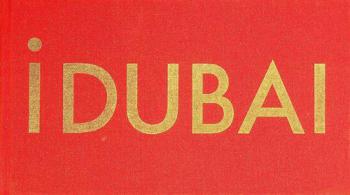
IDubai
As Paris and its shopping arcades were to the 19th century, Dubai and its wondrous malls may be to the new millennium. The Baudelarian flâneur is replaced by the phoneur, a wired wanderer who uses the cell phone to text and call and access the Internet, all the while snapping digital images on the fly. If the arcades were representative of early capitalism, then perhaps the postmodern shopping playgrounds of Dubai are exemplars of advanced capitalism. With this in mind, when photographer Joel Sternfeld visited these malls in 2008, he documented them with the consumer fetish object of the moment--the iPhone. In the process, he achieves a very particular unity of form and content; the object that encapsulates the spirit of an era is used to document that era. Yet Sternfeld's iPhone camera also gets past mass media images of the Emirate to find a human component.--From publisher description.
Book

Joel Sternfeld's Empty Places
Albers examines Joel Sternfeld's series, On This Site: Landscape in Memoriam, a reflection on the relationship of photographs and places to the telling of history and a provocative solution to what might otherwise be perceived as a deficit or limitation of the photographic medium. On This Site came to include places associated with such high-profile moments of violence. Sternfeld's aesthetic revolves around a visual and conceptual impasse between what's revealed through the photograph and what emerges in the text.
Journal Article

i Dubai
As Paris and its shopping arcades were to the 19th century, Dubai and its wondrous malls may be to the new millennium. The Baudelarian flمaneur is replaced by the phoneur, a wired wanderer who uses the cell phone to text and call and access the Internet, all the while snapping digital images on the fly. If the arcades were representative of early capitalism, then perhaps the postmodern shopping playgrounds of Dubai are exemplars of advanced capitalism. With this in mind, when photographer Joel Sternfeld visited these malls in 2008, he documented them with the consumer fetish object of the moment--the iPhone. In the process, he achieves a very particular unity of form and content; the object that encapsulates the spirit of an era is used to document that era. Yet Sternfeld's iPhone camera also gets past mass media images of the Emirate to find a human component.--From publisher description.
Book

Blurring the Boundaries between City and Countryside in Photography
In his article \"Blurring the Boundaries between City and Countryside in Photography\" Steven Jacobs discusses how, in recent decades, a new landscape has emerged in which the differences between city and countryside have been blurred. As a result, the urbanized environment is increasingly viewed and interpreted as a landscape. It is because of the hybridity of this contemporary cityscape that urban planners such as Mirko Zardini have argued for a revaluation of the notion of the picturesque linked with a sensitivity to irregularity and a mixture of the cultural and the natural. Since the late 1960s, the post-urban landscape has become an important motif in art photography as well. Jacobs demonstrates how artists and photographers such as Robert Smithson, Joel Sternfeld, John Pfahl, Jeff Wall, and Andreas Gursky pay attention to the whimsical environment in which natural and artificial elements merge.
Journal Article

Landscape as longing : Queens, New York
In 2003, Frank Gohlke and Joel Sternfeld were commissioned to photograph one of the densest concentrations of ethnic diversity in the world, the borough of Queens in New York City. After more than a year of photographing everything from corner bodegas to the borough's boundaries, Gohlke and Sternfeld had not only captured the complicated dynamic that sustains Queens and its myriad communities; they had also evolved a unique theory of landscape photography in which landscape is a visible manifestation of the invisible emotions of its inhabitants. The collection inherits the strength of each photographer's eye. Gohlke's Queens consists of streets, houses, fences, gardens, parklands, shorelines, and waste spaces, the territory where human arrangement contends endlessly with the forces that undo it: unruly vegetation, weather, rot, decay, and the creative destruction of a voracious commercial culture. Sternfeld focuses on the indigenous shops, restaurants, mosques and temples that make a walk in Queens feel like a walk in Thailand, India or Peru-or all of them at once. Often tucked into homes or converted factories, these places signify a home country, or perhaps a home country that exists more in the mind than in actuality. In conjunction with an essay by the acclaimed writer Suketu Mehta, this book is a powerful instrument for understanding a landscape that seems to defy interpretation. Gohlke and Sternfeld successfully make the dizzying patchwork of Queens accessible and visible.
BOOK

OUT OF THE ORDINARY: JOEL STERNFELD
To British eyes, [JOEL STERNFELD]'s colour photographs immediately deliver a hit of Americana: there's a desert swimming pool with solar devices on it, a father and daughter in Canyon County, California seen...
Trade Publication Article

ROAD TRIP
A copy of American Prospects tucked into our suitcase, we completed our own [Joel Sternfeld] tribute trip in just over a week, and saw more of what felt like 'real' America than I've seen on any other previous visit. All journeys to Arizona begin in Phoenix, and from the minute you arrive at the wishfully named Phoenix Sky Harbour airport (Arizona is landlocked) the friendliness hits you, even at the immigration desk. Hiring a car is mandatory, and cheap - skip the sportier makes for an SUV that will take you over the rougher desert trails. Eventually the road called us south and we found sun and relaxation in Scottsdale, a town adjoining Phoenix that, for its bright-green manicured lawns, palm trees and ritzy shopping, is nicknamed 'the Beverly Hills of Arizona'. It's certainly the best place to go for a (good-value) pampering, not least for its climate: the year-round warmth and low humidity made it a destination for those recovering from tuberculosis. Today, 100-year-old Scottsdale feels like a fancy suburb. Encircled by golfing greens, the main reason for a tourist to come here is to check in at one of the resorts. Newest on the block is The Saguaro, a boutique take on 1950s kitsch, with a dash of Mexican colour. But to shake off the last vestiges of your jet lag, park up at the Sanctuary on Camelback Mountain, a hillside hotel where guests stay in casitas landscaped around a beautiful infinity pool; if you don't sleep over here, at least eat at its outstanding, buzzy Japanese-southwestern fusion restaurant. The sun is high overhead as you drive down the Interstate 10 to Tucson, the second-biggest city in Arizona, just 20 miles from the Mexican border. This easygoing place is the location for two of Sternfeld's American Prospects works, one showing a Saguaro cactus standing proud in the desert, another recording a rudimentary version of solar panels heating a swimming pool. There are plenty of strange sights along the way that might have caught Sternfeld's eye, not least a vista of hundreds of aeroplanes parked in the desert (Pima Air Museum; visit pimaair.org), but today the fan of fine photography travels to Tucson for one reason: it is home to the world-renowned Centre for Creative Photography, which holds extensive collections of work by US artists.
Newspaper Article
Images of wonder from a US road trip ; EXHIBITION
Though different, the work of Americans Robert Adams and Joel Sternfeld and the South African David Goldblatt shares a powerful sense of freshness and authenticity. They create images unburdened by irony or self-consciousness, which stand in contrast to the work of previous, highly fashionable winners of the this prize, such as Boris Mikhalov, Juergen Teller and Richard Billingham.
Newspaper Article
Art: PRIVATE VIEW ; Joel Sternfeld to 18 Jan The Photographers' Gallery, London WC2
[Joel Sternfeld]'s first solo exhibition in this country is a corker: it contains the fruits of an eight-year odyssey across America in a camper van. He christened the resulting book of images American Prospects - a suitably subtle title for such a gently sceptical man.
Newspaper Article

Shelters for the soul PHOTOGRAPHY America is scattered with would- be utopias - where idealists, dreamers and radicals have flocked together to create alternative worlds. Joel Sternfeld's PORTRAITS of these brave new communities leave Tobias Jones enthralled
A QUARTER OF A CENTURY AGO, THE PHOTOGRAPHER Joel Sternfeld made a pilgrimage to Maine to visit one of his heroes - Scott Nearing, the former economics professor and lifelong pacifist. Sternfeld had already started to photograph utopian experiments across America and he wanted to show the work-in-progress to the 99-year-old Nearing. Nearing, author of the self-help classic Living the Good Life, looked through the photos but didn't like them. There is an historical depth to the project, too. Sternfeld is sensitive to the hinges of history: 1516, 1517 and 1525 being a triple-jointed one (publication of Thomas More's Utopia, Luther's theses and the foundation of the Anabaptists respectively). By taking you back to the very earliest congregations on American soil (like the recreated Iroquois Longhouse or the Kaweah co- operative), Sternfeld makes the book as elegaic as it is uplifting. This isn't a cheery hippy manifesto but a contemplation of how and why humans choose to live together. In accompanying text, Sternfeld explains each community's struggles: some are laid low by government violence, but most disintegrate of their own accord, usually over arguments about guests, finances and sex. Sternfeld often sees and shares the funny side: one poor communitarian's headstone read 'persecuted for wearing the beard'.
Newspaper Article