
Catalogue Search | MBRL


Are you sure you want to remove the book from the shelf?

{{itemTitle}}
318
result(s) for
"Sting (Musician)"
Sort by:

Sting and The Police : walking in their footsteps
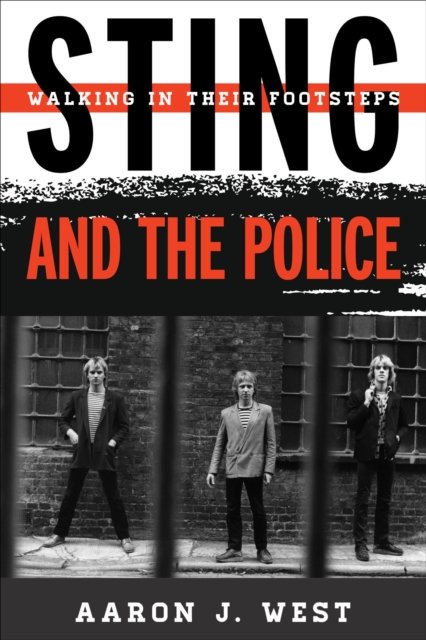
In this critical study, Aaron West, a music critic and professional musician, explores the cultural and musical impact of Stewart Copeland, Andy Summers, and Sting--the band known as The Police. West details the distinctive hybrid character of The Police's musical output, and he shows how the band were pioneers in music video, modern label marketing, global activism, and the internationalization of pop music.--From publisher description.
Book
The words and music of Sting
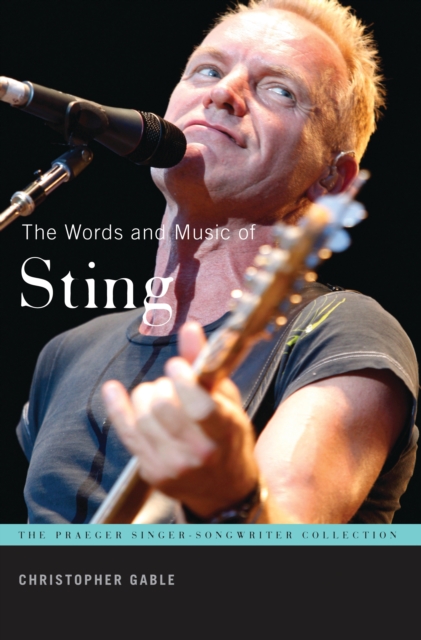
Sting has successfully established himself as one of the most important singer-songwriters in Western popular music over the past twenty years. His affinity for collaborative work and disparate musical styles has pushed his music into an astonishing array of contexts, but no matter what the style or who the collaborator, Sting's voice always remains distinct, and this fact has earned him success amongst a correspondingly broad audience. The Words and Music of Sting subdivides Sting's life and works into rough periods of creative activity and offers a fantastic opportunity to view Sting's many stylistic changes within a coherent general framework. After analyzing Sting's musical output album by album and song by song, author Christopher Gable sums up Sting's accomplishments and places him on the continuum of influential singer-songwriters, showing how he differs and relates to other artists of the same period. Aside from his commercial success, Sting is also interesting for the use of recurring themes in his lyrics (such as family relationships, love, war, spirituality, and work) and for his use of jazz and world music to illustrate or work against the meaning of a song. Sting's life also sheds light on his music, as his working-class roots in Newcastle, England are never far removed from his international superstardom. Throughout his life, he has been musically open-minded and inquisitive, always seeking out new styles and often incorporating them into his compositions.
eBook
Sting and the Police
In Sting and The Police: Walking in Their Footsteps, Aaron J. West explores the cultural and musical impact of Stewart Copeland, Andy Summers, and Sting. West details the distinctive hybrid character of The Police's musical output, which would also characterize Sting's post-Police development as a musician.
eBook

POP MUSIC; Lord Sting, at Peace In His Fields of Gold
Belying its title, \"Mercury Falling\" continues Sting's trajectory away from the downbeat introspection that had become the hallmark of his post-Police career. Like his last full-scale studio album, \"Ten Summoner's Tales\" (1993), which sold more than eight million copies worldwide, \"Mercury Falling\" is an eclectic showcase for Sting's pop gifts, but the mood is more buoyant. There's even a song in which he sings, \"I saw a friend of mine/ He said I look different somehow/ I said everybody's got to leave their darkness behind sometime.\" True to form, Sting spans a wide spectrum of musical styles on \"Mercury Falling,\" from the Brazilian slide of \"I Was Brought to My Senses\" to the mock-country twang of \"I'm So Happy I Can't Stop Crying\" to \"Let Your Soul Be Your Pilot,\" a rousing gospel number that features a church choir and the Memphis Horns. In a review of the Academy concert, Jon Pareles of The Times said of Sting's new material, \"No other top 10 contender is so fond of odd meters or mid-song shifts of style.\" Sting at his 16th-century manor house near Stonehenge--Amellower and more aristocratic persona. (Jonathan Player for The New York Times) (pg. 1); Sting on his 60-acre estate southwest of London--Pastoral pleasures, mellower air. (Fabrizo Ferri); Sting in the 1988 film \"Stormy Monday\"--A performance called \"the movie's biggest surprise.\" (Atlantic Releasing); Sting in the 1984 movie \"Dune\"--He says he's \"not sitting by the phone waiting for Hollywood to call.\" (Universal Pictures); Sting, center, with Andy Summers, left and Stewart Copeland of the Police. (A&M Records)
Newspaper Article
POP VIEW; IF OLD SONGS DON'T FIT, DON'T SING THEM
It was shtick, tantrum and all; [Sting] probably would have sung ''[Roxanne]'' even if the whole audience had yelled for such Police obscurities as ''Murder by Numbers'' or ''A Sermon.'' But that didn't make Sting's complaint any less germane. There he was, all of 35 years old (as he'd said on stage earlier), singing lyrics that declared, ''I won't share you with another boy'' - lyrics that, even if he identified with them when he wrote ''Roxanne'' sometime in the late 1970's, must seem ancient and distant now. For better and worse, a hit can crystallize a performer's public image, the way the Rolling Stones's ''Satisfaction'' (actually the band's second self-written hit, after ''The Last Time'') defined them as raunchy, rebel cynics then and perhaps forever. Fans emphatically rejected Mick Jagger's 1987 nice-guy album, ''Primitive Cool,'' but even jaded music-business types got hot under their cummerbunds when Mr. Jagger belted out ''Satisfaction'' at the Rock and Roll Hall of Fame last month. For that matter, John Lydon's band, Public Image Ltd., which started as a reaction against Mr. Lydon's previous incarnation as Johnny Rotten of the Sex Pistols, now revives Sex Pistols songs. Since pop musicians now expect careers to last well past the one-hit wonder years, it's worth considering what sorts of songs have longer half-lives. Some age well, and some just don't. Up-to-the-second slang (like Paul Simon's ''feelin' groovy'' in ''The 59th Street Bridge Song'' or Michael Jackson's ''I'm bad'' in ''Bad'') wears poorly; so do fashion details (Run-D.M.C.'s ''My Adidas''), topical references and age-related terms like ''boy,'' ''girl'' or ''Teenager in Love.'' Protestations of innocence grow more improbable year by year; anger and cynicism, however, and sadder-but-wiser sentiments are perennials. Paeans of true love or true lust are always current, too.
Newspaper Article
POP REVIEW; Understated Showcase For Sting's New Songs
Following the implicit advice of the new \"Let Your Soul Be Your Pilot,\" songs often look back to 1960's soul music, and Sting's band now includes a four-man horn section and three female backup singers. \"You Still Touch Me\" could almost be a version of \"Every Breath You Take\" backed by Booker T. and the M.G.'s.; \"25 to Midnight\" is Motown bent into an odd meter. Despite Sting's warnings, the music was in fine shape. \"I Hung My Head,\" about an accidental shooting, easily balanced between folk-rock and soul; \"All Four Seasons,\" about loving a changeable woman, had the easy calm and the abundant metaphors of its model, the Temptations' \"My Girl\" (written by Smokey Robinson). Only \"Valparaiso,\" about separation and a sea journey, lost its dreamy yearning in a strained, earthbound performance. \"We'll be back in the summer,\" Sting said after \"Fragile,\" the last encore. \"We'll be better.\" By then, the musicians will be more practiced; with luck, they'll hold on to an element of risk.
Newspaper Article
Pop View; Wait a Minute, Mr. Postman: Sting Takes on His Critics
Rock critics are daily confronted with the fact that rock music owes its strength in large measure to the intensity of the emotions it kindles; that reality draws young musicians to rock, and it draws young critics, too. This has partly to do with its very nature, direct and humanistic (as opposed to complex and formalistic), and partly with the prevailing youth, and hence less maturely modified passions, of its fans. Sting's Chronicle letter provoked an expected range of replies, including one from Crissy Baker of Mill Valley who ended her letter, ''I love you, Sting.'' Against that sort of devotion, a mere critic carries a mighty puny popgun. Lou Reed, one of our most talented and career-savvy rock stars, seemed to be taking that tack when he launched a campaign a decade ago against Robert Christgau of the Voice and myself. Bob and I even got included in the lyrics of one of Lou's recorded songs, which is a credit that none of Sting's targets can yet claim. It made us quite happy. Lou too, I'll bet. Ultimately, [Sting] and any performer, rock or otherwise, would be best advised to build up the ''broad shoulders and thick skin'' he says in his San Francisco letter that he already has. Perform and compose and carry on as honorably and effectively as you can. And personally, Sting, do me a favor: don't clutter up your future shows by giving 10 minutes of time to every critic who's ever taken a potshot at you. The vision of hundreds of showboating amateurs banjo-picking their way through ''Sweet Adeline'' is almost too horrible to contemplate.
Newspaper Article
STING MAKES A FORAY INTO JAZZ
''The Dream of the Blue Turtles,'' may not be wildly exploratory, but it still contains many musically eloquent moments. Sting's impassioned, reedy voice and Mr. [Branford Marsalis]'s tenor sax shiver together on the gospelish pop-jazz ballad, ''If You Love Somebody Set Them Free.'' ''Russians'' cloaks a melodic fragment by Prokofiev with organ and bells to sound like a Christmas carol for the Kremlin. The sounds of delicately malletted percussion, organ and light saxophone licks lend a hymnlike ethereality to ''We Work the Black Seam,'' a tribute to British coal miners. The arrangement also illuminates the song's deeper contemplation of power hidden in the earth and its comparisons between the irresponsible exploitation of human labor and of natural resources. ''Children's Crusade,'' a touching lament about how the young are the casualties of wars initated by the old, is a ringingly elegiac waltz. And in the stealthy ''Moon Over Bourbon Street,'' one hears, as in a dream, the distant sounds of a dixieland band playing a wistful Baroque-styled theme. Moreover a number of Sting's songs sound as though they were written to be recited by school children. In ''Russians,'' a sermonette on behalf of disarmament, the singer flaunts multisyllable rhymes like ''ideology'' and ''biology'' as though he were conducting an elocution class. The pop-reggae tune, ''Love Is the Seventh Wave'' also ''teaches'' a mystical humanism in poeticized turn-of-the-century-flavored verses. And ''Fortress Around Your Heart'' is a studiously constructed parable about war and love that invites dissection of its metaphors.
Newspaper Article
Review/Pop; A Subtler Sting Cuts Loose in a Smaller Hall
While [Sting] the musician is in fine form, Sting the songwriter was only coasting on his current album, \"10 Summoner's Tales.\" Too many songs depend on vamps and patter-song recitative, while the more tuneful ones echo his older material. The songs aren't mere genre exercises: In \"Love Is Stronger Than Justice,\" an odd-meter (7/4) funk vamp emulating Little Feat gives way to a foursquare country chorus, while the superb \"It's Probably Me\" unsettles a ballad with ambiguous, jazzy chords. But the musicianly satisfactions of making a kinetic groove in 5/4 (\"Seven Days\") or 7/4 (\"St. Augustine in Hell\") would double if the verses had full-fledged melodies.
Newspaper Article
RECORDINGS VIEW; Sting Plays a Modern-Day Chaucer
\"St. Augustine in Hell\" is far from the most substantial song on Sting's new album, \"Ten Summoner's Tales\" (A&M 314540070-2; CD and cassette). But its playful mood typifies much of the material on his fourth and most melodic solo album. Where Sting's previous two records were shadowed by the death of his parents (his mother's spirit haunted \"Nothing Like the Sun,\" and visions of his father ran through \"The Soul Cages\"), \"Ten Summoner's Tales\" is a collection of fanciful vignettes that feel less weighed-down with autobiography. Even the joking title, which makes a pun on Sting's name, Gordon Sumner, suggests that the singer and songwriter has decided to lighten up by playing a modern-day Chaucerian storyteller. \"If I Ever Lost My Faith in You,\" the first single to be released from the album, is a classic Sting song, almost stately on the surface but churningly romantic underneath. \"Fields of Gold,\" a flowing modern folk ballad with a Scots-Irish flavor, is stylistically transformed with a delicate Latin pulse. In \"It's Probably Me,\" Sting executes a flawless dive into a melancholy film-noir mode, complete with muted-trumpet flavorings. An austere Middle Eastern modality defines \"Something the Boy Said,\" an eerie ballad about a death march and an unheeded prophecy.
Newspaper Article