
Catalogue Search | MBRL


Are you sure you want to remove the book from the shelf?

{{itemTitle}}
4
result(s) for
"Stockhausen, Karlheinz, 1928-2007 -- Criticism and interpretation"
Sort by:


New Music at Darmstadt
New Music at Darmstadt explores the rise and fall of the so-called 'Darmstadt School', through a wealth of primary sources and analytical commentary. Martin Iddon's book examines the creation of the Darmstadt New Music Courses and the slow development and subsequent collapse of the idea of the Darmstadt School, showing how participants in the West German new music scene, including Herbert Eimert and a range of journalistic commentators, created an image of a coherent entity, despite the very diverse range of compositional practices on display at the courses. The book also explores the collapse of the seeming collegiality of the Darmstadt composers, which crystallised around the arrival there in 1958 of the most famous, and notorious, of all post-war composers, John Cage, an event Carl Dahlhaus opined 'swept across the European avant-garde like a natural disaster'.
eBook

New music at Darmstadt : Nono, Stockhausen, Cage, and Boulez
New Music at Darmstadt explores the rise and fall of the so-called 'Darmstadt School', through a wealth of primary sources and analytical commentary. Martin Iddon's book examines the creation of the Darmstadt New Music Courses and the slow development and subsequent collapse of the idea of the Darmstadt School, showing how participants in the West German new music scene, including Herbert Eimert and a range of journalistic commentators, created an image of a coherent entity, despite the very diverse range of compositional practices on display at the courses. The book also explored the collapse of the seeming collegiality of the Darmstadt composers, which crystallised around the arrival there in 1958 of the most famous, and notorious, of all post-war composers, John Cage, an event that, Carl Dahlhaus opined, 'swept across European avant-garde like a natural disaster'.
BOOK
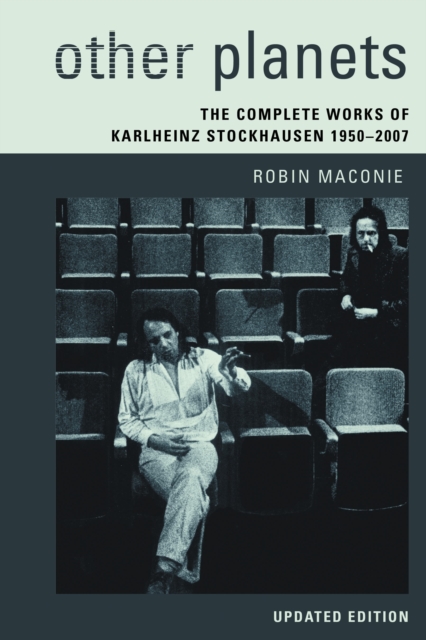
Other Planets
German composer Karlheinz Stockhausen was arguably the most influential figure of the European postwar avant-garde and unquestionably the most elusive and enigmatic musical thinker of a generation that includes Pierre Boulez, John Cage, and Luciano Berio. His radically new electronic and instrumental music converted Igor Stravinsky to serialism in the 1950s and has continued to inspire young composers for more than fifty years. Other Planets: The Complete Works of Karlheinz Stockhausen, 1950–2007 draws on more than fifty years of Maconie's close study of Stockhausen and functions as a catalogue raisonee of Stockhausen's complete output. With plentiful citations from the history of radio, film, and sound recording, as well as from contemporary science and technology, the book is laid out in chronological order and contains ample commentary on the composer's sources of inspiration. Each composition is also fully documented within the text, giving full information of each work's publisher, catalog number, instrumentation, duration, and authorized compact disc. The updated edition extends the range of the volume's contents to include the twenty-five works Stockhausen composed between 2004 and his death in 2007. Stockhausen's status in the history of music in the late twentieth century can now be appreciated with unprecedented clarity. All listeners will benefit from this work, and American music lovers in particular will find it an invaluable guide to the ongoing debate and rivalry over the sources of abstract expressionism and the avant-garde.
eBook