
Catalogue Search | MBRL


Are you sure you want to remove the book from the shelf?

{{itemTitle}}
6
result(s) for
"Storytelling Appalachian Region."
Sort by:

My curious and jocular heroes : tales and tale-spinners from Appalachia
\"With this book, Jones introduces to new generations four scholars of Appalachian folkways who made major contributions to the arts, culture, and values of the Appalachian people. Bascom Lamar Lunsford, born in North Carolina, collected ballads, songs, tunes, and stories--before there were tape recorders--by committing them all to memory and later recording his \"memory collection\" for Columbia University (1935) and the Library of Congress (1949). Josiah H. Combs, a Kentuckian who got a doctorate at the Sorbonne, taught languages, collected stories and songs, gave ballad recitals, was an authority on Kentucky mountain speech, and was a great raconteur. Cratis D. Williams, another Kentuckian, was the father of Appalachian studies based on his massive dissertation, The Southern Mountaineer in Fact and Fiction. He was a scholar and teacher, a singer of the old ballads, and teller of folk tales. He became Jones's treasured mentor. And the master storyteller Leonard W. Roberts, also born in Kentucky, was a pioneer collector and publisher of Old World folktales, riddles, ballads, and lyric songs, too. Beyond mere biography, this book introduces the reader to some of the lore preserved and performed by Lunsford, Combs, Williams, and Roberts throughout their lives. The end of each biographical chapter is filled with collected stories, songs, and jokes representing the breadth of each man's research and repertoire. With \"My Curious and Jocular Heroes,\" Jones provides not only the historical and cultural contexts of the lives of four of his personal heroes, but also brings together significant texts and music from Appalachian folklore in order to make a contribution to the field of Appalachian studies\"-- Provided by publisher.
Book

Using Culturally Focused Storytelling to Empower Appalachian Kentucky Youth to Understand and Address Cancer Disparities in Their Communities
Kentucky has the highest cancer incidence and mortality rates in the nation with the Appalachian region of the state being most affected. These rates are driven by health behaviors and inequities in social determinants of health. Herein, Appalachian Kentucky students with the University of Kentucky’s Appalachian Career Training in Oncology (ACTION) program were engaged in a storytelling exercise by writing culturally framed essays. Students discussed their personal experiences with cancer and their thoughts on the causes of and potential solutions to Appalachian Kentucky’s cancer disparities. Content analysis was used to identify common themes, subthemes, and subtopics in the essays regarding cancer types, causes of cancer in Appalachia, and solutions to the high cancer rates. Common cancer types experienced by the students included breast, lung, and prostate. The most frequently identified themes that drive cancer rates in Appalachian Kentucky were identified as geography, environmental factors, tobacco use, education, poverty, prevention, and mistrust. Common proposed solutions to decrease cancer rates were to increase education and awareness, screening, and tobacco cessation. Overall, through storytelling, youth gained a better understanding of cancer in their communities and envisioned culturally tailored, community-based intervention strategies that can aid in reducing the cancer burden in Appalachian Kentucky.
Journal Article

My Curious and Jocular Heroes
We were going down the road, and we came to this house. There was a little boy standing by the road just crying and crying. We stopped, and we heard the biggest racket you ever heard up in the house. œWhat ™s the matter, son? œWhy, Maw and Paw are up there fightin ™. œWho is your Paw, son? œWell, that ™s what they are fightin ™ over. Brimming with ballads, stories, riddles, tall tales, and great good humor, My Curious and Jocular Heroes pays homage to four people who guided and inspired Loyal Jones ™s own study of Appalachian culture. His sharp-eyed portraits introduce a new generation to Bascom Lunsford, the pioneer behind the œmemory collections of song and story at Columbia University and the Library of Congress; the Sorbonne-educated collector and performer Josiah H. Combs; Cratis D. Williams, the legendary father of Appalachian studies; and the folklorist and master storyteller Leonard W. Roberts. Throughout, Jones highlights the tales, songs, jokes, and other collected nuggets that define the breadth of each man ™s research and repertoire.
eBook
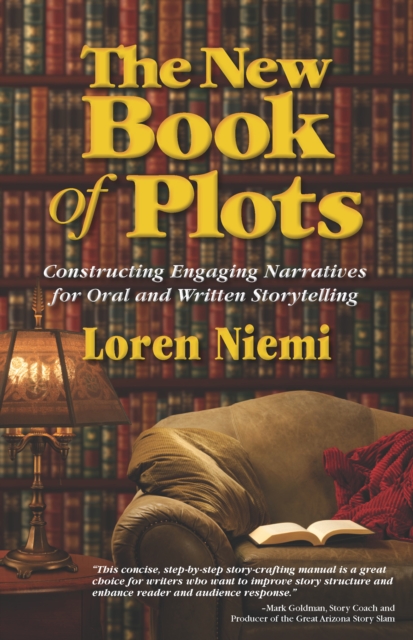
The New Book of Plots
In the space of the thirty-some years I have called myself a storyteller, the balance of what I tell has shifted from children's stories and traditional folk and fairy tales told in schools, churches, and community centers to stories drawn directly from my own experiences. But I also understand that by adapting and re-imagining traditional folk and fairy tale material, you can provide a point of entry for contemporary listeners to experience, as psychologist Bruno Bettelheim has suggested in his book The Uses of Enchantment, the continuing power of the old stories to speak to the imagination and heart. Wanting to make a connection between the older stories and our existential circumstance, I sought to re-interpret folk and fairy tales by placing them in a more contemporary context. The confusing Black Forest of the Brothers Grimm became the crowded shopping mall. Rapunzel's mother sought a more familiar drug than the painkilling herbs of the witch's garden. I also created stories that were in the style of the older folk and fairy tales. One featured a lowly cucumber plant that, after consuming radioactive water and junk-food compost, became the glowing, green Godzilla of pickles. Another featured a boy named Jack, who found fame and fortune racing inner-city cockroaches. In creating and performing original stories and reimagined folk tales, as well as teaching stories to students of all ages, it has become clear to me that how we tell the story, as much as why, is at the very heart of the art. By \"how,\" I do not mean how we use voice and gesture, etc., but how we organize stories to get across their meanings to an audience. There are two central facts at the heart of the oral story. The first is that it begins when the teller begins and ends when the teller ends it, though I could argue that it actually ends when the audience dismisses it. This is fundamentally different from the written story, where a reader can go back and read the same words again. With the spoken word, we are in the moment. Even if we could ask the teller to go back and say something again, the very act of asking would alter the way in which the information is conveyed to us. This leads directly to the second basic fact: the act of telling is an expression of the relationship of the teller to the audience. We always tell to someone, even if it is to ourselves. It is incumbent upon us to recognize that the choice we make about how we tell a story to a given audience is as much about our understanding of who that audience is as it is about what we are saying to the audience.It is this crucial understanding of how the narrative is shaped and the choices we make as tellers to share a particular version of a story with a particular audience that I wish to explore with you. Whether we are working with a live audience in performance or with an imagined one while typing away on our laptops, the creation of compelling fiction and non-fiction begins with how to frame the story. This book is for storytellers and would-be storytellers, whether you call yourself a writer, minister, politician, journalist, lawyer, teacher, therapist, or street-corner b.s.'er. Whatever the name, the benefit you derive from the application of this material to your creative process will come from understanding how narrative is shaped and making conscious decisions about shaping that narrative content. This book was developed in workshops and classes I've conducted with storytellers and writers since 1986. In the course of those years, this teaching practice has refined my thinking and improved my ability to help participants discover new approaches to creating powerful, authentic, and entertaining stories.Much of what I say will be framed around the creation of stories as oral performance, but the concepts and exercises I suggest apply to written material as well. Whether the stories are oral or written, this book is about three things: the choice of an appropriate narrative form to provide the story's structure, the choice of an appropriate point of view and timeframe to support the story's emotional arc, and how those choices help or hinder the transmission of the meaning of the story to an audience.
eBook
Three mountain tales
Appalshop's Roadside Theater produced these mountain folk tales, illustrated with pastel drawings by Angelyn DeBord. Told in mountain dialect and accompanied by fiddle, banjo and guitar, these stories are entertaining for young and old alike. 'Fat and Lean' is a ghost story with a comic twist. 'Little Fish Story' is a tale from the Smoky Mountains about friendship and the origins of rainbows. 'The Big Toe' is the story of a little boy's encounter with a big, hairy goblin whose toe looked too much like a potato. The film is both a document of traditional regional storytelling and an example of the collaborative art & media that has come out of Appalshop for decades.
Streaming Video

When craft & storytelling come TOGETHER
When Smith was a college student, majoring in English literature at Hollins Col- lege in Roanoke, Va., she struggled, like many young writers, at finding her writer's voice. Because she looked at writing as a serious endeavor, she thought it required important or dra- matic events described in formal, third-person English. [...] it had to be third person, like a history book.
Magazine Article