
Catalogue Search | MBRL


Are you sure you want to remove the book from the shelf?

{{itemTitle}}
82
result(s) for
"Street-railroads."
Sort by:

Private sector participation in light rail-light metro transit initiatives
This book aims to help governments and public authorities to establish effective light rail-light metro transit (LRMT) systems, and focuses on use of Public-Private Participation (PPP) arrangements. Rather than identify a single approach, authors present options and discuss practical issues related to preparing and implementing new LRMT PPP schemes. The approach is focused on providing information that can be used to make informed decisions, adapted to local policy and objectives. The material presented is intended as a practical guide to developing LRMT PPPs in both developed and developing countries. This work endeavors to provide answers to readers' questions regarding how to successfully incorporate private sector participation in LRMT with a lesser emphasis on why LRMT and the private sector may be beneficial. The primary focus of this text is guiding the reader from design through to project implementation. It starts from the premise that underlying transport policy decisions will have already been made and that LRMT has already been identified as the appropriate transport solution. The authors have included some limited discussion of policy and technical issues where these directly impact the LRMT PPP approach. The approach is presented in nine sections, and in preparing it the author drew on current international LRMT PPP experience, through a series of interviews and case studies. The sections covered are: 1) urban transport and LRMT: an overview of urban transport policy, the characteristics of LRMT schemes and the influences on LRMT policies; 2) technical issues: a brief review of some key technical issues inherent in LRMT schemes and their potential impact on PPP design and implementation; 3) incorporating private sector participation in LRMT initiatives: what PPP has to offer, and an overview of the issues and stages public authorities follow to establish successful LRMT PPP arrangements; 4) understanding and managing risk: analyzing and allocating risks and responsibilities among stakeholders in the LRMT scheme and practical ways of designing risk allocation rules; 5) PPP, design, specifications and performance management: setting service standards and specifications and establishing associated costs; developing of performance and payment indicators and managing compliance; 6) funding and finance: large LRMT capital and system maintenance requirements require strong financing arrangements. The practical use of public and private financing mechanisms under PPP arrangement is reviewed; 7) developing a PPP agreement: looking at the main types of PPP agreements, an outline framework for developing the contractual arrangement is developed through re-view of key issues; 8) procurement: reviewing the approaches that the public authority can use to select the private partner; and 9) conclusions.
eBook

City trains
\"Hop on a city train to see where they go, how they work, and why so many people use trains as public transport.\"--Back cover.
Book

The urban rail development handbook
CHAPTER 1. Introduction; CHAPTER 2. Urban Rapid Transit as an Opportunity for Sustainable and Inclusive Development; CHAPTER 3. Deciding Whether to Develop an Urban Rail Project; CHAPTER 4. Project Management Planning; CHAPTER 5. Designing an Urban Rail Project; CHAPTER 6. Project Optimization; CHAPTER 7. Managing Risks; CHAPTER 8. Procuring the Project; CHAPTER 9. Structuring Public-Private Partnerships; CHAPTER 10. Maximizing Funding and Financing; CHAPTER 11. Preparing for Construction; CHAPTER 12. Institutional Set-Up and Governance of Urban Rail; CHAPTER 13. Ensuring Operational and Financial Sustainability; CHAPTER 14. Addressing Social Impacts of Urban Rail Projects; CHAPTER 15. Environment, Health, and Safety Management; CHAPTER 16. Improving Accessibility and Shaping Urban Form; CHAPTER 17. Climate and Natural Hazard Resilience in Urban Rail Projects; INDEX.
Book


Private Sector Participation in Light Rail/Light Metro Transit Initiatives
This book aims to help governments and public authorities to establish effective LRMT systems, and focuses on use of Public Private Participation (PPP) arrangements. Rather than identify a single approach, we present options and discuss practical issues related to preparing and implementing new LRMT PPP schemes. The approach is focused on providing information that can be used to make informed decisions, adapted to local policy and objectives.The material presented is intended as a practical guide to developing LRMT PPPs in both developed and developing countries. This work endeavors to provide answers to readers questions regarding how to successfully incorporate private sector participation in LRMT with a lesser emphasis on why LRMT and the private sector may be beneficial. The primary focus is guiding the reader from design through to project implementation. It starts from the premise that underlying transport policy decisions will have already been made and that LRMT has already been identified as the appropriate transport solution. We have included some limited discussion of policy and technical issues where these directly impact the LRMT PPP approach.The approach is presented in nine sections, and in preparing it the author drew on current international LRMT PPP experience, through a series of interviews and case studies. The sections covered are: Urban Transport and Light Rail/Light Metro Transit Technical Issues Incorporating Private Sector Participation in LRMT Initiatives Understanding and Managing Risk Public-Private Partnership Design, Specifications, and Performance Management Funding and Finance Contractual Arrangements Procurement Conclusions.
eBook
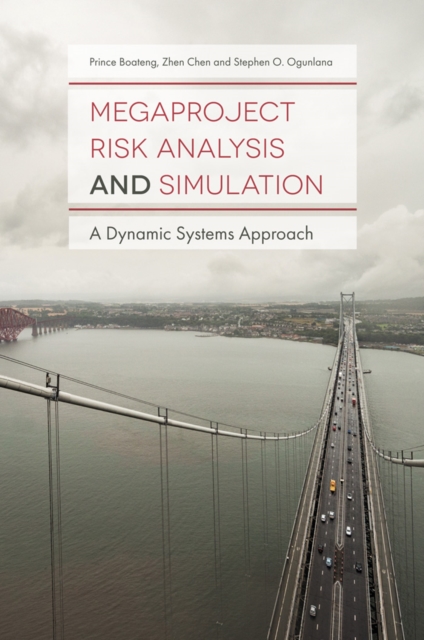
Megaproject Risk Analysis and Simulation
Providing new knowledge on risk analysis and simulation for megaprojects, this book is essential reading for both academics and practitioners. Its focus is on technical descriptions of a newly developed dynamic systems approach to megaproject risk analysis and simulation. This is backed up by a discussion of the methodology as applied in a comprehensive case study on the Edinburgh Tram Network (ETN) project. The book informs both academic researchers and megaproject stakeholders with the latest information on risk as applied to megaprojects. As well as the complete case study, the book includes a general risk analysis framework for megaprojects, an analytic network process (ANP) method for risk quantification, a system dynamics (SD) method for risk simulation, and practical guides for the application of the dynamic systems approach in megaproject research and practice.
eBook

Twin Cities by Trolley
Twin Cities by Trolley offers a rolling snapshot of Minneapolis and St. Paul from the 1880s to the 1950s, when the streetcar system shaped the entire area. More than 400 photographs and 70 maps let the reader follow the tracks from Stillwater to Lake Minnetonka, through Uptown to downtown Minneapolis. The illustrations show nearly every Twin Cities neighborhood as it once was.
eBook