
Catalogue Search | MBRL


Are you sure you want to remove the book from the shelf?

{{itemTitle}}
123,777
result(s) for
"Strength of materials."
Sort by:


Scaling of structural strength
This book is concerned with a leading-edge topic of great interest and importance, exemplifying the relationship between experimental research, material modeling, structural analysis and design. It focuses on the effect of structure size on structural strength and failure behaviour. Bazant's theory has found wide application to all quasibrittle materials, including rocks, ice, modern fiber composites and tough ceramics. The topic of energetic scaling, considered controversial until recently, is finally getting the attention it deserves, mainly as a result of Bazant's pioneering work. In this new edition an extra section of data and new appendices covering twelve new application developments are included. * The first book to show the 'size effect' theory of structure size on strength* Presents the principles and applications of Bazant's pioneering work on structural strength * Revised edition with new material on topics including asymptotic matching, flexural strength of fiber-composite laminates, polymeric foam fractures and the design of reinforced concrete beams
eBook

Mechanics of materials for dummies
Provides plain-English explanations of all the topics you'll encounter in a typical undergraduate course, including principles of equilibrium, geometric compatibility, and material behavior; stress and its relation to force and movement; strain and its relation to displacement; and methods for calculating deformations and indeterminate systems.
Book

Controlled fragmentation of multimaterial fibres and films via polymer cold-drawing
Cold-drawing of multimaterial fibres consisting of a brittle core embedded in a ductile polymer cladding results in controllable fragmentation of the core to produce uniformly sized rods parallel to the drawing direction for cylindrical geometries and narrow, parallel strips perpendicular to the drawing direction for flat geometries.
A new tool for nanofabrication
Polymer fibres such as nylon and polyester are often formed by cold-drawing, whereby the raw, brittle plastic is put under tensile stress and pulled — or 'drawn' — into thinner fibres. In a study of cold-drawing in the context of multimaterial structures consisting of a brittle core clad in a polymeric fibre or film, Ayman Abouraddy and colleagues have observed a surprising phenomenon that could be exploited to produce novel nanomaterials. They show that as the 'shoulder' between the thicker intact fibre and the thinner 'neck' region of the fibre propagates, the brittle core fragments evenly and predictably to form a train of equally spaced fragments within the polymer fibre, which can, if desired, be dissolved to leave only the core material. The phenomenon occurs regardless of core cross-section or material — silicon, germanium, gold, silk, polystyrene and even ice behave in this way — and both fibres and sheets can be cold-drawn to the same effect.
Polymer cold-drawing
1
,
2
,
3
,
4
is a process in which tensile stress reduces the diameter of a drawn fibre (or thickness of a drawn film) and orients the polymeric chains. Cold-drawing has long been used in industrial applications
5
,
6
,
7
, including the production of flexible fibres with high tensile strength such as polyester and nylon
8
,
9
. However, cold-drawing of a composite structure has been less studied. Here we show that in a multimaterial fibre
10
,
11
composed of a brittle core embedded in a ductile polymer cladding, cold-drawing results in a surprising phenomenon: controllable and sequential fragmentation of the core to produce uniformly sized rods along metres of fibre, rather than the expected random or chaotic fragmentation. These embedded structures arise from mechanical–geometric instabilities associated with ‘neck’ propagation
2
,
3
. Embedded, structured multimaterial threads with complex transverse geometry are thus fragmented into a periodic train of rods held stationary in the polymer cladding. These rods can then be easily extracted via selective dissolution of the cladding, or can self-heal by thermal restoration to re-form the brittle thread. Our method is also applicable to composites with flat rather than cylindrical geometries, in which case cold-drawing leads to the break-up of an embedded or coated brittle film into narrow parallel strips that are aligned normally to the drawing axis. A range of materials was explored to establish the universality of this effect, including silicon, germanium, gold, glasses, silk, polystyrene, biodegradable polymers and ice. We observe, and verify through nonlinear finite-element simulations, a linear relationship between the smallest transverse scale and the longitudinal break-up period. These results may lead to the development of dynamical and thermoreversible camouflaging via a nanoscale Venetian-blind effect, and the fabrication of large-area structured surfaces that facilitate high-sensitivity bio-detection.
Journal Article


Grain Boundary Decohesion by Impurity Segregation in a Nickel-Sulfur System
The sulfur-induced embrittlement of nickel has long been wrapped in mystery as to why and how sulfur weakens the grain boundaries of nickel and why a critical intergranular sulfur concentration is required. From first-principles calculations, we found that a large grain-boundary expansion is caused by a short-range overlap repulsion among densely segregated and neighboring sulfur atoms. This expansion results in a drastic grain-boundary decohesion that reduces the grain-boundary tensile strength by one order of magnitude. This decohesion may directly cause the embrittlement, because the critical sulfur concentration of this decohesion agrees well with experimental data on the embrittlement.
Journal Article

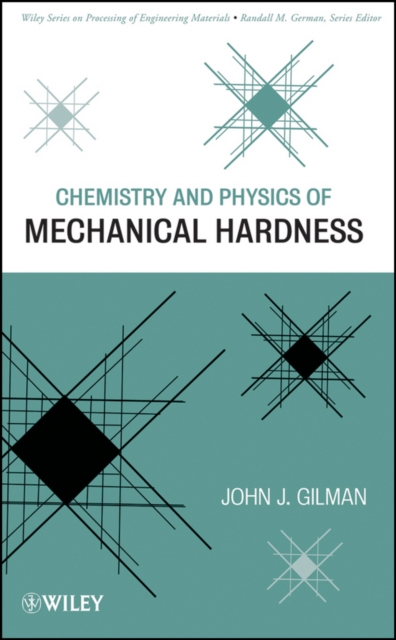
Chemistry and physics of mechanical hardness
Hardness is one the most important properties of solid materials and requires a comprehensive treatment. There are books on hardness testing and on the hardnesses of particular types of materials, but there are none that treat the physics and chemistry of the subject in a general way. Atomic Basis of Mechanical Hardness presents a general introduction for materials scientists and mechanical engineers who are interested in hardness measurement and the connection between hardness and fundamental materials properties. Various materials types.
eBook


Mechanism of Crack Development and Strength Deterioration in Controlled Low-Strength Material in Dry Environment
The continuous expansion at the urban scale has produced a lot of construction waste, which has created increasingly serious problems in the environmental, social, and economic realms. Reuse of this waste can address these problems and is critical for sustainable development. In recent years, construction waste has been extensively recycled and transformed into highly sustainable construction materials called controlled low-strength materials (CLSMs) in backfilling projects, pile foundation treatment, roadbed cushion layers, and other applications. However, CLSMs often experience shrinkage and cracking due to water loss influenced by climatic temperature factors, which can pose safety and stability risks in various infrastructures. The purpose of this paper was to study the mechanism of crack formation and strength degradation in a CLSM in a dry environment and to analyze the deterioration process of the CLSM at the macro- and micro-scales by using image analysis techniques and scanning electron microscopy (SEM). The test results show that with the drying time, the CLSM samples had different degrees of cracks and unconfined compressive strength (UCS) decreases, and increasing the content of ordinary Portland cement (OPC) reduced the number of cracks. The addition of bentonite with the same OPC content also slowed down the crack development and reduced the loss of UCS. The development of macroscopic cracks and UCS is caused by the microscopic scale, and the weak areas are formed due to water loss in dry environments and the decomposition of gel products, and the integrity of the microstructure is weakened, which is manifested as strength deterioration. This research provides a novel methodology for the reuse of construction waste, thereby offering a novel trajectory for the sustainable progression of construction projects.
Journal Article