
Catalogue Search | MBRL


Are you sure you want to remove the book from the shelf?

{{itemTitle}}
11
result(s) for
"Structural engineering History and criticism."
Sort by:

Christian Menn : Brèucken = bridges
\"Christian Menn is one of the most renowned structural engineers in the world. He is known in particular for his remarkable bridges, such as the Leonard P. Zakim Bunker Hill Memorial Bridge in Boston. This book is the first to document Menn's work in detail, alongside his vision, philosophy, and thinking about design and engineering. Presenting around thirty of his designs--both built and unbuilt--via full-color photographs, plans, and drawings, the book celebrates Menn's creative solutions to challenging engineering problems and his constant rethinking of the fundamentals of his profession. Menn's own writings on his work are accompanied by essays from fellow engineer David P. Billington, scholar Werner Oechslin, writer Iso Camartin, and others, all of whom offer different takes on Menn's achievement.\"-- Amazon.com.
Book

Mind in Architecture
Although we spend more than ninety percent of our lives inside buildings, we understand very little about how the built environment affects our behavior, thoughts, emotions, and well-being. We are biological beings whose senses and neural systems have developed over millions of years; it stands to reason that research in the life sciences, particularly neuroscience, can offer compelling insights into the ways our buildings shape our interactions with the world. This expanded understanding can help architects design buildings that support both mind and body. InMind in Architecture, leading thinkers from architecture and other disciplines, including neuroscience, cognitive science, psychiatry, and philosophy, explore what architecture and neuroscience can learn from each other. They offer historical context, examine the implications for current architectural practice and education, and imagine a neuroscientifically informed architecture of the future. Architecture is late in discovering the richness of neuroscientific research. As scientists were finding evidence for the bodily basis of mind and meaning, architecture was caught up in convoluted cerebral games that denied emotional and bodily reality altogether. This volume maps the extraordinary opportunity that engagement with cutting-edge neuroscience offers present-day architects.ContributorsThomas D. Albright, Michael Arbib, John Paul Eberhard, Melissa Farling, Vittorio Gallese, Alessandro Gattara, Mark L. Johnson, Harry Francis Mallgrave, Iain McGilchrist, Juhani Pallasmaa, Alberto Pérez-Gómez, Sarah Robinson
eBook
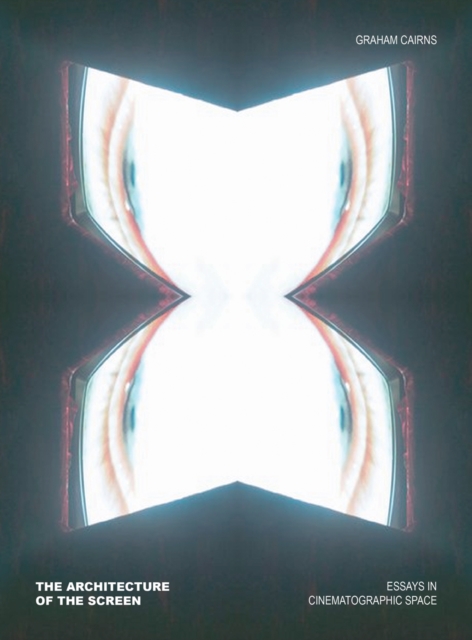
The architecture of the screen
With the birth of film came the birth of a revolutionary visual language. This new, unique vocabulary - the cut, the fade, the dissolve, the pan and the new idea of movement - gave not only artists but also architects a completely new way to think about and describe the visual. The Architecture of the Screen examines the relationship between the visual language of film and the onscreen perception of space and architectural design, revealing how film's visual vocabulary influenced architecture in the twentieth century and continues to influence it today. Graham Cairns draws on film reviews, architectural plans and theoretical texts to illustrate the unusual and fascinating relationship between the worlds of filmmaking and architecture.
eBook

From Work to Text
From the late 1960s into the early 70s, Barthes wrote a series of manifesto pieces announcing the shift in his criticism from structuralist analysis of the working of signs to what has come to be called “poststructuralism.” Poststructuralism exists in many different forms, and Barthes’ writings constitute only one variant, if an influential one. But as it emerged as a movement—and we see, in this piece, the attempt to define a broader philosophical movement—a number of theorists, Barthes included, published programmatic statements describing the new approach. “The Third Meaning,” “Diderot, Brecht, Eisenstein,” “The Death of the Author,” and
Book Chapter

Introduction
This book seeks to demonstrate that substantial editing took place in the history of the Hebrew Bible. It presents empirical evidence¹ that gives exemplary insight into the editorial processes. The examples show how successive scribes updated the texts to accord with changed historical and social circumstances and with new religious concepts. On the basis of evidence that is collected here it can reasonably be assumed that editorial reworking of the Hebrew Bible continued unabated for centuries before the texts gradually became unchangeable. Their growing religious authority does not seem to have precluded scribes from changing the form, meaning, and content
Book Chapter

Obstacles to the Implementation of Lonergan’s Solution to the Contemporary Crisis of Meaning
It was Bernard Lonergan’s view that the challenge facing contemporary philosophy is epochal. It is analogous to the challenge confronted by Socrates, Plato, and Aristotle to complete and consolidate the transition from the ‘mythic mentality’ to the ‘logical mentality.’² As philosophy arose and took root in response to the crisis of self-knowledge provoked by the collapse of the mythic superstructure, so philosophy today is called upon to respond creatively to a second crisis in our knowledge of ourselves. But if the present crisis resembles that faced by the Greeks in its epochal dimensions, it differs from it in a fundamental
Book Chapter
Conclusion
While the immediate aftermath of 9/11 saw Hollywood pull virtually anything from distribution that vaguely resembled the experience of that day, five years later in 2006 the event would be front and center in films such asUnited 93andWorld Trade Center.Writing in February of the same year, Julian Stallabrass noted, “There is . . . a vast outpouring of 9-11 merchandise that surely seeks to heal the image wound: posters of heroic firemen against the backdrop of the fallen towers, badges, caps, T-shirts, magnets and memorial candles.”¹ The cries of “too soon” seemed to have rescinded and
Book Chapter
Working Watersheds
At the same time that my neighbors and I are learning new words—J1s, muds, and fracking, for example—we confront new acronyms such as MCF, MER, PIG.¹ And the terms, the terms keep coming. I discover that to drill on air is to sink a bare bit through the water table. A Christmas tree, I hear, is a collection of pipes on a well top. Someone mentions that horizontal drilling has revolutionized oil and gas production, and an expert reminds me that “all energy requires water; water requires energy.”² Even as I struggle to sort words and terms, big
Book Chapter
STRUCTURAL DESIGNS
Essayist Annie Dillard describes writing as an architectural endeavor, a continuous cycle of design, demolition, and rebuilding. Sentences are the bricks; paragraphs are the walls and windows:
Some of the walls are bearing walls; they have to stay, or everything will fall down. Other walls can go with impunity. . . . Unfortunately, it is often a bearing wall that has to go. It cannot be helped. There is only one solution, which appalls you, but there it is. Knock it out. Duck.¹
Dillard’s metaphor strikes at the emotional heart of the writing process, which involves destruction as well as
Book Chapter
The Travels of Formalism
Rereading the first preface to Wellek and Warren’s 1949Theory of Literature, one cannot ignore their doubts and hesitations and at the same time their elation over the possible senses of theory. The book begins with a naming crisis. The authors are unsure of how to characterize the object of their enterprise, no less than the range of activities and concepts that might be covered by a “theory of.” The senses of theory seem open and difficult to denominate. “Even a proper ‘short title,’ ‘Theory of Literature and Methodology of Literary Study,’ would be too cumbersome,” they admit. “Before the
Book Chapter