
Catalogue Search | MBRL


Are you sure you want to remove the book from the shelf?

{{itemTitle}}
994
result(s) for
"Structural engineering History."
Sort by:
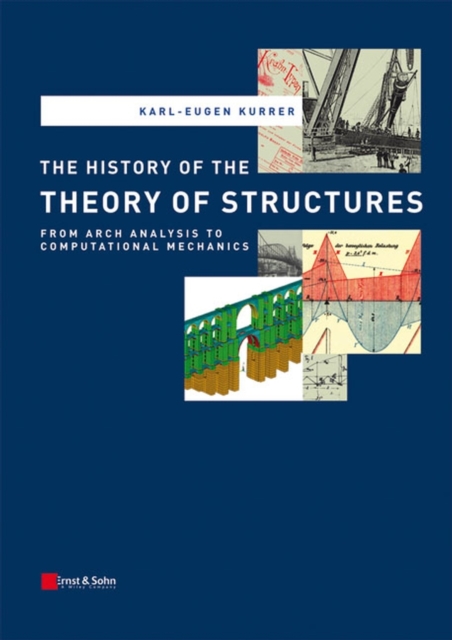
The history of the theory of structures : from arch analysis to computational mechanics
This book traces the evolution of theory of structures and strength of materials - the development of the geometrical thinking of the Renaissance to become the fundamental engineering science discipline rooted in classical mechanics. Starting with the strength experiments of Leonardo da Vinci and Galileo, the author examines the emergence of individual structural analysis methods and their formation into theory of structures in the 19th century. For the first time, a book of this kind outlines the development from classical theory of structures to the structural mechanics and computational mechanics of the 20th century. In doing so, the author has managed to bring alive the differences between the players with respect to their engineering and scientific profiles and personalities, and to create an understanding for the social context. Brief insights into common methods of analysis, backed up by historical details, help the reader gain an understanding of the history of structural mechanics from the standpoint of modern engineering practice. A total of 175 brief biographies of important personalities in civil and structural engineering as well as structural mechanics plus an extensive bibliography round off this work.
eBook

The story of buildings : from the Pyramids to the Sydney Opera House and beyond
\"From the pyramid erected so that an Egyptian pharaoh would last forever to the dramatic, machine-like Pompidou Center designed by two young architects, Patrick Dillon's stories of remarkable buildings and the remarkable people who made them celebrates the ingenuity of human creation.\"--Amazon.com.
Book

Analysing Buildings from Context to Detail in Time. ABCD Research Method
Technology provided the author of this book with the inspiration to develop a more comprehensive research method to assess buildings: Analysing Buildings from Context to Detail in time: ABCD Research Method. Technology, at academic level, should be considered in the analysis of a building. In this book the focus is on construction engineering, the study of the requirements associated with constructing buildings. Providing information on practice is a key element in construction engineering, which is a learning process. Changes are made during the life of a building and they might be made differently if the history and technical aspects of the building were studied in greater detail. Both maintenance and changes require us to understand the building concerned. In essence, a building can be described in detail using the ABCD research method. Experience obtained with other buildings can lead to better considered solutions when designing and building new buildings or intervening in existing buildings. We can recognize layers where changes may have led to interventions in what existed at one time. The ABCD research method is an instrument to show us how changes happened and what the original concepts for the building were. We have to investigate the history of the design and construction of a building to distil this essence.
eBook

Extraordinary skyscrapers : the science of how and why they were built
Skyscrapers are more than just tall buildings. They're engineering wonders and are extraordinary to behold. But have you ever wondered how they were built? Put on your hard hat and go behind the scenes to investigate the world's most amazing skyscrapers. Explore the design, construction, and engineering processes that went into creating these marvelous buildings. Extraordinary Skyscrapers will leave you with a better understanding and a greater appreciation of these incredible structures-- Provided by publisher.
Book

The Rise and Decline of the Italian School of Engineering
This paper tells the story behind the origin, rise and sudden disappearance of the engineering School in Italy in the 20th century. It was not an academic school as such, rather an actual design school that produced an extraordinary heritage of big structures. It was a golden age: by the mid-Sixties Italian structural engineering was recognised as one of the most prestigious in the world. However, just after the economic miracle, the school suddenly ceased to exist, and it has been completely forgotten. Even by historiography.
It is true that some of the leading figures are well-known: Pier Luigi Nervi was maybe Italy’s most famous designer worldwide and even Riccardo Morandi or Sergio Musmeci enjoyed high popularity. But the school was the result of a more complex adventure undertaken by two generations of scientists, designers, contractors and builders. In the absence of a historical reconstruction, that collective story has become lost in the mists of time.
The SIXXI research (XX Century Structural Engineering: the Italian Contribution), funded by a European Research Council (ERC) Advanced Grant, was developed with the aim of tracing and telling that story to engineers, architects and everyone.
In the paper the story is proposed as a two-voice story: the first narrative voice tells about events, individual works, construction sites, significant episodes; the second voice (in italics) connects them to the unfolding of the entire affair.
This text is dedicated to the 43 victims of the collapse of the bridge over the Polcevera in Genoa, on 14 August 2018. It is not possible today to know the causes of the collapse: but we can say without fear that Riccardo Morandi is not guilty for it. He was the best Italian bridge designer, with few rivals in Europe. Blaming Morandi for the collapse is now a way to absolve ourselves for not being able to save a masterpiece of Italian engineering, an icon of Made in Italy, a structural jewel, causing unforgivable mourning.
Journal Article

Sky high : George Ferris's big wheel
\"A biography about the early life and invention of the ferris wheel by George W. Ferris, an American engineer\"-- Provided by publisher.
Book

Pier Luigi Nervi: an engineer, an architect and a builder
All Nervi’s works bear the stamp of his unique qualities as an engineer. At the same time, they were always closely related to the cultural and social conditions both domestically and worldwide, which changed consid-erably during his long working life (from twenties to seventies): from World War One through the Fascist era to the enthusiastic second post-war reconstruction period, and on to the booming years of economic euphoria up to financial crisis of the seventies. For this reason, upon reviewing his works, it seems to us that Pier Luigi Nervi lived not one but three lives in that he was a modern architect, a builder creator of a new building method, and an international star-architect. Three equally intense lives that coexisted, overlapped and interacted but remained independent of each other. This paper tell briefly about the three lives of Nervi.
Journal Article

Christian Menn : Brèucken = bridges
\"Christian Menn is one of the most renowned structural engineers in the world. He is known in particular for his remarkable bridges, such as the Leonard P. Zakim Bunker Hill Memorial Bridge in Boston. This book is the first to document Menn's work in detail, alongside his vision, philosophy, and thinking about design and engineering. Presenting around thirty of his designs--both built and unbuilt--via full-color photographs, plans, and drawings, the book celebrates Menn's creative solutions to challenging engineering problems and his constant rethinking of the fundamentals of his profession. Menn's own writings on his work are accompanied by essays from fellow engineer David P. Billington, scholar Werner Oechslin, writer Iso Camartin, and others, all of whom offer different takes on Menn's achievement.\"-- Amazon.com.
Book

Investigation of RC structure damages after February 6, 2023, Kahramanmaraş earthquake in the Hatay region
From a tectonic perspective, Türkiye is a geographical region known for its high seismic activity, with some of the most active faults in the world. On February 6, 2023, two consecutive earthquakes with magnitudes of Mw 7.7 and Mw 7.6 struck Kahramanmaraş within a remarkably short time span of 9 h. This event stands out as a rare and unprecedented tectonic occurrence in terms of seismicity and tectonic activity over the past 100 years. The impact of these two major earthquakes on the region's reinforced concrete structures was significant, resulting in severe damage and the collapse of numerous buildings. It is of utmost importance to investigate and examine the design flaws and underlying factors that contributed to the damage observed in the reinforced concrete structures affected by these earthquakes. Such research will not only contribute to the improvement of structural design, seismic regulations, and quality control measures during construction but also enhance our understanding of earthquake engineering. In this study, an in-depth field investigation was conducted on reinforced concrete structures in Hatay, one of the regions most affected by the Kahramanmaraş earthquakes. The damages occurring in the buildings were documented through a detailed field survey and analyzed. A total of 540 reinforced concrete structures in the Hatay region were extensively examined, and the damages that occurred in these structures were photographed and interpreted to understand their underlying causes. Subsequently, based on the findings from the field investigation, a structural model was designed that incorporated the most significant design and construction errors responsible for the damages observed in the 540 examined structures. The devised model was subjected to static push-over analysis and nonlinear dynamic analysis using the SAP2000 finite element software, and the results obtained were interpreted.
Journal Article