
Catalogue Search | MBRL


Are you sure you want to remove the book from the shelf?

{{itemTitle}}
11,906
result(s) for
"Structural failures."
Sort by:


Energy Driving-Damage Degradation-Structural Failure Mechanism of Layered Sandstones Under Uniaxial Conditions
It is of great theoretical significance to effectively reveal the energy driving-damage degradation-structural failure mechanism of rocks for the probability evaluation and prevention of rock burst in deep coal mines. Therefore, uniaxial loading and unloading tests of layered sandstones were conducted. Subsequently, the progressive failure process and stress–strain curves were obtained. Then, the evolution characteristics of strength, strain, energy, damage and macroscopic failure was characterized. Meanwhile, the damage proportion at each stage was quantified, and the linear damage deterioration law was obtained. Finally, the energy driving-damage degradation-structural failure mechanism was revealed. The results showed that: (1) increasing the unloading stress level did not necessarily reduce the bearing capacity, but the unloading effect could significantly affect the energy storage capacity; (2) there was the significant linear evolution relationship between the damage proportion and the unloading stress level under identical inclination angle in stages II and IV; (3) When the unloading stress level was over 0.7, the pre-peak structural adjustment behavior could strengthen the stability of post-peak structures and reduce the impact degree of rock burst. The conclusions could provide certain of theoretical basis for the prevention of rock burst in deep coal mines.HighlightsThe pre- and post-peak structural evolution stages belonged to the active and passive structural adjustment behaviors, respectively.When the unloading stress level was over 0.7, the pre-peak structural adjustment behavior could strengthen the post-peak structures stability.The linear damage degradation law was obtained, and the failure mechanism was revealed.
Journal Article


Modeling and Estimation of Structural Damage
Modelling and Estimation of Damage in Structures is a comprehensiveguide to solving the type of modelling and estimation problems associated with the physics of structural damage. * Provides a model-based approach to damage identification * Presents an in-depth treatment of probability theory and random processes * Covers both theory and algorithms for implementing maximum likelihood and Bayesian estimation approaches * Includes experimental examples of all detection and identification approaches * Provides a clear means by which acquired data can be used to make decisions regarding maintenance and usage of a structure
eBook


Prognostics and Health Management
A comprehensive guide to the application and processing of condition-based data to produce prognostic estimates of functional health and life. Prognostics and Health Management provides an authoritative guide for an understanding of the rationale and methodologies of a practical approach for improving system reliability using conditioned-based.
eBook


Construction Reliability
This book provides answers to the following problems: how to identify the most probable critical failures; how to describe and use data-concerning materials that are either heterogeneous, time-variant, or space-variant; how to quantify the reliability and lifetime of a system; how to use feedback information to actualize reliability results; and how to optimize an inspection politic or a maintenance strategy. Numerous authors from public research centers and firms propose a synthesis of methods, both new and well-known, and offer numerous examples concerning dams, geotechnical study, and structures from nuclear and civil engineering.
eBook

Structural and system reliability
\"Based on material taught at the University of California, Berkeley, this textbook offers a modern, rigorous and comprehensive treatment of the methods of structural and system reliability analysis. It covers the first- and second-order reliability methods for components and systems, simulation methods, time- and space-variant reliability, and Bayesian parameter estimation and reliability updating. It also presents more advanced, state-of-the-art topics such as finite element reliability methods, stochastic structural dynamics, reliability-based optimal design, and Bayesian networks. A wealth of well-designed examples connect theory with practice, with simple examples demonstrating mathematical concepts and larger examples demonstrating their applications. End-of-chapter homework problems are included throughout\"-- Provided by publisher.
Book
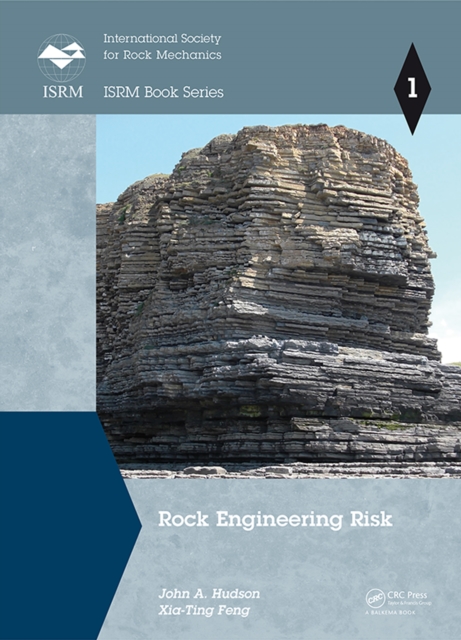
Rock Engineering Risk
This book provides a new, valuable approach to the consideration of risk in underground engineering projects constructed within rock masses. There are Chapters on uncertainty and risk, rock engineering systems, rock fractures and rock stress, the design of a repository for radioactive waste, plus two major case examples relating to the headrace tunnels and caverns for a hydroelectric project. The book is particularly timely given the current increasing emphasis on geo-engineering safety, accountability and sustainability. The book will benefit all who are concerned with rock engineering projects in civil, mining, geological and construction engineering worldwide.
eBook