
Catalogue Search | MBRL


Are you sure you want to remove the book from the shelf?

{{itemTitle}}
130
result(s) for
"Structuralism (Architecture)"
Sort by:


Up close
Every year, millions of livestock are killed for Eid al-Adha, a major Islamic holiday commemorating Ibrahim's willingness to sacrifice his son to God. The festival is known as Qurban Bayram in Azerbaijan, where the tradition outlived Soviet atheism and was declared a state holiday by the independent republic.
Magazine Article
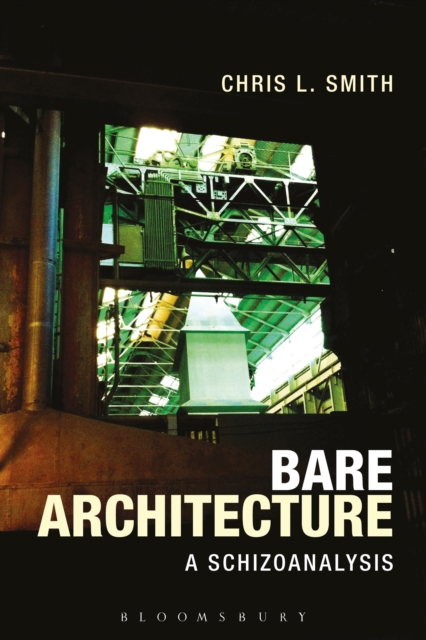
Bare Architecture
Bare Architecture: a schizoanalysis, is a poststructural exploration of the interface between architecture and the body. Chris L. Smith skilfully introduces and explains numerous concepts drawn from poststructural philosophy to explore the manner by which the architecture/body relation may be rethought in the 21st century. Multiple well-known figures in the discourses of poststructuralism are invoked: Gilles Deleuze and Félix Guattari, Roland Barthes, Georges Bataille, Maurice Blanchot, Jorges Luis Borges and Michel Serres. These figures bring into view the philosophical frame in which the body is formulated. Alongside the philosophy, the architecture that Smith comes to refer to as ‘bare architecture’ is explored. Smith considers architecture as a complex construction and the book draws upon literature, art and music, to provide a critique of the limits, extents and opportunities for architecture itself. The book considers key works from the architects Douglas Darden, Georges Pingusson, Lacatan and Vassal, Carlo Scarpa, Peter Zumthor, Marco Casagrande and Sami Rintala and Raumlabor. Such works are engaged for their capacities to foster a rethinking of the relation between architecture and the body.
eBook

The Architectonic of Philosophy
In the Architectonic of Philosophy Leslie Kavanaugh chose three 'architectonics', philosophical structures, to be examined more extensively. These are Plato's Chora, the continuum of Aristoteles and finally Leibniz's labyrinth.
eBook

From Individual to Community: Geometry as a Mediating Tool in Jan Verhoeven’s School Architecture
Drawing from Aldo van Eyck’s theories of ‘twin phenomena’, the Dutch architect Jan Verhoeven (1926-1944) found in the manipulation of geometrical patterns a powerful design tool for reflecting on the duality of individual and community. Despite the key contribution of Verhoeven's work to the emergence of Dutch structuralism, and although it was acclaimed by critics and the wider public at the time, that work has not received the academic attention that it deserves, overshadowed as it is by other figures of his generation, such as Herman Hertzberger, Piet Blom, and Joop van Stigt. Expressed in all his projects is a keen interested in the symbolic and existential meaning of geometry, a meaning unabashedly loaded with classical connotations from the point of view of the design process yet manifesting in a daring vernacular appearance in its built form. This is especially true of the eight nursery and primary schools that Verhoeven designed from 1973 to 1984. This paper focuses on analyzing Verhoeven’s first two such projects, the schools in Rozendaal and Cuijk. In both projects, he tried to bring architecture close to its users through formal, constructional, and perceptional resources - directly derived from the application of geometry - while accepting a general European trend towards the wearing away of the modern movement in favor of a transition to other aesthetic and ideological horizons.
Journal Article

Free Plan versus Free Rooms
Since the 1960s, open architecture has sought to move away from fixed objects built for eternity and instead towards the development of indeterminate proposals. Today, in the midst of health and climate crises, some architects are reconsidering the need for an evolving and adaptable architecture that encourages multiple uses. Sanitary confinement has made us aware of the urgency of flexibility in housing. Climate crises, on the other hand, require that buildings can be converted in order to avoid obsolescence. This article examines how the different design processes used by Office KGDVS, MVRDV, Sanaa, and Sou Fujimoto, among others, go beyond the unitary and homogeneous models of open architecture proposed in the 1960s in order to respond to a crucial desire of contemporary society: the need for singularity. As we theorise it, the free plan wanted to be singular and specific instead of neutral, in order to absorb obsolete uses into broader programmes. The free room, on the contrary, absorbs multiple uses on the scale of the dwelling and encourages multiple reconfigurations. The confinement measures taken by many governments in response to the Covid-19 pandemic have taught us that architecture must make uses possible that will undoubtedly be even more diversified tomorrow than they were yesterday.
Journal Article
Spolia and the Open Work
This article discusses the possibilities of signification in architectural interventions involving historical remnants, focusing on the notions of spolia and of opera aperta. The notion of spolia has been the province of art history since the Renaissance. In bringing it to the field of architectural design, the focus will shift from the historical realm to the conceptual possibilities opened up by spolia in architectural practice. The aim is to analyse the association between the creative reuse of and intervention in historical remnants and the multiplication of possible significations through various examples. Methodologically, the article expands the linguistic drive of the contemporary debate on spolia to the structural linguistics upon which Umberto Eco built the poststructuralist concept of open work.More precisely, the essay resorts to the notions of ‘sign’ and ‘sign structure’ as a vehicle to explore the possibilities for the semantic and syntactical openness of spolia. Toning in with Eco’s arguments on the open work, the openness associated with spolia will be seen as dependent on the loosening of the formal and typological structures of established architectural codes.
Journal Article

Towards Deconstructivist Music: Reconstruction paradoxes, neural networks, concatenative synthesis and automated orchestration in the creative process
Since the 1980s, deconstruction has become a popular approach for designing architecture. In music, however, the term has not been absorbed as well by the related literature, with a few exceptions. In this article, ways to find ideological groundings for deconstructivism in music are introduced through the concepts of enchaînement and reconstruction paradoxes. Similar to the Banach–Tarski paradox in mathematics, reconstruction paradoxes occur when reconstructing the parts of a whole no longer yields the same properties as the whole. In music, a reconstruction paradox occurs when a piece constructed from tonal segments no longer yields a perceived tonality. Deconstruction in architecture heavily relies on computer-aided design (CAD) to realise complex ideas. Similarly in music, computer-aided composition (CAC) techniques such as neural networks, concatenative synthesis and automated orchestration are used. In this article, we discuss such tools in the context of this advocated new aesthetics: deconstructivist music.
Journal Article

Novelistic essay: on the form of Wang Shu’s PhD thesis, ‘Fictionalising Cities
In 2012 the Chinese architect Wang Shu won the distinguished Pritzker Architecture Prize. Since then, his buildings and his architectural thinking have received increasing international attention. Among his many written works, Wang’s PhD thesis ‘Fictionalising Cities’ – completed in 2000 under the supervision of Professor Jiwei Lu at Tongji University in Shanghai – is widely considered the definitive statement of his architectural thought and methodology. It comprises a structuralist study of the city and its architecture, doing so through the development of two key themes. The first is Wang’s theoretical discussion of the application of structuralist-semiotic approaches to architecture, urban research, and other areas in the humanities, and the second is his reading of the Chinese city and China’s landscape architecture tradition in the light of this theoretical discussion. Wang believes that traditional Chinese cities have their own structure, components and rules of combination, and refers to them as instances of ‘texture city’ (), a term that proposes an analogy between Roland Barthes’s notion of text and the city, both of which are understood as a ‘fabric of signifiers’.
Journal Article
Afektivna topologija: Maks Rajnhard kuća (1992) Pitera Ajzenmana
This paper reconsiders the relation between digitally modeled architecture and a body in front of it or in it. Such a relationship investigates production or better affection of haptic space in a viewer’s body, and thus dislocation of the discursive function of the human subject and vision. Developing this thesis through historical, comparative and analytical method, the objective of this paper is to elaborate contemporary cognitions of affect and affectation (in the era of digital media) and modifications of a body perception in interaction with digital technology manifested through architectural design. The starting point is based on the philosophical views of Henri Bergson, Gilles Deleuze, Felix Guattari and Mark Hansen. Attention is moving from poststructuralistic semiology and theory of text toward a new phenomenology.
Journal Article