
Catalogue Search | MBRL


Are you sure you want to remove the book from the shelf?

{{itemTitle}}
482
result(s) for
"Structuralism (Literary analysis)"
Sort by:


The System of Comics
This edition of Thierry Groensteen'sThe System of Comicsmakes available in English a groundbreaking work on comics by one of the medium's foremost scholars. In this book, originally published in France in 1999, Groensteen explains clearly the subtle, complex workings of the medium and its unique way of combining visual, verbal, spatial, and chronological expressions. The author explores the nineteenth-century pioneer Rodolphe Töpffer, contemporary Japanese creators, George Herriman's Krazy Kat, and modern American autobiographical comics.
The System of Comics uses examples from a wide variety of countries including the United States, England, Japan, France, and Argentina. It describes and analyzes the properties and functions of speech and thought balloons, panels, strips, and pages to examine methodically and insightfully the medium's fundamental processes.
From this, Groensteen develops his own coherent, overarching theory of comics, a \"system\" that both builds on existing studies of the \"word and image\" paradigm and adds innovative approaches of his own. Examining both meaning and appreciation, the book provides a wealth of ideas that will challenge the way scholars approach the study of comics. By emphasizing not simply \"storytelling techniques\" but also the qualities of the printed page and the reader's engagement, the book's approach is broadly applicable to all forms of interpreting this evolving art.
Thierry Groensteen is a comics scholar and translator in Brussels, Belgium. He is the author ofLa bande dessinée: Une littérature graphiqueandLa construction de la cage, among other books. Bart Beaty is associate professor of communication and culture at the University of Calgary. Nick Nguyen is an archivist at Library and Archives Canada, in Ottawa, Ontario.
eBook

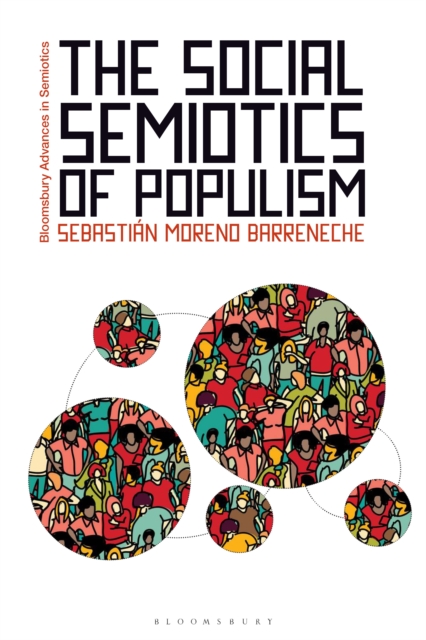
The Social Semiotics of Populism
The concept of ‘populism’ is currently used by scholars, the media and political actors to refer to multiple and disparate manifestations and phenomena from across both the left and the right ends of the political spectrum. As a result, it defies neat definition, as scholarship on the topic has shown over the last 50 years. In this book, Sebastián Moreno Barreneche approaches populism from a semiotic perspective and argues that it constitutes a specific social discourse grounded on a distinctive narrative structure that is brought to life by political actors that are labelled ‘populist’. Conceiving of populism as a mode of semiotic production that is based on a conception of the social space as divided into two groups, ‘the People’ and ‘the Other’, this book uses semiotic theory to make sense of this political phenomenon. Exploring how the categories of ‘the People’ and ‘the Other’ are discursively constructed by populist political actors through the use of semiotic resources, the ways in which meaning emerges through the oppositions between imagined collective actors is explained. Drawing on examples from Europe, North America and South America, The Social Semiotics of Populism presents a systematic semiotic approach to this multifaceted political concept and bridges semiotic theory and populism studies in an original manner.
eBook


Reading Memory Sites Through Signs
What can space tell us about our past? Which stories do memory sites narrate? Which memories do they transmit? And, more importantly, how can we read their meanings? Semiotics can provide us with a homogeneous, shareable and theoretically sound methodology to analyse space within a comparable and common frame of reference for scholars of memory studies and traumatic heritage, as well as for historians, architects and museum curators. The book describes in clear and understandable language the main semiotic concepts that can be used to analyse space, illustrating them with carefully chosen case studies of memory spaces - monuments, museums, post-war urban restoration, filmed and virtual space - in order to show the applicability and efficacy of a semiotic methodology.
eBook

Lacan in Public
Lacan in Public argues that Lacan’s contributions
to the theory of rhetoric are substantial and revolutionary and
that rhetoric is, in fact, the central concern of Lacan’s
entire body of work.
Scholars typically cite Jacques
Lacan as a thinker primarily concerned with issues of desire,
affect, politics, and pleasure. And though Lacan explicitly
contends with some of the pivotal thinkers in the field of
rhetoric, rhetoricians have been hesitant to embrace the French
thinker both because his writing is difficult and because
Lacan’s conception of rhetoric runs counter to the American
traditions of rhetoric in composition and communication studies.
Lacan’s conception of rhetoric, Christian Lundberg argues
in
Lacan in Public , upsets and extends the received wisdom
of American rhetorical studies—that rhetoric is a science,
rather than an art; that rhetoric is predicated not on the
reciprocal exchange of meanings, but rather on the impossibility
of such an exchange; and that rhetoric never achieves a
correspondence with the real-world circumstances it attempts to
describe. As Lundberg shows, Lacan’s work speaks directly
to conversations at the center of current rhetorical scholarship,
including debates regarding the nature of the public and public
discourses, the materiality of rhetoric and agency, and the
contours of a theory of persuasion.
eBook

Critical discourse analysis and cognitive science : new perspectives on immigration discourse
This study advances a model for Critical Discourse Analysis which draws on Evolutionary Psychology and Cognitive Linguistics, applied in a critical analysis of immigration discourse. It will be of special interest to students and researchers with which to explore new perspectives in CDA.
eBook
The complexity of social-cultural emergence : biosemiotics, semiotics and translation studies
The volume, which presents a selection of papers read at a conference in 2022 with the same title as the book, engages the systems of matter-energy, biology, and significance from which and in relation to which society-culture emerges.
eBook
Iconicity in Cognition and across Semiotic Systems
This volume investigates iconicity as to both comprehension and production of meaning in language, gesture, pictures, art and literature. It highlights iconic processes in meaning-making and interpretation across different semiotic systems at structurally, historically and pragmatically different levels of iconicity, with special focus on Cognitive Semiotics. Exploring the ubiquity of iconicity in verbal, visual and gestural communication, these contributions discuss it from the point of view of human meaning-making, examined as a phenomenon that is experienced, embodied and often polysemiotic in nature.
eBook