
Catalogue Search | MBRL


Are you sure you want to remove the book from the shelf?

{{itemTitle}}
92,004
result(s) for
"Student Health Services."
Sort by:

The college counselor's guide to group psychotherapy
\"Group psychotherapy in college counseling centers continues to thrive as a popular approach to working with college students, and yet there continues to be a lack of up-to-date, comprehensive resources for group psychotherapists working with this unique population. The College Counselor's Guide to Group Psychotherapy highlights the role of the group therapist within college counseling centers; provides practical, step-by-step instructions for creating a thriving group program and culture; and unveils some of the opportunities to expand this under-recognized practice setting. This exciting new volume draws on the most current knowledge on group psychotherapy while paying particular attention to issues and ethical dilemmas that are unique to working with college students.\"--Provided by publisher.
Book

Development and Effects of College-Based Lifestyle Modification Program for Menstrual Health of Young Adult Women with Irregular Menses: A Randomized Controlled Trial
Purpose: This study was conducted to develop the ‘College-based Lifestyle Modification Program’ (College-based LMP) for young adult women with irregular menstruation and examine its effects after intervention. Methods: The College-based LMP consisted of small group education, individual physical exercise counseling/training, individual diet counseling, and feedback and support. Participants were comprised of 38 females who reported less than 10 irregular menstruations in a year and were randomly assigned to the experimental and control groups. The primary outcome variables consisted of menstrual cycle index (MCI), sex hormone binding globulin (SHBG), and androgenic profile (testosterone—T, free androgen index—FAI), while the outcome variables included premenstrual symptoms (PMS), menstrual volume, body composition parameters, glycemic parameters (fasting blood sugar—FBS, insulin, HOMA-IR), sleep duration, perceived stress, and nutrient intake.. Results: There were no significant differences in primary outcome variables (MCI, SHBG, T, and FAI). In the variables, there were no significant differences except for the partial domain of PMS (symptoms of depression and anxiety) and sleep duration. Conclusions: The study was significant in that it demonstrated the importance of lifestyle, which could provide ordinary young adult women with healthy menstruation. The College-based LMP needs to be elaborated with further studies.
Journal Article


Cost-effectiveness of train-the-trainer versus expert consultation training models for implementing interpersonal psychotherapy in college mental health settings: evidence from a national cluster randomized trial
Background
This study is a cost-effectiveness study of two implementation strategies designed to train therapists in college and university counseling centers to deliver interpersonal psychotherapy. Costs of implementing a train-the-trainer (TTT) strategy versus an expert consultation strategy were estimated, and their relative effects upon therapist outcomes were calculated and compared.
Methods
Twenty four counseling centers were recruited across the United States. These centers were randomized to either a TTT (experimental) condition, in which an in-house therapist trained other center therapists, or an expert consultation condition, in which center therapists participated in a workshop and received 12 months of ongoing supervision. The main outcome was therapist fidelity (adherence and competence) to interpersonal psychotherapy, assessed via audio recordings of therapy sessions, and analyzed using linear mixed models. Costs of each condition were quantified using time-driven activity-based costing methods, and involved a costing survey administered to center directors, follow up interviews and validation checks, and comparison of time tracking logs of trainers in the expert condition. Mean costs to produce one therapist were obtained for each condition. The costs to produce equivalent improvements in therapist-level outcomes were then compared between the two conditions.
Results
Mean cost incurred by counseling centers to train one therapist using the TTT strategy was $3,407 (median = $3,077); mean cost to produce one trained therapist in the control condition was $2,055 (median = $1,932). Therapists in the TTT condition, on average, demonstrated a 0.043 higher adherence score compared to therapists in the control condition; however, this difference was not statistically significant. For the competence outcome, effect size for therapists in the TTT condition was in the large range (1.16; 95% CI: 0.85–1.46;
p
< .001), and therapists in this condition, on average, demonstrated a 0.073 higher competence score compared to those in the expert consultation condition (95% CI, 0.008–0.14;
p
= .03). Counseling centers that used the TTT model incurred $353 less in training costs to produce equivalent improvements in therapist competence.
Conclusions
Despite its higher short run costs, the TTT implementation strategy produces greater increases in therapist competence when compared to expert consultation. Expanding resources to support this platform for service delivery can be an effective way to enhance the mental health care of young people seeking care in college and university counseling centers.
Trial registration
ClinicalTrials.gov Identifier: NCT02079142.
Journal Article


The three stages of building and testing mid-level theories in a realist RCT: a theoretical and methodological case-example
Background
Randomised controlled trials (RCTs) of social interventions are often criticised as failing to open the ‘black box’ whereby they only address questions about ‘what works’ without explaining the underlying processes of implementation and mechanisms of action, and how these vary by contextual characteristics of person and place. Realist RCTs are proposed as an approach to evaluation science that addresses these gaps while preserving the strengths of RCTs in providing evidence with strong internal validity in estimating effects.
Methods
In the context of growing interest in designing and conducting realist trials, there is an urgent need to offer a worked example to provide guidance on how such an approach might be practically taken forward. The aim of this paper is to outline a three-staged theoretical and methodological process of undertaking a realist RCT using the example of the evaluation of a whole-school restorative intervention aiming to reduce aggression and bullying in English secondary schools.
Discussion
First, informed by the findings of our initial pilot trial and sociological theory, we elaborate our theory of change and specific a priori hypotheses about how intervention mechanisms interact with context to produce outcomes. Second, we describe how we will use emerging findings from the integral process evaluation within the RCT to refine, and add to, these a priori hypotheses before the collection of quantitative, follow-up data. Third, we will test our hypotheses using a combination of process and outcome data via quantitative analyses of effect mediation (examining mechanisms) and moderation (examining contextual contingencies). The results are then used to refine and further develop the theory of change.
Conclusion
The aim of the realist RCT approach is thus not merely to assess whether the intervention is effective or not, but to develop empirically informed mid-range theory through a three-stage process. There are important implications for those involved with reporting and reviewing RCTs, including the use of new, iterative protocols.
Trial registration
Current Controlled Trials
ISRCTN10751359
(Registered 11 March 2014)
Journal Article
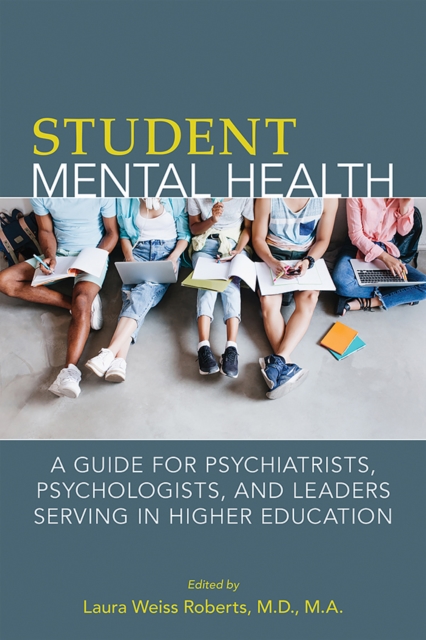
Student mental health : a guide for psychiatrists, psychologists, and leaders serving in higher education
Student Mental Health: A Guide for Psychiatrists, Psychologists, and Leaders Serving in Higher Education is the result of a sustained and multidisciplinary collaboration of scholars, leaders, clinicians, and educators who are deeply committed to student health and well-being. The needs of young people today are quite different from those of even 5 years ago, and this book pays great attention to the specific issues encountered in caring for today's students who experience distress or develop significant mental health conditions. Such issues, including suicidality, newly emergent psychosis, problems associated with substance misuse, the health risks of eating disorders, and the devastation of sexual assault, can challenge even the most experienced clinician. These topics and others related to safety, respect, conflict, and connection on campus, as well as students' evolving relationships with family, friends, and romantic partners, are covered with sensitivity and skill.
The book offers many features that deepen awareness and enhance learning:
• Chapters offer student case examples that illustrate the concepts and strategies discussed in the text, allowing readers to readily apply their newly acquired knowledge to real-life scenarios.• The experiences, mental health, and well-being of distinct, vitally important, and often overlooked student populations, such as student athletes, graduate students, students of color, LGBTQ students, students who are the first in their families to attend college, students who are veterans or active military, and medical students, are addressed.• Positive self-care -- for both students and the clinicians who work with them -- is emphasized. For example, activities and habits related to sleep, nutrition, and exercise are outlined in hopes they will become lifelong self-management strategies for students, while effective measures to prevent emotional exhaustion in clinicians are also highlighted in the text. • Chapters incorporate features designed to promote learning: Key points offer quick summaries of chapter content; recommendations serve as reminders for best practices; and discussion questions provide thought-provoking approaches to the material for the reader's further reflection, development, and improvement.
At a time when students -- whether in college, graduate school, or professional training -- are experiencing unprecedented levels of stress and distress, the need for guidance that is comprehensive, compassionate, constructive, and culturally sensitive has never been greater. Student Mental Health brings understanding and clinical acumen to bear on the complex problems of this vulnerable group.
eBook

A Survey of Mental Health Services at Post-Secondary Institutions in Alberta
Objectives:
The relatively high prevalence of mental health problems among students at post-secondary institutions in Canada is well documented; in contrast, less is known about the adequacy of mental health services available to Canadian post-secondary students on campuses. Our study sought to examine the current state of campus mental health initiatives and services in Alberta as well as the extent to which resources identified in mental health literature as being key in mental health problem prevention and promotion appear to be available.
Methods:
A 60-question, online survey was sent to staff (primarily front-line workers; n = 45) at Alberta's 26 publicly funded post-secondary institutions. Responses were organized according to small (less than 2000 students), medium (2000 to 10 000 students), and large (10 000 or more students) institutions.
Results:
All of Alberta's post-secondary institutions were represented in the responses. Mental health initiatives and services are available, to varying extent, at all of Alberta's post-secondary institutions. However, many institutions do not have initiatives and (or) services aimed at identifying students with mental health problems or policies for monitoring their mental health services. Additionally, smaller institutions are less likely to offer certain services (for example, gatekeeper training and campus medical services), compared with larger ones. Finally, a systematic review or an evaluation of services appears to be infrequently conducted.
Conclusions:
These findings highlight the need for post-secondary institutions in Alberta, and by extension in Canada, to develop and institute a comprehensive strategy to evaluate and optimize the delivery of mental health initiatives and services.
Journal Article

School-Related and Social–Emotional Outcomes of Providing Mental Health Services in Schools
This study evaluated student outcomes of an expanded school mental health (ESMH) model that placed community mental health clinicians on-site in schools to identify and treat children with mental health needs. The first aim of this study was to consider school-related outcomes (suspension rates and attendance rates) for those students who received ESMH treatment (n = 159) were compared to a matched high-risk sample that did not receive such services (n = 148). Results demonstrated differences between groups over time on measures of suspensions and attendance but not academic achievement. The second aim of this study was to evaluate change in social–emotional functioning (Strengths and Difficulties Questionnaire Scores) over time for the treatment group. Results indicated significant improvements on several parent and teacher ratings. Despite limitations of the ESMH framework examined in this study, the overall results suggest some promising advantages for students who received ESMH services.
Journal Article

Autism and Accommodations in Higher Education: Insights from the Autism Community
This article builds on the growing body of research on higher education for autistic students by soliciting input from autistic adults on their higher education experiences and suggestions on making these experiences more ‘autism-friendly’. Sixty-six individuals participated in a national exploratory survey and thirty-one participated in follow-up, online focus groups. The article reviews the accommodations individuals received and the accommodations they would have liked to receive. Concrete strategies are provided for institutes of higher education to address the social and sensory needs of autistic students, areas many participants reported being neglected in their academic experience, such as mentors and a neurodiverse space. These suggestions are intended to complement traditional academic accommodations to improve the outcomes of autistic students.
Journal Article