
Catalogue Search | MBRL


Are you sure you want to remove the book from the shelf?

{{itemTitle}}
124,777
result(s) for
"Student evaluation"
Sort by:
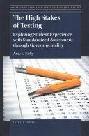
The high stakes of testing : exploring student experience with standardized assessment through governmentality
\"Standardized assessments have long been part of the educative experience for students around the world. The high-stakes nature of these tests can have damaging and enduring effects for public school systems, particularly the youth. With the adoption of Common Core State Standards and mandated state-wide accountability measures, high-stakes tests, like the PARCC, gained quick and controversial notoriety. The high-stakes discourse has been dominated by politicians, educators, and parents. Notably absent from this dialogue are the voices of those whom are impacted the most; students. Largely influenced by Critical Pedagogy, this research sheds light on the negative, punitive, and often arbitrary nature of testing in schools. The paramount intention of this publication is to raise awareness of student experiences and perspectives of standardized testing. The High Stakes of Testing analyzes the experiences, relationships, thoughts, ideas, and opinions students have with standardized assessment measures. Interviews with seven students in Grades 3, 5, and 8 are examined through a governmentality lens to reveal the ways in which the youth are manipulated, regulated, and disciplined to view standardized testing as a natural part of what it means to be a public-school student. It is only when we can begin to see and appreciate how our youth interact with the omnipresent testing in our public schools can we begin to envision changing these accountability practices\" Provided by publisher.
Book

On the Validity of Student Evaluation of Teaching: The State of the Art
This article provides an extensive overview of the recent literature on student evaluation of teaching (SET) in higher education. The review is based on the SET meta-validation model, drawing upon research reports published in peer-reviewed journals since 2000. Through the lens of validity, we consider both the more traditional research themes in the field of SET (i.e., the dimensionality debate, the 'bias' question, and questionnaire design) and some recent trends in SET research, such as online SET and bias investigations into additional teacher personal characteristics. The review provides a clear idea of the state of the art with regard to research on SET, thus allowing researchers to formulate suggestions for future research. It is argued that SET remains a current yet delicate topic in higher education, as well as in education research. Many stakeholders are not convinced of the usefulness and validity of SET for both formative and summative purposes. Research on SET has thus far failed to provide clear answers to several critical questions concerning the validity of SET.
Journal Article


Course design as a stronger predictor of student evaluation of quality and student engagement than teacher ratings
Research on Student Evaluation of Teaching (SET) has indicated that course design is at least as important as teachers’ performance for student-rated perceived quality and student engagement. Our data analysis of more than 6000 SETs confirms this. Two hierarchical multiple regression models revealed that course design significantly predicts perceived quality more strongly than teachers, and that course design significantly predicts student engagement independent of teachers. While the variable
teachers
is a significant predictor of perceived quality, it is not a significant predictor of student engagement. In line with previous research, the results suggest it is important to highlight the vital impact of course design. The results are discussed particularly in relation to improved teaching practice and student learning, but also in terms of how student evaluations of teaching can be used in meaningful ways.
Journal Article


Gender Bias in Student Evaluations of Teaching: 'Punishing Those Who Fail To Do Their Gender Right'
A significant body of work problematises the assumption that student evaluations of teaching (SET) actually measure teaching quality. This is concerning, given that SET are increasingly relied upon not only to evaluate candidates for employment (so job acquisition is influenced by flawed data) but also to inform performance metrics for those in employment (so job security is influenced by flawed data). This paper presents qualitative research conducted at a large public university in Australia. The findings suggest that student evaluations of teaching seem to measure conformity with gendered expectations rather than teaching quality, with particularly negative effects for women. The integration of SET into performance management practices within institutions of higher education could be entrenching inequalities amongst university staff that could ultimately disadvantage female academics.
Journal Article


Student evaluations of teaching are an inadequate assessment tool for evaluating faculty performance
Literature is examined to support the contention that student evaluations of teaching (SET) should not be used for summative evaluation of university faculty. Recommendations for alternatives to SET are provided.
Journal Article


Discrepancies in purposes of student course evaluations: what does it mean to be “satisfied”?
Student evaluation of teaching is a multipurpose tool that aims to improve and assure educational quality. Improved teaching and student learning are central to educational enhancement. However, use of evaluation data for these purposes is less robust than expected. This paper explores how students and teachers perceive how different student evaluation methods at a Norwegian university invite students to provide feedback about aspects relevant to their learning processes. We discuss whether there are characteristics of the methods themselves that might affect the use of student evaluation. For the purpose of this study, interviews with teachers and students were conducted, and educational documents were analysed. Results indicated that evaluation questions in surveys emerged as mostly teaching-oriented, non-specific and satisfaction-based. This type of question did not request feedback from students about aspects that they considered relevant to their learning processes. Teachers noted limitations with surveys and said such questions were unsuitable for educational enhancement. In contrast, dialogue-based evaluation methods engaged students in discussions about their learning processes and increased students’ and teachers’ awareness about how aspects of courses improved and hindered students’ learning processes. Students regarded these dialogues as valuable for their learning processes and development of communication skills. The students expected all evaluations to be learning oriented and were surprised by the teaching focus in surveys. This discrepancy caused a gap between students’ expectations and the evaluation practice. Dialogue-based evaluation methods stand out as a promising alternative or supplement to a written student evaluation approach when focusing on students’ learning processes.
Journal Article