
Catalogue Search | MBRL


Are you sure you want to remove the book from the shelf?

{{itemTitle}}
180,989
result(s) for
"Students Attitudes."
Sort by:
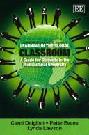
Learning in the global classroom : a guide for students in the multicultural university
This text highlights how students come with different learning styles and attitudes to teaching and learning, and demonstrates how students face not only language issues, but also numerous unanticipated challenges in dealing with new and unfamiliar cultural behavioural patterns.
Book

Introducing Machine Translation in the Translation Classroom: a Survey on Students’ Attitudes and Perceptions
The translation sector is going under major changes that will undoubtedly be accentuated in the future owing to the development of automation and artificial intelligence, and more specifically, of machine translation. Technology also plays a crucial role in the translation process and has a significant impact on translation competence. Therefore, it is of utmost importance that translator programs incorporate new translation technology into their curriculums in order to ensure that students are made aware of their usefulness in order to fulfil industry employment needs. This piece of research strives at mapping how and what for translation students use MT, and what are their attitudes and perceptions towards its use. Findings of a qualitative analysis indicate that undergraduate students have a positive general attitude towards MT and its many advantages, whereas they show preoccupation when MT professional issues are addressed.
Journal Article


College Students' Sense of Belonging: A National Perspective
In a nationally representative sample, first-year U.S. college students \"somewhat agree,\" on average, that they feel like they belong at their school. However, belonging varies by key institutional and student characteristics; of note, racialethnic minority and first-generation students report lower belonging than peers at 4-year schools, while the opposite is true at 2-year schools. Further, at 4-year schools, belonging predicts better persistence, engagement, and mental health even after extensive covariate adjustment. Although descriptive, these patterns highlight the need to better measure and understand belonging and related psychological factors that may promote college students' success and well-being.
Journal Article


Development and validation of an instrument to measure undergraduate students’ attitudes toward the ethics of artificial intelligence (AT-EAI) and analysis of its difference by gender and experience of AI education
As artificial intelligence (AI) becomes more prevalent, so does the interest in AI ethics. To address issues related to AI ethics, many government agencies, non-governmental organizations (NGOs), and corporations have published AI ethics guidelines. However, only a few test instruments have been developed to assess students’ attitudes toward AI ethics. A related instrument is required to effectively prepare lecture curricula and materials on AI ethics, as well as to quantitatively evaluate the learning effect of students. In this study, we developed and validated the instrument (AT-EAI) to assess undergraduate students’ attitudes toward AI ethics. The instrument’s reliability, content validity, and construct validity were evaluated following its development and application in a sample of 1,076 undergraduate students. Initially, the instrument comprised five dimensions that totaled 42 items, while the final version had 17 items. When it came to content validity, experts (n = 8) were involved in the process. Exploratory factor analysis identified five dimensions, and confirmatory factor analysis found that the model was good-fitting. The reliability analysis using Cronbach’s alpha and the corrected item-total correlation were both satisfactory. Considering all the results, the developed instrument possesses the psychometric properties necessary to be considered a valid and reliable instrument for measuring undergraduate students’ attitudes toward AI ethics. This study also found that there were gender differences in fairness, privacy, and non-maleficence dimensions. Furthermore, it revealed the difference in students’ attitudes toward fairness based on their prior experience with AI education.
Journal Article

Student engagement and educational rapport in higher education
This book outlines a range of innovative methods to gather student feedback, and explores the complex relation between student engagement, student satisfaction, and student success. Drawing on results from a set of numerous case-studies carried out at a school of education, the book reports on a range of theoretically-informed teaching innovations, including focus groups, learning analytics data, collegial conversations and insights from student researchers, that have been designed to create respectful, student-centred, and engaging learning environments.
Book

Development and Validation of a Scale Measuring Student Attitudes Toward Artificial Intelligence
Artificial intelligence (AI) education is becoming increasingly important worldwide. However, there has been no measuring instrument for diagnosing the students’ current perspective. Thus the aim of this study was to develop an instrument that measures student attitudes toward AI. The instrument was developed by verifying the reliability and validity by 8 computer education PhD using a sample of 305 K-12 students. This scale made students’ attitudes toward AI operational and quantifiable. Accordingly, educators can use it to diagnose the current status of students or verify the effectiveness of new AI education methods.
Journal Article


Extracurricular Pulse Activities in School: Students’ Attitudes and Experiences
Background: Few children and adolescents reach the recommended levels of daily physical activity, which is something that affects their health and wellbeing. Research shows that physical activities could be one factor for improving health and achieving academic goals in children and adolescents. Methods: Eight focus group interviews with students 10–15 years old were conducted at two schools with extracurricular pulse activities (ECPAs) during the school day. Results: In general, the interviewed students at both schools expressed positive attitudes toward ECPAs, emphasizing a felt correlation with physical activities out of school. Phenomena such as motivation, concentration and social relations also seem to profit from ECPAs. However, some students display a critical approach to ECPAs. From a gender perspective, girls embrace ECPAs with more enthusiasm than boys. Conclusions: In order to make the best use of positive attitudes and health promotion, schools need to improve structural conditions such as facilities, time pressure, unhygienic conditions, blurry boundaries between ECPAs and Physical Education (PE), uncomprehending teachers, contents and, very importantly, the inclusion of students in the process of planning and implementing ECPAs.
Journal Article