
Catalogue Search | MBRL


Are you sure you want to remove the book from the shelf?

{{itemTitle}}
146,806
result(s) for
"Studios"
Sort by:


The Barrandov Studios
The Barrandov Studios are one of the largest and oldest film studios in Europe. For more than 80 years so far, the studios have been the location of choice for over 2,500 Czech and International films. Barrandov's founding fathers, the Havel brothers Vàclav and Milo. (the grandfather and uncle of later president Vàclav Havel), built the 'Hollywood of Eastern Europe' in the 1930s.
A legendary studio like this - and its story - has so far not been told to an English-speaking readership. This collection aims to correct this, presenting the studio's rich history, its esteemed directors, and their most important films.
eBook

Marvel Studios : all your questions answered
Who exactly are the Guardians of the Galaxy? What's the best order to watch the films in? And are Iron Man and Captain America friends or enemies? If you've ever mixed up the different Thor movies, or you get confused by which Avengers villain is which, fear not! Marvel Cinematic Universe: All Your Questions Answered is the book for you.
Book
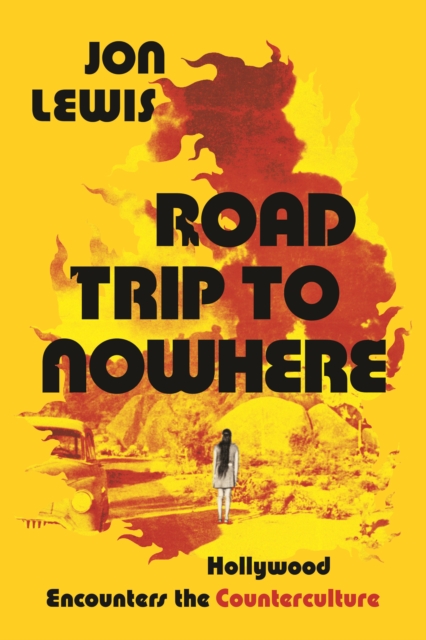
Road Trip to Nowhere
How a new generation of counterculture talent changed the
landscape of Hollywood, the film industry, and celebrity
culture. By 1967, the commercial and political impact on
Hollywood of the sixties counterculture had become impossible to
ignore. The studios were in bad shape, still contending with a
generation-long box office slump and struggling to get young people
into the habit of going to the movies. Road Trip to
Nowhere examines a ten-year span (from 1967 to 1976) rife with
uneasy encounters between artists caught up in the counterculture
and a corporate establishment still clinging to a studio system on
the brink of collapse. Out of this tumultuous period many among the
young and talented walked away from celebrity, turning down the
best job Hollywood-and America-had on offer: movie star. Road
Trip to Nowhere elaborates a primary-sourced history of movie
production culture, examining the lives of a number of talented
actors who got wrapped up in the politics and lifestyles of the
counterculture. Thoroughly put off by celebrity culture, actors
like Dennis Hopper, Christopher Jones, Jean Seberg, and others
rejected the aspirational backstory and inevitable material
trappings of success, much to the chagrin of the studios and
directors who backed them. In Road Trip to Nowhere , film
historian Jon Lewis details dramatic encounters on movie sets and
in corporate boardrooms, on the job and on the streets, and in
doing so offers an entertaining and rigorous historical account of
an out-of-touch Hollywood establishment and the counterculture
workforce they would never come to understand.
eBook


The Studios after the Studios
Modern Hollywood is dominated by a handful of studios: Columbia, Disney, Fox, Paramount, Universal, and Warner Bros. Threatened by independents in the 1970s, they returned to power in the 1980s, ruled unquestioned in the 1990s, and in the new millennium are again beseiged. But in the heyday of this new classical era, the major studios movies — their stories and styles — were astonishingly precise biographies of the studios that made them. Movies became product placements for their studios, advertising them to the industry, to their employees, and to the public at large. If we want to know how studios work—how studios think—we need to watch their films closely. How closely? Maniacally so. In a wide range of examples, The Studios after the Studios explores the gaps between story and backstory in order to excavate the hidden history of Hollywood's second great studio era.
eBook

The artist's studio : a cultural history
The artist's workplace has always been an imaginary as well as an actual location, an idealized utopia as well as the domain of dirty, back-breaking work. Written descriptions, paintings, prints and even photographs of the artist's atelier distort as much as they document. This pioneering cultural history charts the myth and reality of the creative space from Ancient Greece to the present day.
Book

Death of the Moguls
Death of the Mogulsis a detailed assessment of the last days of the \"rulers of film.\" Wheeler Winston Dixon examines the careers of such moguls as Harry Cohn at Columbia, Louis B. Mayer at MGM, Jack L. Warner at Warner Brothers, Adolph Zukor at Paramount, and Herbert J. Yates at Republic in the dying days of their once-mighty empires. He asserts that the sheer force of personality and business acumen displayed by these moguls made the studios successful; their deaths or departures hastened the studios' collapse. Almost none had a plan for leadership succession; they simply couldn't imagine a world in which they didn't reign supreme.
Covering 20th Century-Fox, Selznick International Pictures, Metro-Goldwyn-Mayer, Paramount Pictures, RKO Radio Pictures, Warner Brothers, Universal Pictures, Republic Pictures, Monogram Pictures and Columbia Pictures, Dixon briefly introduces the studios and their respective bosses in the late 1940s, just before the collapse, then chronicles the last productions from the studios and their eventual demise in the late 1950s and early 1960s. He details such game-changing factors as the de Havilland decision, which made actors free agents; the Consent Decree, which forced the studios to get rid of their theaters; how the moguls dealt with their collapsing empires in the television era; and the end of the conventional studio assembly line, where producers had rosters of directors, writers, and actors under their command.Complemented by rare, behind-the-scenes stills,Death of the Mogulsis a compelling narrative of the end of the studio system at each of the Hollywood majors as television, the de Havilland decision, and the Consent Decree forced studios to slash payrolls, make the shift to color, 3D, and CinemaScope in desperate last-ditch efforts to save their kingdoms. The aftermath for some was the final switch to television production and, in some cases, the distribution of independent film.
eBook

How to land in the metaverse : from interior design to the future of design : Crosby Studios
Founded in 2014 by the design ingenue Harry Nuriev, Crosby Studios is one of the buzziest furniture, interior design, lifestyle, and architecture brands of this day and age. With instantly recognizable viral pieces, Crosby Studios is behind some of today's most original interiors that exude aspirational fantasy, conceptual artistry, and effortless cool-as well as being at the forefront of the metaverse revolution. Presenting Crosby Studios' most popular interiors and newest metaverse spaces, this original volume is a must-have reference for the firm?s myriad fans. From private residences and commercial venues to daring creations specifically designed for the metaverse, the featured projects showcase all aspects of Nuriev's signature style: monochromatic touches of bold colors that enliven interiors along with his original blend of Eastern European-inspired design and contemporary references to the digital world. A vibrant publication that celebrates one of the most enthralling names working in design today, this book is bound to appeal to interiors and digital enthusiasts everywhere.
Book

Studios before the system
By 1915, Hollywood had become the epicenter of American filmmaking, with studio \"dream factories\" structuring its vast production. Filmmakers designed Hollywood studios with a distinct artistic and industrial mission in mind, which in turn influenced the form, content, and business of the films that were made and the impressions of the people who viewed them. The first book to retell the history of film studio architecture,Studios Before the Systemexpands the social and cultural footprint of cinema's virtual worlds and their contribution to wider developments in global technology and urban modernism.
Focusing on six significant early film corporations in the United States and France--the Edison Manufacturing Company, American Mutoscope and Biograph, American Vitagraph, Georges Méliès's Star Films, Gaumont, and Pathé Frères--as well as smaller producers and film companies,Studios Before the Systemdescribes how filmmakers first envisioned the space they needed and then sourced modern materials to create novel film worlds. Artificially reproducing the natural environment, film studios helped usher in the world's Second Industrial Revolution and what Lewis Mumford would later call the \"specific art of the machine.\" From housing workshops for set, prop, and costume design to dressing rooms and writing departments, studio architecture was always present though rarely visible to the average spectator in the twentieth century, providing the scaffolding under which culture, film aesthetics, and our relation to lived space took shape.
eBook