
Catalogue Search | MBRL


Are you sure you want to remove the book from the shelf?

{{itemTitle}}
41
result(s) for
"Subconsciousness in literature"
Sort by:


The Unconscious in Shakespeare's Plays
Just as concerts emerge from the interaction of many instruments, so our understanding of Shakespeare is enriched by different approaches to him. Psychoanalysis assumes that creative writers have the need to both reveal and conceal their own inner conflicts in their works. They leave residues in their works that, if we pay attention, can become building blocks that reveal aspects of the unconscious. Readers may find that the questions raised add to the pleasure of reading Shakespeare and that they deepens their understanding of his plays. Topics covered include the pivotal position of Hamlet, the poet and his calling, the Oedipus complex, intrapsychic conflict, the battle against paranoia and the homosexual compromise. By using psychoanalytic techniques in analyzing his plays and characters, the author reveals more about Shakespeare's hidden motivations and mental health.
eBook

The ancient unconscious : psychoanalysis and the ancient text
In the field of classical studies, the psychoanalytic construction of the unconscious is rarely regarded as a fruitful methodological concept. Commonly understood as a modern conceptual invention rather than the discovery of a psychic reality, the notion of the unconscious is often criticized as an anachronistic lens, one that ineluctably subjects ancient experience to modern patterns of thought. The Ancient Unconscious seeks to challenge this ambivalent theoretical disposition toward the psychoanalytic concept and reclaim the value of the unconscious as a methodological tool for the study of ancient texts by transforming our understanding of what the unconscious means, the way it operates, and how it relates to textual hermeneutics. It considers the debate over whether the ancients had an unconscious as an invitation to rethink the relationship between antiquity and modernity, investigating the meaning of textuality through contact between historical moments that have no priority under the law of chronology: associations and connections between the past and its future - including the present - belong to the sphere of the unconscious, which is primarily employed here in order to study the inherent, often hidden, links that bind modernity to classical antiquity and modern to ancient experiences. Drawing on an incisive examination of the complicated, often conflicted, relationship between classical studies and psychoanalytic theory, the volume aims to explain why the concept of the unconscious is in fact inseparable from, and crucial for, the study of the ancient text and, more generally, the methodology of classical philology.
Book

Goethe's Allegories of Identity
A century before psychoanalytic discourse codified a scientific language to describe the landscape of the mind, Johann Wolfgang von Goethe explored the paradoxes of an interior self separate from a conscious self. Though long acknowledged by the developers of depth psychology and by its historians, Goethe's literary rendering of interiority has not been the subject of detailed analysis in itself. Goethe's Allegories of Identity examines how Goethe created the essential bridge between the psychological insights of his contemporary, Jean-Jacques Rousseau, and the psychoanalytic theories of his admirer Sigmund Freud.Equally fascinated and repelled by Rousseau's vision of an unconscious self, Goethe struggled with the moral question of subjectivity: what is the relation of conscience to consciousness? To explore this inner conflict through language, Goethe developed a unique mode of allegorical representation that modernized the long tradition of dramatic personification in European drama. Jane K. Brown's deft, focused readings of Goethe's major dramas and novels, from The Sorrows of Young Werther to Elective Affinities, reveal each text's engagement with the concept of a subconscious or unconscious psyche whose workings are largely inaccessible to the rational mind. As Brown demonstrates, Goethe's representational strategies fashioned a language of subjectivity that deeply influenced the conceptions of important twentieth-century thinkers such as Freud, Michel Foucault, and Hannah Arendt.
eBook


Translations of Power
Elizabeth J. Bellamy here casts new theoretical light on the Renaissance genre of the dynastic epic. Drawing upon Freudian and Lacanian psychoanalysis to illuminate the emergence of an epic \"subjecthood,\" she focuses on Virgil'sAeneid, Ariosto's Orlando furioso, Tasso's Gerusalemme liberata, and Spenser'sFaerie Queene in an attempt to demonstrate how the operations of the unconscious may be interpreted within narrative history.
Bellamy first evaluates the psychoanalytic approach to epic as a possible alternative to the new historicism. Turning to theAeneid, she discusses Freud's'neurotic'relation to Rome as a founding image for a historical unconscious. She then interweaves a genealogy of epic subjecthood with the motif of the translatio imperii, likening the'translations of power'that constitute the translatio imperii to extended meditations on the fate of Troy throughout literary history. According to Bellamy, the epic genre manifests a repeated displacement and repression of its Trojan origins, and the doomed city of Troy represents the locus of epic's own narrative narcissism. Offering provocative analyses of epic temporality and of the function of the death drive in epic narrative, she concludes that dynastic epic may be seen as a structure of narcissistic desire which undermines the capacity of the epic to embody a fully articulated historical subject.
Translations of Power will enliven current debates among scholars and students of Renaissance culture, literary theory, gender studies, and psychoanalytic criticism.
eBook
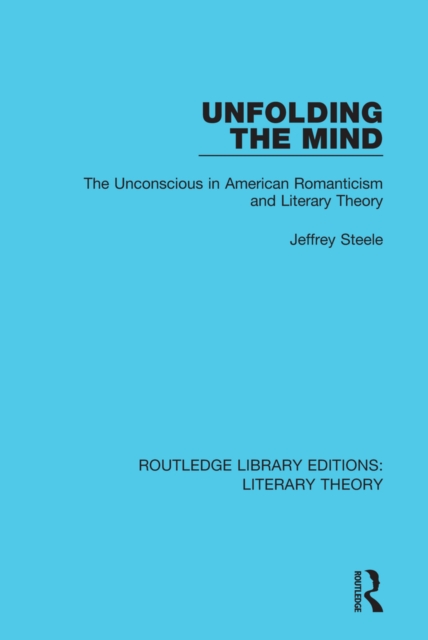
Unfolding the Mind
American writers in the 1830’s and 1840’s felt the need for a new terminology to express their awakening perception of \"new\" aspects of the mind. Without words like the \"unconscious\" vast areas of the psyche would have remained unexpressed and thus unapproachable. This \"discovery\" of the unconscious constitutes to the theme of this study, which was first published in 1987. This title will be of interest to students of literary theory.
Abbreviations; Acknowledgements; 1. Discovering the Unconscious 2. Heart of Light or Heart of Darkness: Romantic Organicism and Psychic Energy 3. Projective and Interpretive Form 4. Sublimation: The Psychological Dialectic of Nature 5. Circumscribing the Mind 6. Emerson’s \"Philosophy of History\" and Jungian Psychology 7. Interpreting the Self 8. Aspects of Power: Toward a Phenomenology of the Self 9. Masks of Dionysius: Enthusiasm and Inflation in the 19 th Century 10. Deconstruction and Reconstruction; Bibliography
eBook
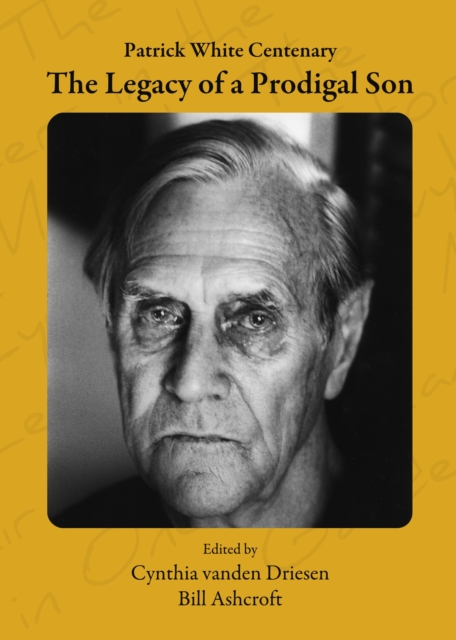
Patrick White Centenary
This volume marks the birth centenary of a giant amongst contemporary writers: the Australian Nobel prize-winning novelist, Patrick White (1912-1990). It proffers an invaluable insight into the current state of White studies through commentaries drawn from an international galaxy of eminent critics, as well as from newer talents. The book proves that interest in Whites work continues to grow and diversify. Every essay offers a new insight: some are re-evaluations by seasoned critics who rev.
eBook
The Unconscious in Philosophy, and French and European Literature
This book traces the idea of the unconscious as it emerges in French and European literature. It discusses the functioning of the normal unconscious mind and provides examples of the abnormal unconscious in poems and literature. Psychiatric cases as they are understood today are illustrated as mirrored in literature describing the functioning of the disturbed mind.
eBook
The Unconscious
The unconscious is a term which is central to the understanding of psychoanalysis, and, indeed everyday life. In this introductory guide, Antony Easthope provides a witty and accessible overview of the subject showing the reality of the unconscious with a startling variety of examples. He takes us on a vivid guided tour of this troubling topic via jokes, rugby songs, Hamlet , Hitchcock's Psycho , and the life and death of Princess Di. Aimed at the absolute beginner, The Unconscious is an enjoyable and easy-to-read introduction for the student and general reader.
eBook