
Catalogue Search | MBRL


Are you sure you want to remove the book from the shelf?

{{itemTitle}}
51
result(s) for
"Submersibles History."
Sort by:

In oceans deep : courage, innovation, and adventure beneath the waves
In an age of unprecedented exploration and innovation, our oceans remain largely unknown, and endlessly fascinating. Streever celebrates the daring pioneers who tested the limits of what the human body can endure under water as he traces both the little-known history and exciting future of how we travel and study the depths. He covers seventeenth-century leather-hulled submarines, their nuclear-powered descendants, and robots capable of roving unsupervised between continents. Discover all the adventures our seas have to offer-- and why they are in such dire need of conservation. -- adapted from jacket
Book

Misadventures of a Civil War Submarine
In 2001, while vacationing on Panama’s Pacific coast, maritime archaeologist James P. Delgado came upon the hulk of a mysterious iron vessel, revealed by the ebbing tides in a small cove at Isla San Telmo. Local inquiries proved inconclusive: the wreck was described as everything from a sunken Japanese suicide submarine from World War II to a poison-laden craft of death that was responsible for the ruin of the pearl beds, decades before.
His professional interest fully aroused, Delgado would go on to learn that the wreck was the remains of one of the first successful deep-diving submersibles, built in 1864 by Julius H. Kroehl, an innovator and entrepreneur who initially sought to develop his invention for military use during the Civil War. The craft’s completion coming too late for that conflict, Kroehl subsequently convinced investors that it could be used to harvest pearls from the Pacific beds off Panama, in waters too deep for native pearl divers to reach.
In Misadventures of a Civil War Submarine, Delgado chronicles the confluence of technological advancement, entrepreneurial aspiration, American capitalist ambition, and ignorance of the physiological effects of deep diving. As he details the layers of knowledge uncovered by his work both in archival sources and in the field excavation of Kroehl’s ill-fated vessel, Delgado weaves the tangled threads of history into a compelling narrative. This finely crafted saga will fascinate and inform professional archaeologists and researchers, naval historians, students and aficionados of maritime exploration, and interested general readers.
eBook

Maximum depth extensions for Hydrozoa, Tunicata and Ctenophora
The observation of singleton or rare species in the deep sea is extremely valuable for gaining a census of biodiversity. At hadal depths (> 6000 m), these records provide a more complete picture of the vertical distribution of fauna. In this study, we present new in situ video records for Trachymedusae (Hydrozoa), Ascidiacea (Tunicata), and Tentaculata (Ctenophora) taken by submersible and supporting landers in the western Pacific Ocean. Together, these three taxonomic groups are present at depths far deeper than previously known. Observations of the rhopalonematid trachymedusa (Pectis cf. profundicola) from both lander and submersible dives at 10,063 and 10,040 m in the Philippine Trench (NW Pacific Ocean) extend the maximum depth of the Hydrozoa by a further 997 m and is the first record of Hydrozoa > 10,000 m. The predatory tunicate Octacnemidae sp. was observed nine times at 7799 m in the Mariana Trench and once at 8077 m in the Izu-Ogasawara Trench (NW Pacific Ocean), therefore extending its maximum depth by 1726 m, and 1002 m to historical accounts of what might also be in the Phlebobranchia order of Ascidiacea. Several observations of large, globular ctenophores with long filamentous tentacles and lacking oral lobes from 10,040 m in the Kermadec Trench (SW Pacific Ocean) increase the maximum depth of the Ctenophora by 2823 m and is the first record of Ctenophora > 10,000 m. Benthic ctenophores were also recorded from the Japan Trench at 8001 m, extending their known depth range by a further 2750 m.
Journal Article

New records of gelatinous zooplankton from an oceanic island in the Eastern Tropical Pacific
Gelatinous zooplankton are an abundant and diverse group of animals in the pelagic environment. However, knowledge of species diversity and spatial distributions, as well as their ecological role, is scarce. We present information of epi- and mesopelagic gelatinous zooplankton recorded by the ‘DeepSee’ submersible between 2006 and 2012 at Isla del Coco (Cocos Island), Costa Rica, an oceanic island in the Eastern Tropical Pacific. Two species of scyphomedusae, three species of hydromedusae, two genera of siphonophores, and two species of ctenophores were observed in the videos, at depths between 50 and 400 m. None of these species had been previously recorded in the waters around the island. Furthermore, except for the jellyfish Pelagia noctiluca and a siphonophore in the genus Praya, all are new records for Costa Rican waters. This study also includes the first record of the cnidarians Modeeria rotunda, Solmissus sp., Halitrephes maasi and Apolemia spp., and the ctenophore Thalassocalyce inconstans in the Eastern Tropical Pacific. We show that surveys in regions with little information about gelatinous zooplankton may broaden our knowledge of their natural history and may result in new records of gelatinous species.
Journal Article
Self-potential mapping using an autonomous underwater vehicle for the Sunrise deposit, Izu-Ogasawara arc, southern Japan
We performed a simultaneous survey of self-potential and plume turbidity using an autonomous underwater vehicle (AUV) above the Sunrise deposit in the Myojin Knoll caldera of the Izu-Ogasawara arc. A 10-m-long electrode rod, on which five electrodes referenced with a common electrode were mounted, was connected at the tail of an AUV. The survey was conducted at a typical speed of 2 knots, covering the 1500 m × 1500 m area with a typical spacing of survey lines of 100 m. With AUV altitude of 100 m above the seafloor, a negative self-potential anomaly of a few millivolts was observed. The self-potential anomaly was found to spread 300 m × 300 m. The self-potential is probably attributable to the geo-battery mechanism: electric current is generated by redox reactions occurring around an ore body crossing a redox contrast. Assuming that the source of the self-potential is an electric current dipole, we can image a southward-dipping dipole with the moment of approximately 103 A m, approx. 30 m below the southern part of the ore deposit. Anomalies of turbidity, which are correlated to ambient temperature and which are signatures of discharged hydrothermal fluids, were distributed more broadly than the self-potential. Some turbidity anomalies were found without self-potential anomalies. They were probably transported by the ocean current. Spatial decoupling between the self-potential and turbidity anomalies suggests that the direct contribution of hydrothermal fluids to the self-potential anomalies is probably a secondary effect. The survey altitude of 100 m and the survey speed of 2 knots in the present study represent practical limitations for the self-potential survey when active hydrothermal fields are targeted. We have observed that the self-potential method responds exclusively to the presence of hydrothermal ore deposits. This behavior differs from other methods for exploring seafloor hydrothermal ore deposits: The geomagnetic method responds not only to ore deposits but also to volcanic bodies. The plume method can detect remote hydrothermal activities, but the source locations are not necessarily specified. The self-potential method is useful as an excellent exploration tool, particularly for initial surveys.
Journal Article

Sub Culture
A deep dive into the significance of submarines, across everything from warfare and politics to literature and film. Sub Culture explores the crucial role of the submarine in modern history, its contribution to scientific progress and maritime exploration, and how it has been portrayed in art, literature, fantasy, and film. Ranging from the American Civil War to the destruction of the Russian submarine Kursk in 2000, the book examines the submarine's activities in the First and Second World Wars, the Cold War, and in covert operations and marine exploration to the present day. Citing the submarine, particularly the nuclear submarine, as both ultimate deterrent and doomsday weapon, Sub Culture examines how its portrayal in popular culture has reinforced, and occasionally undermined, the military and political agendas of the nation-states that deploy it.
eBook

Risk Analysis of Autonomous Underwater Vehicle Operation in a Polar Environment Based on Fuzzy Fault Tree Analysis
Autonomous underwater vehicles have long been used in marine explorations, and their application in recent polar expeditions is particularly noteworthy. However, the complexity and extreme conditions of the polar environment pose risks to the stable operation of autonomous underwater vehicles. This study adopted the methodology of fuzzy fault tree analysis to deeply analyze the operational risks of autonomous underwater vehicles in polar environments. While traditional fault tree analysis maps the causal relationships and probabilities between basic and intermediate events, fuzzy fault tree analysis models the uncertainty of data and determines the failure probability by integrating expert opinions. This study revealed that polar environment-induced failures play a more substantial role in autonomous underwater vehicle loss in polar regions than inherent system failures. The study identified ‘recovery failure’ and ‘poor communication’ as the major risk factors facing autonomous underwater vehicles in polar environments, exhibiting the highest failure probabilities. Specifically, among various polar environmental factors, ‘large ice concentration’, ‘ice thickness’, and ‘roughness of ice underside’ under ‘bad’ conditions were found to have a significant impact on the autonomous underwater vehicle’s failure probability. The fuzzy fault tree analysis method in this study successfully filled the gap created by the absence of historical data by effectively incorporating expert opinions, enabling a quantitative presentation of the impact of polar environments, which has been previously difficult to convey in qualitative terms.
Journal Article

A novel submersible-mounted sediment pressure-retaining sampler at full ocean depth
High-efficiency pressure-retaining sampling technology for obtaining seabed sediments is required for studying marine geological history, the survival principles of marine microorganisms, and the evolution of earth life. In this paper, a novel submersible-mounted sampler capable of collecting pressure-retained samples at a full ocean depth is designed. The structure scheme is first presented, including the sampling unit, pressure-retaining unit, and pressure-compensation unit. The sampling kinematics model is then established, and the influences of pressing velocity, and the length and inner diameter of pressure pipe on the pressing force of the mechanical arm are determined, providing important guidance for the design of the sealing structure. The maximum working depth of the sampler is 11,000 m, the coring diameter of the sampler is 54 mm, the maximum coring depth is 500 mm, and obtained samples can keep close to in-situ pressures. The sampler can be mounted on a submersible and operated using a single mechanical arm. During cruise TS-21 from August to October 2021, the sampler was deployed 4 times at depth of 7700 m in the West Philippine Basin, and the high pressure sediment samples were successfully collected. The pressure change of the samples remained within ±6%, which verified the rationality of the design and the feasibility of this novel submersible-mounted pressure-retaining sampler.
Journal Article

Development Timeline of the Autonomous Underwater Vehicle in Japan
In 2020, the autonomous underwater vehicle (AUV) has already become a vital part of deep-sea research. There is a long history of R&D of AUVs that dive into the deep sea, where radio waves cannot reach, thus making remote control difficult so that no help can be provided, which implies that careful and adequate preparation is necessary. Their successful development has been based on the accumulation of experience and achievements contributing to the remarkable results that no other system can produce. The aggressive R&D of Japanese AUVs started approximately 40 years ago. This paper looks back at this history and introduces various Japanese AUVs.
Journal Article
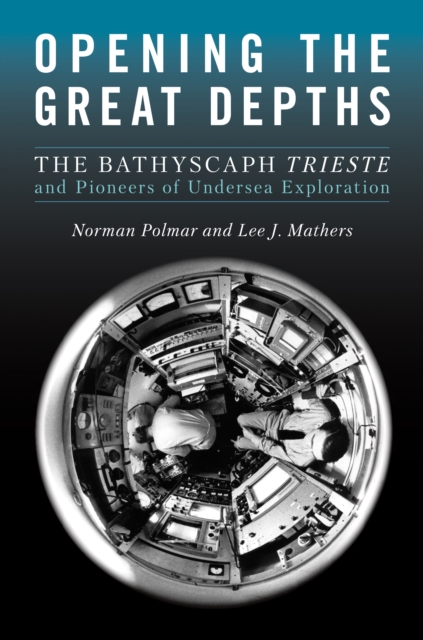
Opening the Great Depths
Opening the Great Depths is the story of the Trieste, its officers and sailors, and the civilians, often told in their own words, documenting for the first time the earliest years of humanity's probing into Earth's final frontier.
eBook