
Catalogue Search | MBRL


Are you sure you want to remove the book from the shelf?

{{itemTitle}}
254,965
result(s) for
"Substance Abuse"
Sort by:

High : everything you want to know about drugs, alcohol, and addiction
With drug education for children more important than ever, this book draws on the experiences of a \"New York Times\"-bestselling father-son team to provide all the information teens and tweens need to know about drugs, alcohol, and addiction.
Book

A scalable, integrated intervention to engage people who inject drugs in HIV care and medication-assisted treatment (HPTN 074): a randomised, controlled phase 3 feasibility and efficacy study
People who inject drugs (PWID) have a high incidence of HIV, little access to antiretroviral therapy (ART) and medication-assisted treatment (MAT), and high mortality. We aimed to assess the feasibility of a future controlled trial based on the incidence of HIV, enrolment, retention, and uptake of the intervention, and the efficacy of an integrated and flexible intervention on ART use, viral suppression, and MAT use.
This randomised, controlled vanguard study was run in Kyiv, Ukraine (one community site), Thai Nguyen, Vietnam (two district health centre sites), and Jakarta, Indonesia (one hospital site). PWID who were HIV infected (index participants) and non-infected injection partners were recruited as PWID network units and were eligible for screening if they were aged 18–45 years (updated to 18–60 years 8 months into study), and active injection drug users. Further eligibility criteria for index participants included a viral load of 1000 copies per mL or higher, willingness and ability to recruit at least one injection partner who would be willing to participate. Index participants were randomly assigned via a computer generated sequence accessed through a secure web portal (3:1) to standard of care or intervention, stratified by site. Masking of assignment was not possible due to the nature of intervention. The intervention comprised systems navigation, psychosocial counselling, and ART at any CD4 count. Local ART and MAT services were used. Participants were followed up for 12–24 months. The primary objective was to assess the feasibility of a future randomised controlled trial. To achieve this aim we looked at the following endpoints: HIV incidence among injection partners in the standard of care group, and enrolment and retention of HIV-infected PWID and their injection partners and the uptake of the integrated intervention. The study was also designed to assess the feasibility, barriers, and uptake of the integrated intervention. Endpoints were assessed in a modified intention-to-treat popualtion after exclusion of ineligible participants. This trial is registered on ClinicalTrials.gov, NCT02935296, and is active but not recruiting new participants.
Between Feb 5, 2015, and June 3, 2016, 3343 potential index participants were screened, of whom 502 (15%) were eligible and enrolled. 1171 injection partners were referred, and 806 (69%) were eligible and enrolled. Index participants were randomly assigned to intervention (126 [25%]) and standard of care (376 [75%]) groups. At week 52, most living index participants (389 [86%] of 451) and partners (567 [80%] of 710) were retained, and self-reported ART use was higher among index participants in the intervention group than those in the standard of care group (probability ratio [PR] 1·7, 95% CI 1·4–1·9). Viral suppression was also higher in the intervention group than in the standard of care group (PR 1·7, 95% CI 1·3–2·2). Index participants in the intervention group reported more MAT use at 52 weeks than those in the standard of care group (PR 1·7, 95% CI 1·3–2·2). Seven incident HIV infections occurred, and all in injection partners in the standard of care group (intervention incidence 0·0 per 100 person-years, 95% CI 0·0–1·7; standard of care incidence 1·0 per 100 person-years, 95% CI 0·4–2·1; incidence rate difference −1·0 per 100 person-years, 95% CI −2·1 to 1·1). No severe adverse events due to the intervention were recorded.
This vanguard study provides evidence that a flexible, scalable intervention increases ART and MAT use and reduces mortality among PWID. The low incidence of HIV in both groups impedes a future randomised, controlled trial, but given the strength of the effect of the intervention, its implementation among HIV-infected PWID should be considered.
US National Institutes of Health.
Journal Article

The life of the heroin user : typical beginnings, trajectories and outcomes
\"Heroin is a worldwide scourge and a seemingly intractable one. The Life of the Heroin User: Typical Beginnings, Trajectories and Outcomes is the first book to apply a biographical approach to the lifecycle of the heroin user from birth until death. Chapters address each stage of the user's life, including childhood, routes to use, the development of dependence, problems arising from addiction, death and options for treatment and prevention. Drawing on over two decades of experience in the field of opium research, Shane Darke examines major theoretical approaches to the development of opiate dependence and the efficacy of treatment options for opiate dependence. Key points are presented at the end of each chapter. The most detailed review available of what is likely to happen to the dependent heroin user, this is an important book for clinicians, researchers and students in the fields of drug and alcohol studies and public health\"-- Provided by publisher.
Book
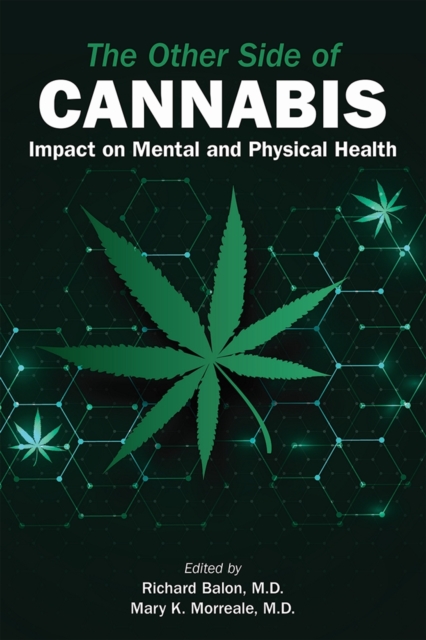
The Other Side of Cannabis
In extensively referenced and accessible chapters, experts from around the world discuss the effects of cannabis on adolescents, adults, and older adults; the link between cannabis use and conditions such as PTSD and psychosis; the effects of cannabis on fertility; and a myriad of other topics.
eBook

Increased Uptake of HCV Testing through a Community-Based Educational Intervention in Difficult-to-Reach People Who Inject Drugs: Results from the ANRS-AERLI Study
The community-based AERLI intervention provided training and education to people who inject drugs (PWID) about HIV and HCV transmission risk reduction, with a focus on drug injecting practices, other injection-related complications, and access to HIV and HCV testing and care. We hypothesized that in such a population where HCV prevalence is very high and where few know their HCV serostatus, AERLI would lead to increased HCV testing.
The national multisite intervention study ANRS-AERLI consisted in assessing the impact of an injection-centered face-to-face educational session offered in volunteer harm reduction (HR) centers (\"with intervention\") compared with standard HR centers (\"without intervention\"). The study included 271 PWID interviewed on three occasions: enrolment, 6 and 12 months. Participants in the intervention group received at least one face-to-face educational session during the first 6 months.
The primary outcome of this analysis was reporting to have been tested for HCV during the previous 6 months. Statistical analyses used a two-step Heckman approach to account for bias arising from the non-randomized clustering design. This approach identified factors associated with HCV testing during the previous 6 months.
Of the 271 participants, 127 and 144 were enrolled in the control and intervention groups, respectively. Of the latter, 113 received at least one educational session. For the present analysis, we selected 114 and 88 participants eligible for HCV testing in the control and intervention groups, respectively. In the intervention group, 44% of participants reported having being tested for HCV during the previous 6 months at enrolment and 85% at 6 months or 12 months. In the control group, these percentages were 51% at enrolment and 78% at 12 months. Multivariable analyses showed that participants who received at least one educational session during follow-up were more likely to report HCV testing, compared with those who did not receive any intervention (95%[CI] = 4.13[1.03;16.60]).
The educational intervention AERLI had already shown efficiency in reducing HCV at-risk practices and associated cutaneous complications and also seems to have a positive impact in increasing HCV testing in PWID.
Journal Article


Increases in Acute Hepatitis C Virus Infection Related to a Growing Opioid Epidemic and Associated Injection Drug Use, United States, 2004 to 2014
Objectives. To compare US trends in rates of injection drug use (IDU), specifically opioid injection, with national trends in the incidence of acute HCV infection to assess whether these events correlated over time. Methods. We calculated the annual incidence rate and demographic and risk characteristics of reported cases of acute HCV infection using surveillance data from 2004 to 2014 and the annual percentage of admissions to substance use disorder treatment facilities reporting IDU for the same time period by type of drug injected and demographic characteristics. We then tested for trends. Results. The annual incidence rate of acute HCV infection increased more than 2-fold (from 0.3 to 0.7 cases/100 000) from 2004 to 2014, with significant increases among select demographic subgroups. Admissions for substance use disorder attributed to injection of heroin and prescription opioid analgesics increased significantly, with an almost 4-fold increase in prescription opioid analgesic injection. Significant increases in opioid injection mirrored those for reported cases of acute HCV infection among demographic subgroups. Conclusions. These findings strongly suggest that the national increase in acute HCV infection is related to the country’s opioid epidemic and associated increases in IDU.
Journal Article


Social support and HIV management among people who inject drugs: in-depth interviews in Delhi, India
Background
People who inject drugs (PWID) experience a higher burden of HIV compared to general populations. Social support has been shown to improve disease management and combat stigma for PWID yet remains unexplored among PWID in low- and middle-income countries.
Methods
We conducted qualitative in-depth interviews to understand social ties and health management among PWID living with HIV in Delhi, India. The research was nested in a factorial randomized controlled trial comparing same-day treatment and community-based care with standard-of-care. Interviews were conducted in Hindi in a private room, audio recorded, transcribed in English, and analyzed inductively using Dedoose.
Results
We conducted 22 interviews (30 min-two hours) with PWID living with HIV in Delhi (all men, ages 21–38 years). 10 slept in houses, 11 on public streets, and one in a shelter. Participants often experienced isolation in their lives but identified avenues of positive social support from healthcare staff, families, peers (friends or injecting partners), and authority figures/public contacts. Healthcare staff provided information and respectful encouragement to manage health. Outreach workers provided support to remind and accompany participants to clinic visits. Family members offered financial support, medicine reminders, and trust. Authority figures/public contacts included employers, shopkeepers, and vendors who provided a safe place to sleep or store belongings, which proved crucial to consistently store and take pills. In some cases, specific social connections created barriers to health by enabling injecting drug use and carrying out harmful behaviors such as physical attacks, disrespect, and theft.
Conclusion
Social connections can offer PWID positive emotional and logistical support to access health services and help them persevere through societal and structural stigmas. However, in some cases they may also contribute negatively to health management challenges. As a harm reduction strategy, public health services can work with PWID to consider untapped opportunities to build positive support and resilience through social ties, as well as how to contend with social connections harmful to health management.
Journal Article