
Catalogue Search | MBRL


Are you sure you want to remove the book from the shelf?

{{itemTitle}}
4
result(s) for
"Substance-Related Disorders -- rehabilitation -- Russia"
Sort by:
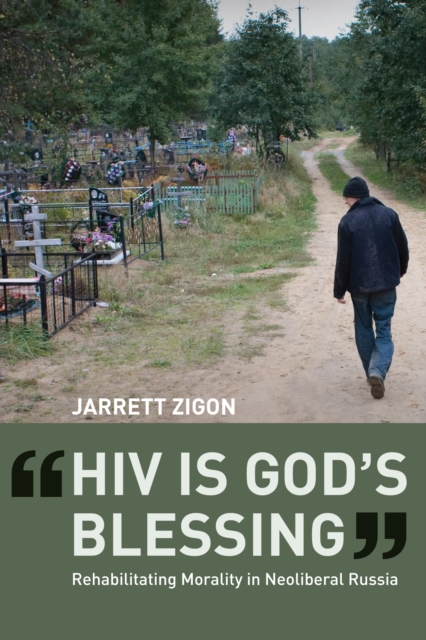
\HIV is God's blessing\
This provocative study examines the role of today's Russian Orthodox Church in the treatment of HIV/AIDS. Russia has one of the fastest-growing rates of HIV infection in the world—80 percent from intravenous drug use—and the Church remains its only resource for fighting these diseases. Jarrett Zigon takes the reader into a Church-run treatment center where, along with self-transformational and religious approaches, he explores broader anthropological questions—of morality, ethics, what constitutes a \"normal\" life, and who defines it as such. Zigon argues that this rare Russian partnership between sacred and political power carries unintended consequences: even as the Church condemns the influence of globalization as the root of the problem it seeks to combat, its programs are cultivating citizen-subjects ready for self-governance and responsibility, and better attuned to a world the Church ultimately opposes.
eBook

Civil society and drugs in Russia: moving towards the conservative agenda
The fall of the Soviet Union in the early 1990s brought about important shifts in Russian economic, social, and political life. Along with economic turmoil emerged a wave of drug abuse.1
Journal Article

\A Disease of Frozen Feelings\: Ethically Working on Emotional Worlds in a Russian Orthodox Church Drug Rehabilitation Program
In a Russian Orthodox Church drug rehabilitation program in St. Petersburg, drug addiction was often described as a disease of frozen feelings. This image suggests that rehabilitation is a process of thawing emotional worlds and, thus, allows the emotions to flow once again. In this article I argue that \"frozen feelings\" is better understood as the unsocial emotional worlds many drug users experience, and that rehabilitation in this church-run program particularly focuses on the cultivation of an emotional world that supports sociality. This is done, I argue, by means of ethically training rehabilitants to learn how to control and manage their emotional worlds, and in so doing, rehabilitants become new moral persons better able to live in the social world.
Journal Article

Russia's punitive drug laws
According to Chris Beyrer, Center for Public Health and Human Rights, Johns Hopkins Bloomberg School of Public Health, Baltimore, MD, USA, ...the narcologic and psychiatric establishments must join the mainstream of modern science and support and use opioid substitution therapy, with methadone, buprenorphine, or Suboxone.
Journal Article