
Catalogue Search | MBRL


Are you sure you want to remove the book from the shelf?

{{itemTitle}}
1,106
result(s) for
"Sudan Foreign relations."
Sort by:


The International Politics of Mass Atrocities
The ongoing crisis in Darfur, Sudan has stimulated a huge amount of political and academic interest across the world. The crisis has been both reflective and constitutive of key areas of contestation and change within contemporary international society.
This book examines the crisis in Darfur as a case study of some of the wider debates currently taking place within International Relations theory. Using the conceptual framework developed by English School theorists, specifically their concept of international society and the related idea of \"good international citizenship\", this book examines a wide range of issues: foreign policy analysis, theories of norm diffusion, international organizations, peace operations, international criminal justice and war law, the causes and nature of contemporary warfare, and the international relations of Africa.
Making an important contribution to the debate about the meaning and limits of international society, this book will be of interest to students and scholars international relations theory, international security, foreign policy, international organizations, human rights, African politics, genocide studies and international law.
Introduction: International Society and the Crisis in Darfur Paul D. Williams and David R. Black Part 1: Regional Politics 1. The Government of Sudan and the Darfurian Armed Groups I.D.F. and Munzoul Assal 2. Regional Politics and the Darfur Crisis Lee J.M. Seymour Part 2: Multilateral Politics 3. The United Nations Security Council Michael MacKinnon 4. The African Union Cristina Badescu and Linnea Bergholm 5. The European Union Rory Keene and Asbjorn Wee 6. The International Criminal Court William A. Schabas Part 3: Bilateral Politics 7. The United States Scott Stedjan and Colin Thomas-Jensen 8. The People’s Republic of China Ian Taylor 9. The United Kingdom Paul D. Williams 10. France Bruno Charbonneau 11. Canada David R. Black. Conclusion David R. Black and Paul D. Williams
'This collection of essays provide an elegant reminder of why international society is a contested concept and Darfur is a contested conflict. A first-rate piece of work about the central dilemmas facing governments, international organizations, NGOs, and citizens.' - Professor Thomas G. Weiss, The CUNY Graduate Center, USA
'Despite the attention focused on the conflict in Darfur since it broke out in 20003, there have been few systematic studies that probe the role of major regional and international players in the conflict. Black and Williams’ The International Politics of Atrocities: The Case of Darfur, fills this lacunae. Against the backdrop of the turbulence in Sudanese politics, the book has cogently assembled a broad range of expertise to examine the roles of multilateral and bilateral actors. The chapters are neatly woven around the organizing theme of the possibilities and limits to good international citizenship. The book is bound to find wide readership and improve our understanding of the complexity of external action and inaction in Darfur.' - Gilbert M. Khadiagala, Jan Smuts Professor of International Relations, The University of the Witwatersrand, South Africa
'For me, this important book teaches us, through the evidence provided by regional specialists on Darfur from a variety of countries, that there is less to the notions of 'international society', 'international community', 'good international citizenship', 'solidarism', and 'responsibility to protect' than their official and academic proponents claim. Tragically, such a verdict is always likely to be starkest when 'mass atrocities' occur in Africa.' - Professor Ken Booth FBA, Senior Research Associate, Aberystwyth University, UK
'It will …be an invaluable resource for scholars of Darfur, human rights, and humanitarian intervention.' - Kenneth A. Rodman, William R. Cotter Distinguished Professor of Government, Colby College, USA
'This is an excellent volume: well-conceived, designed, researched and written… represents the very best of case-specific scholarship on the difficult (issue) of collective responses to genocidal conflict…(N)icely integrates IR theory and the details of this particular case. The study blends well broader concerns such as the existence and capacity of an \"international society\" and the tenaciously problematic case of Darfur.…gives the international response to Darfur a clear yardstick and we gain real insights into the challenges of the context and the failures of a robust and effective international response.' - Tim Sisk, Professor and Director, Center for Sustainable Development and International Peace, Josef Korbel School of International Studies, University of Denver
David R. Black is Director of the Centre for Foreign Policy Studies and Associate Professor in Political Science at Dalhousie University, Canada. His current research interests focus on Canada and Sub-Saharan Africa, with emphases on human security, development assistance, multilateral diplomacy and extractive industry investment.
Paul D. Williams is Associate Professor of International Affairs and Associate Director, Security Policy Studies Program at George Washington University, USA. He also serves as Faculty Adviser for students with concentrations in Conflict & Conflict Resolution. He specializes in issues of conflict resolution, international peacekeeping and Africa's international relations.
eBook


Israel and Sudan: The Origins of Clandestine Relations (1954–1964)
The years 1954–1964 witnessed two phases of clandestine contacts pursued by Israeli and Sudanese representatives. During the first phase, 1954–1958, Israel developed secret ties with the Sudanese Umma party Israel in an attempt to establish the southern tier of the Periphery Alliance, with Ethiopia and Sudan against Nasser's Egypt but the attempt was sabotaged by the 1958 'Abboud coup. During the second phase, beginning in 1961, the Division for Politico-Economic Planning (DPEP) of Israel's Ministry of Foreign Affairs developed secret ties with certain Sudanese officials with the aim of helping Sudan compete with its primary competitor in the cotton market, Nasser's Egypt, in order to deal a blow to the Egyptian economy and the Arab boycott of Israel. Although at first the DPEP supplied the 'Abboud regime with anonymous information, over time the Sudanese partners recognized and approve the identity of their Israeli benefactor. This article reveals the extent of the secret ties between Israel and Sudan and the ingenious ways in which Israel fought against Egypt and the Arab Boycott.
Journal Article

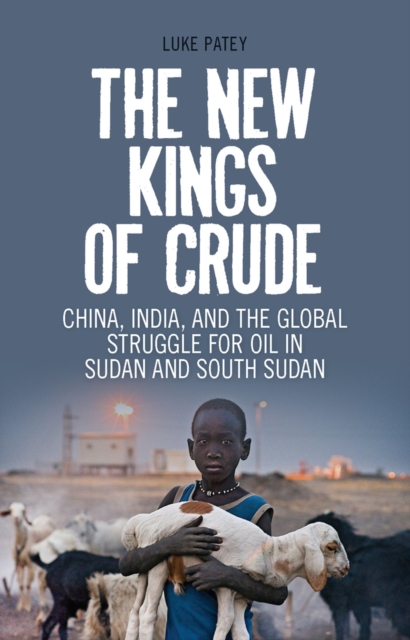
The new kings of crude : China, India, and the global struggle for oil in Sudan and South Sudan
In the past decade, the need for oil in Asia's new industrial powers, China and India, has grown dramatically. The New Kings of Crude takes the reader from the dusty streets of an African capital to Asia's glistening corporate towers to provide a first look at how the world's rising economies established new international oil empires in Sudan, amid one of Africa's longest-running and deadliest civil wars. For over a decade, Sudan fuelled the international rise of Chinese and Indian national oil companies. But the political turmoil surrounding the historic division of Africa's largest country, with the birth of South Sudan, challenged Asia's oil giants to chart a new course. Luke Patey weaves together the stories of hardened oilmen, powerful politicians, rebel fighters, and human rights activists to show how the lure of oil brought China and India into Sudan--only later to ensnare both in the messy politics of a divided country. His book also introduces the reader to the Chinese and Indian oilmen and politicians who were willing to become entangled in an African civil war in the pursuit of the world's most coveted resource. It offers a portrait of the challenges China and India are increasingly facing as emerging powers in the world.
eBook

Sudan : the failure and division of an African state
Over the past two decades, the situation in Africa's largest country, Sudan, has progressively deteriorated: the country is in second position on the Failed States Index, a war in Darfur has claimed hundreds of thousands of deaths, President Bashir has been indicted by the International Criminal Court, a forthcoming referendum on independence for Southern Sudan threatens to split the country violently apart. In this fascinating and immensely readable book, the Africa editor of the Economist gives an absorbing account of Sudan's descent into failure and what some have called genocide. Drawing on interviews with many of the main players, Richard Cockett explains how and why Sudan has disintegrated, looking in particular at the country's complex relationship with the wider world. He shows how the United States and Britain were initially complicit in Darfur - but also how a broad coalition of human-rights activists, right-wing Christians, and opponents of slavery succeeded in bringing the issues to prominence in the United States and creating an impetus for change at the highest level.
Book

Israel and Sudan: the Saga of an enigmatic relationship
Israeli-Sudanese relations are unique for their secrecy and inconsistency. Sudan's initial policy toward Israel was by no means hostile. However, many factors militated against a consistent policy on the part of the Sudanese government, such as the unstable nature of the Sudanese state caused by frequent military takeovers, inter-tribal conflict, and the perennial struggle between Islamic and secular groups. The article demonstrates that despite the virulent anti-Israeli remarks often made by Sudanese leaders, there were episodes of significant cooperation between the two countries.
Journal Article

A Return to Business As Usual in Sudan?
\"The African Union suspended Sudan's government's membership in the union. The US government suspended bilateral assistance. The EU threatened 'there will be serious consequences for our support, including financial' and US Senator Chris Coons introduced legislation that would impose individual sanctions on key actors obstructing the transition. That powerful wave of pressure effectively bolstered the demands of the protesters and brought us to this point. Now more than ever, international support and scrutiny needs to be maintained to ensure that those who are fighting for a better, more rights-abiding future in Sudan are not abandoned.\" (AllAfrica.com) In this point-of-view article, the author argues that international support and pressure is needed to ensure a better future for Sudan.
Newspaper Article