
Catalogue Search | MBRL


Are you sure you want to remove the book from the shelf?

{{itemTitle}}
17,325
result(s) for
"Sudan."
Sort by:


Bounds of Blackness
Bounds of Blackness explores
the history of Black America's intellectual and cultural engagement
with the modern state of Sudan. Ancient Sudan occupies a
central place in the Black American imaginary as an exemplar of
Black glory, pride, and civilization, while contemporary Sudan,
often categorized as part of \"Arab Africa\" rather than \"Black
Africa,\" is often sidelined and overlooked. In this pathbreaking
book, Christopher Tounsel unpacks the vacillating approaches of
Black Americans to the Sudanese state and its multiethnic populace
through periods defined by colonialism, postcolonial civil wars,
genocide in Darfur, and South Sudanese independence. By exploring
the work of African American intellectuals, diplomats,
organizations, and media outlets, Tounsel shows how this
transnational relationship reflects the robust yet capricious terms
of racial consciousness in the African Diaspora.
eBook


South Sudan
In 2011, South Sudan became independent following a long war of liberation, that gradually became marked by looting, raids and massacres pitting ethnic communities against each other. In this remarkably comprehensive work, Edward Thomas provides a multi-layered examination of what is happening in the country today. Writing from the perspective of South Sudan's most mutinous hinterland, Jonglei state, the book explains how this area was at the heart of South Sudan's struggle. Drawing on hundreds of interviews and a broad range of sources, this book gives a sharply focused, fresh account of South Sudan's long, unfinished fight for liberation.
eBook


Secession and Conflict
The overthrow of Saddam Hussein in 2003 in Iraq opened the door
for Kurdish nationalists to move toward outright independence.
Despite the recent visibility of the Kurds in the international
media, little is known about their political aspirations as
citizens of an autonomous region. In Secession and
Conflict Zheger Hassan employs a comparative analysis to
explore why Iraqi Kurdistan, despite being better positioned
institutionally and economically than the similar cases of South
Sudan and Kosovo, has not declared independence. In rebuilding Iraq
and fighting against the Islamic State, the Kurds have cultivated
important political alliances with the US and Europe, which have
garnered them international economic, military, and political
support. Though now well-positioned to function as an independent
state, Iraqi Kurdistan has vacillated in seizing this golden
opportunity to declare independence. The apparent Kurdish
willingness to forgo independence runs counter to the prevailing
narratives about the Kurds in the Middle East. Hassan draws not
only on the history of the Kurds but also on first-hand interviews
with high-ranking officials, journalists, and nationalists to
provide a new window into the calculations of Kurdish leaders as
they navigate the complicated politics of Iraq. Secession and
Conflict offers a new model for understanding the Kurdish
question in Iraq.
eBook

Local justice in Southern Sudan
This report analyzes the current justice system in Southern Sudan, focusing on the relationship between customary chiefs' courts and government courts and the ways that litigants navigate both types of courts in practice. Based on extensive interviews with litigants, chiefs, and court officials, the report argues that the line between chiefs' and government courts is blurred and that litigants prize the system's hybridity and flexibility, as they often seek restorative and consensual dispute resolution over retribution. The report's analysis suggests that current justice reform efforts, aiming at stricter jurisdictional limitations and the ascertainment of customary law, may reduce litigants' abilities to achieve the justice they want, undermine fairness, and exacerbate local conflict. Interventions should keep the current system's flexibility intact and focus on long-term education and information efforts. Where such knowledge resources are available, there is evidence that individual litigants deploy them in their disputes and cases, contributing to the gradual processes of change that the flexibility of local justice engenders.
Book

Post-referendum Sudan : national and regional questions
The fate of Sudan, by then the largest country in Africa, was clearly decided when results of the referendum vote were announced in February 2011. Policy makers, scholars and the international community began to grapple with critical issues that might arise after the independence of South Sudan and how different stakeholders were likely to react during the period of uncertainty. Political developments in Sudan were long-term outcomes of post-cold war revolutions in the world system after the Soviet Union collapsed. A domino effect of such events swept across Eastern Europe with some manifestations in the Horn of Africa. The fall of Mengistu Haile Mariam, marked the beginning of the redrawing of the map of Africa and posed a challenge to the long held principle of preservation of colonial borders that had been enshrined in the Charter of the Organisation of African Unity. The precedent set by the independence of Eritrea seemed to encourage southern Sudan to press forward for independence through a two pronged approach of armed struggle and diplomacy led by the Sudan People�s Liberation Army/Movement. This book attempts to understand national, regional and continental dimensions of the unresolved issues that could result in the escalation of conflict in the Sudan. It examines internal dynamics of the Sudan after secession of the south and how these dynamics might affect neighbouring countries in the geopolitical regions: the Horn of Africa, the Great Lakes Region and Central Africa. A section of the book is dedicated to dynamics within South Sudan as a new state. Post-conflict South Sudan as country was marked by extreme poverty, lack of infrastructure and prevalence of inter-communal armed violence. This book proposes possible policies to prevent the country from descending into a state of economic and social chaos. The book provides the argument that equitable and rational transformative socio-economic programmes and policies could greatly reduce potentials for conflict. This book calls on policy makers to pursue policies that could lead to concrete projects planned to alleviate poverty and provision of basic social services such as education, health, and safe water. The book comes to the conclusion that political stability will depend on collective actions of stakeholders to ensure that peace prevails both in the north and the south to guarantee human security in the region.
eBook

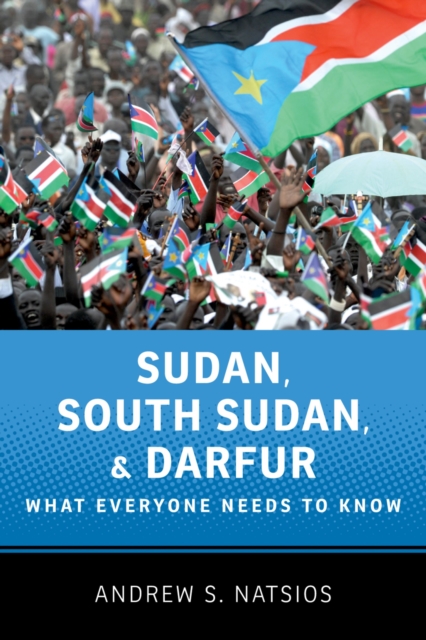
Sudan, South Sudan, and Darfur
A concise and illuminating account of the turbulent history, economics, and culture of Sudan, this timely book is essential for anyone who wants to know more about the complicated country and the changes to come with the independence of South Sudan in July 2011.
eBook