
Catalogue Search | MBRL


Are you sure you want to remove the book from the shelf?

{{itemTitle}}
51
result(s) for
"Suffrage Ireland."
Sort by:


Eva Gore-Booth
This is the first dedicated biography of the extraordinary Irish woman, Eva Gore-Booth. Gore-Booth rejected her aristocratic heritage choosing to live and work amongst the poorest classes in industrial Manchester. Her work on behalf of barmaids, circus acrobats, flower sellers and pit-brow lasses is traced in this book. During one impressive campaign Gore-Booth orchestrated the defeat of Winston Churchill. Gore-Booth published volumes of poetry, philosophical prose and plays, becoming a respected and prolific author of her time and part of W.B. Yeats' literary circle. The story of Gore-Booth's.
eBook

Power-Sharing Executives
To achieve peaceful interethnic relations and a stable democracy in the aftermath of violent conflict, institutional designers may task political elites representing previously warring sides with governing a nation together. InPower-Sharing Executives, Joanna McEvoy asks whether certain institutional rules can promote cooperation between political parties representing the contending groups in a deeply divided place. Examining the different experiences of postconflict power sharing in Bosnia, Macedonia, and Northern Ireland, she finds that with certain incentives and norms in place, power sharing can indeed provide political space for an atmosphere of joint governance or accommodation between groups.
Power-Sharing Executivesexplains how the institutional design process originated and evolved in each of the three nations and investigates the impact of institutional rules on interethnic cooperation. McEvoy also looks at the role of external actors such as international organizations in persuading political elites to agree to share power and to implement power-sharing peace agreements. This comparative analysis of institutional formation and outcomes shows how coalitions of varying inclusivity or with different rules can bring about a successful if delicate consociationality in practice.Power-Sharing Executivesoffers prescriptions for policymakers facing the challenges of mediating peace in a postconflict society and sheds light on the wider study of peace promotion.
eBook

New Collections for New Women: Collecting and Commissioning Portraits at the Early Women’s University Colleges
In 1899 Irish suffragist Dorothea Roberts gave Bedford College a portrait of Millicent Fawcett by the artist Theodore Blake Wirgman. This gift commemorated Fawcett’s acceptance of her honorary degree from the University of St Andrews, an important celebratory moment for the women’s higher education movement. At one of the earliest women’s colleges in the country, Fawcett’s portrait joined a growing collection of portraits of pioneering professional women at Bedford College. The art collections at the newly established women’s colleges heralded a new kind of collector: collectives of educated women, staff, students, and alumnae. These women were not necessarily wealthy individuals, but as collectives they could commission artworks through the intricate networks that threaded between the different institutions promoting higher education for women. Focusing on three very different early women’s colleges — Newnham, Bedford, and Royal Holloway — this article explores the motivations, networks, and inspirations for the collections formed by women’s university colleges in the late nineteenth and early twentieth centuries. Including portraits by celebrated artists like James Jebusa Shannon, Philip de László, and William Orpen, these collections were among the first to celebrate female sitters for their academic achievements and leadership, and among the first to be collected for the edification of a largely female audience. I argue that networks stretching across different colleges were utilized to share knowledge of appropriate and preferred artists, who could be trusted to produce work that was aesthetically conservative but radical in subject. These collectives of educated women deliberately cultivated art collections that would present a new visual history of education, with women as its leaders.
Journal Article

No Foreign Despots on Southern Soil: The Know-Nothing Party in Alabama, 1850-1857
[...]the legal requirement that male political leaders place Catholic women in a position of public power violated their construction of patriarchal gender relationships. [...]the nineteenth-century, most Catholic nuns were foreign-born, which only increased southern animosity towards the Sisters of Charity in Mobile.23 Second, aldermen feared that the hospital promoted Catholic values at the expense of Protestant Christianity, which threatened the association between American society and Protestant Christianity. According to the mayor's supporters, the populace generally applauded the announcement and maintained that \"the position which the mayor, at the risk of losing the favor of ... the saloon keepers, the bar-room frequenters, the lower class of Roman Catholics, has taken in his message calls forth the approbation of all Protestant Christian men and women, and the praise of all who would see the Sabbath of the Lord sanctified by respectful outward observance. According to Alabama naturalization records, forty-two percent of immigrants who applied for citizenship named Ireland as their native country.41 Thus, well-to-do foreigners posed a political threat to members of the white, Protestant middle-class residing in southern cities. Southern members acknowledged that some abolitionists perceived themselves as members of the American Party but claimed that the party as a whole was pro-slavery. [...]Know-Nothings maintained that prominent abolitionist leaders, such as William Seward, Joshua Giddings, and Horace Greeley, vigorously opposed the American Party.75 Alabama Democrats more effectively attacked Know-Nothing policies as an abolitionist plot to centralize the federal government, which provided abolitionists a subtler, more promising means to attack slavery in the South.
Journal Article

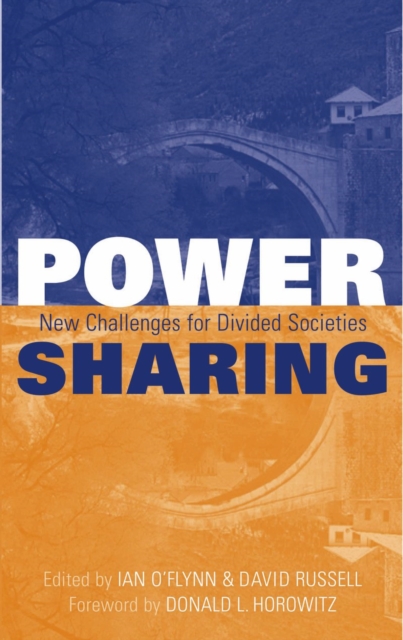
Power Sharing
It is widely assumed that internal power-sharing is a viable democratic means of managing inter-communal conflict in divided societies. In principle, this form of government enables communities that have conflicting identities to remedy longstanding patterns of discrimination and to co-exist peacefully. Key arguments in support of this view can be found in the highly influential works of Arend Lijphart and Donald Horowitz.
Power Sharing seeks to explore the unintended consequences of power-sharing for the communities themselves, their individual members, and for others in society. More specifically, it is distinctive in questioning explicitly whether power sharing: perpetuates inter-communal conflict by institutionalising difference at the political level; inhibits conflict resolution by encouraging extremism; stifles internal diversity; and fails to leave sufficient space for individual autonomy.
This book not only provides a theoretical exploration and critique of these questions, but comprehensively examines specific test cases where power-sharing institutions have been established, including in Northern Ireland, Belgium, Bosnia-Herzegovina, Macedonia and Lebanon. It also explores such issues as the role of political leaders, human rights instruments, the position of women, and the prospects for reconciliation within such societies. Furthermore it provides a detailed set of policy recommendations to meet the challenges of transition in deeply-divided societies.
eBook

The truest form of patriotism
This fascinating book explores the pervasive influence of pacifism on Victorian feminism. Drawing on previously unused source material, it provides an account of Victorian women who campaigned for peace and the many feminists who incorporated pacifist ideas into their writing on women and women's work. It explores feminists' ideas about the role of women within the empire, their eligibility for citizenship and their ability to act as moral guardians in public life. Brown shows that such ideas made use - in varying ways - of gendered understandings of the role of force and the relevance of arbitration and other pacifist strategies. 'The truest for of patriotism' examines the work of a wide range of individuals and organisations, from well-known feminists such as Lydia Becker, Josephine Butler and Millicent Garrett Fawcett, to lesser-known figures such as the Quaker pacifists Ellen Robinson and Priscilla Peckover. Women's work within male-dominated organisations, such as the Peace Society and the International Arbitration and Peace Association, is covered alongside single-sex organisations, such as the International Council of Women. Also reviewed are the arguments put forward in feminist journals like the Englishwoman's Review and the Women's Penny Paper. Brown uncovers a wide range of pacifist, internationalist and anti-imperialist strands in Victorian feminist thought, focusing on how these ideas developed within the political and organisational context of the time. This book will be of interest to anyone studying nineteenth-century social movements, and essential reading for those with an interest in the history of British feminism.
eBook
