
Catalogue Search | MBRL


Are you sure you want to remove the book from the shelf?

{{itemTitle}}
3,448
result(s) for
"Sugar History."
Sort by:

Sugar : a global history
\"Sugar is one of the most beloved substances consumed by humans, and also one of the most reviled. It has come to dominate our diets-- whether in candy, desserts, soft drinks or even bread and pasta sauces-- for better and for worse. This fascinating history of this addictive ingredient reveals its incredible value as a global commodity and explores its darker legacies of slavery and widespread obesity.\"--Dust jacket.
Book

The Sugar Plantation in India and Indonesia
European markets almost exclusively relied on Caribbean sugar produced by slave labor until abolitionist campaigns began around 1800. Thereafter, importing Asian sugar and transferring plantation production to Asia became a serious option for the Western world. In this book, Ulbe Bosma details how the British and Dutch introduced the sugar plantation model in Asia and refashioned it over time. Although initial attempts by British planters in India failed, the Dutch colonial administration was far more successful in Java, where it introduced in 1830 a system of forced cultivation that tied local peasant production to industrial manufacturing. A century later, India adopted the Java model in combination with farmers' cooperatives rather than employing coercive measures. Cooperatives did not prevent industrial sugar production from exploiting small farmers and cane cutters, however, and Bosma finds that much of modern sugar production in Asia resembles the abuses of labor by the old plantation systems of the Caribbean.
eBook

Sugar plantation in India and Indonesia : industrial production, 1770-2010
\"European markets almost exclusively relied on Caribbean sugar produced by slave labor until abolitionist campaigns began around 1800. Thereafter, importing Asian sugar and transferring plantation production to Asia became a serious option for the Western world. In this book, Ulbe Bosma details how the British and Dutch introduced the sugar plantation model in Asia and refashioned it over time. Although initial attempts by British planters in India failed, the Dutch colonial administration was far more successful in Java, where it introduced in 1830 a system of forced cultivation that tied local peasant production to industrial manufacturing. A century later, India adopted the Java model in combination with farmers' cooperatives rather than employing coercive measures. Cooperatives did not prevent industrial sugar production from exploiting small farmers and cane cutters, however, and Bosma finds that much of modern sugar production in Asia resembles the abuses of labor by the old plantation systems of the Caribbean\"-- Provided by publisher.
Book
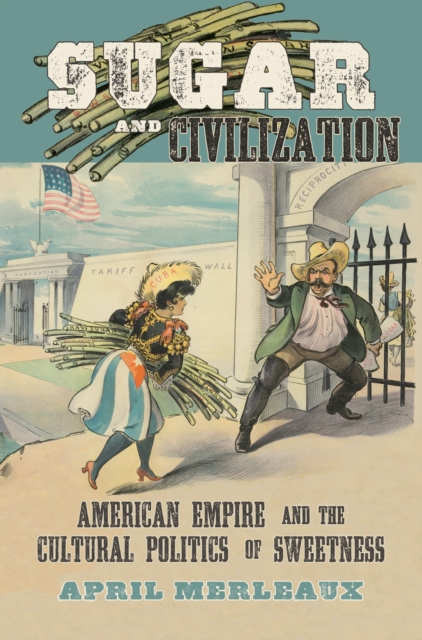
Sugar and Civilization
In the weeks and months after the end of the Spanish-American War, Americans celebrated their nation's triumph by eating sugar.Each of the nation's new imperial possessions, from Puerto Rico to the Philippines, had the potential for vastly expanding sugar production.
eBook

Unrefined : how capitalism reinvented sugar
\"Just what is sugar? This question tormented nineteenth-century planters, scientists, and governments. Sugar was powerful: It colonized and enslaved people, held consumers in thrall, spurred new technologies, and was colossally profitable. David Singerman shows that sugar's grip over the world had as much to do with how knowledge about sugar was created and transmitted as it did with how it was grown and traded. Taking us to the laboratories where it was taxonomized, the docks where it was appraised, and the congressional sessions where tariffs on it were levied, Singerman threads together a novel, multifaceted history of this staple good\"-- Provided by publisher.
BOOK

Sweet Cane
A look at the antebellum history and architecture of the little-known sugar industry of East Florida . From the late eighteenth century to early 1836, the heart of the Florida sugar industry was concentrated in East Florida, between the St. Johns River and the Atlantic Ocean. Producing the sweetest sugar, molasses, and rum, at least 22 sugar plantations dotted the coastline by the 1830s. This industry brought prosperity to the region—employing farm hands, slaves, architects, stone masons, riverboats and their crews, shop keepers, and merchant traders. But by January 1836, Native American attacks of the Second Seminole War, intending to rid the Florida frontier of settlers, devastated the whole sugar industry. Although sugar works again sprang up in other Florida regions just prior to the Civil War, the competition from Louisiana and the Caribbean blocked a resurgence of sugar production for the area. The sugar industry would never regain its importance in East Florida—only two of the original sugar works were ever rebuilt. Today, remains of this once thriving industry are visible in a few parks. Some are accessible but others lie hidden, slowly disintegrating and almost forgotten. Archaeological, historical, and architectural research in the last decade has returned these works to their once prominent place in Florida’s history, revealing the beauty, efficiency of design, as well as early industrial engineering. Equally important is what can be learned of the lives of those associated with the sugar works and the early plantation days along the East Florida frontier.
eBook

Sugar changed the world : a story of magic, spice, slavery, freedom, and science
Chronicles the human pursuit of sugar to satisfy our collective sweet tooth. The book describes this history in terms of ages, beginning with the Age of Honey, built on local growth and consumption of comestibles; through the Age of Sugar and its slave-supported \"factory\" plantation method of production; and into a period of science and freedom, when enslaved workers claimed their human rights and production of sweeteners shifted from the field to the lab.
Book

The sugar plantation in India and Indonesia
\"European markets almost exclusively relied on Caribbean sugar produced by slave labor until abolitionist campaigns began around 1800. Thereafter, importing Asian sugar and transferring plantation production to Asia became a serious option for the Western world. In this book, Ulbe Bosma details how the British and Dutch introduced the sugar plantation model in Asia and refashioned it over time. Although initial attempts by British planters in India failed, the Dutch colonial administration was far more successful in Java, where it introduced in 1830 a system of forced cultivation that tied local peasant production to industrial manufacturing. A century later, India adopted the Java model in combination with farmers' cooperatives rather than employing coercive measures. Cooperatives did not prevent industrial sugar production from exploiting small farmers and cane cutters, however, and Bosma finds that much of modern sugar production in Asia resembles the abuses of labor by the old plantation systems of the Caribbean\"--
Book


The House That Sugarcane Built
The multigenerational history of one of Louisiana's oldest dynasties and its empire of sugar and land.
eBook